
Last updated September 21, 2026
Free on-site gate assessment - hinges, posts, and your LiftMaster or Nice gate operator checked before anything is quoted
The assessment is free and the quote is the invoice.



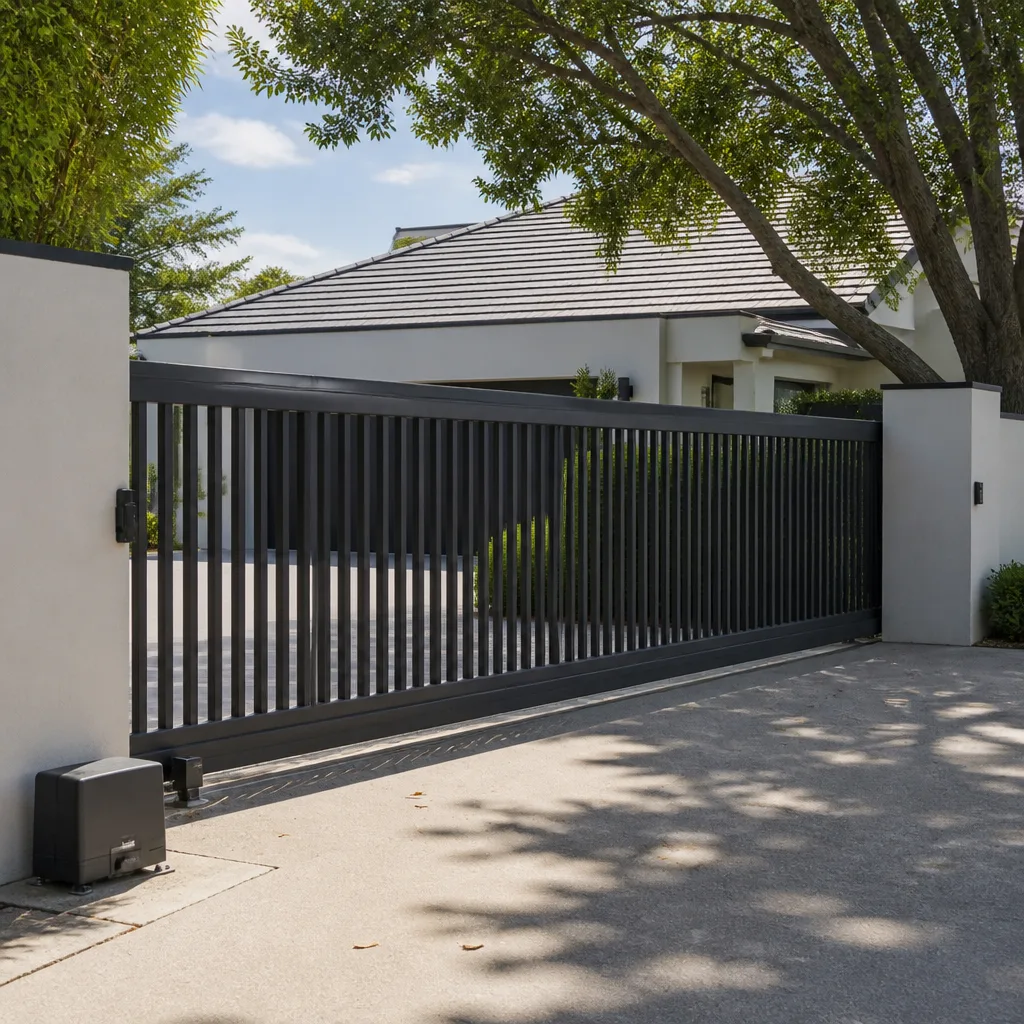
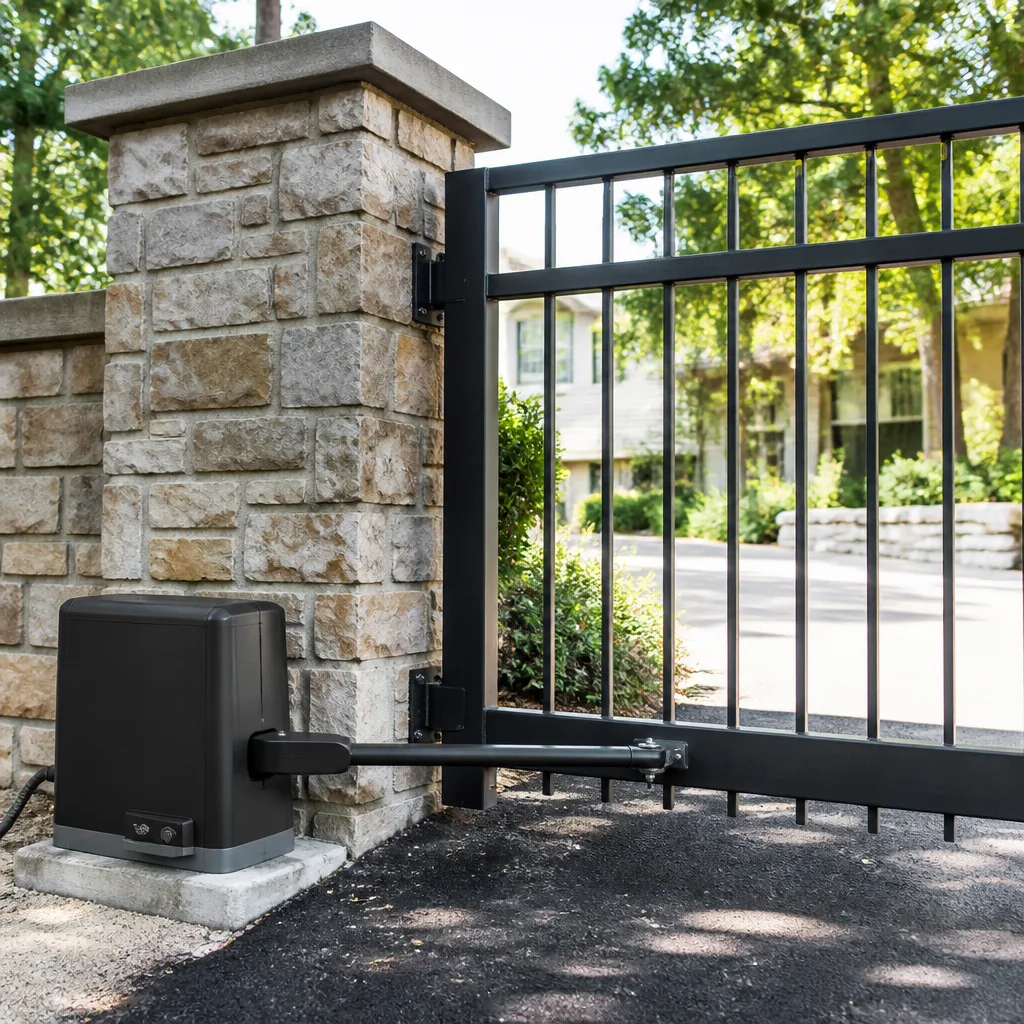
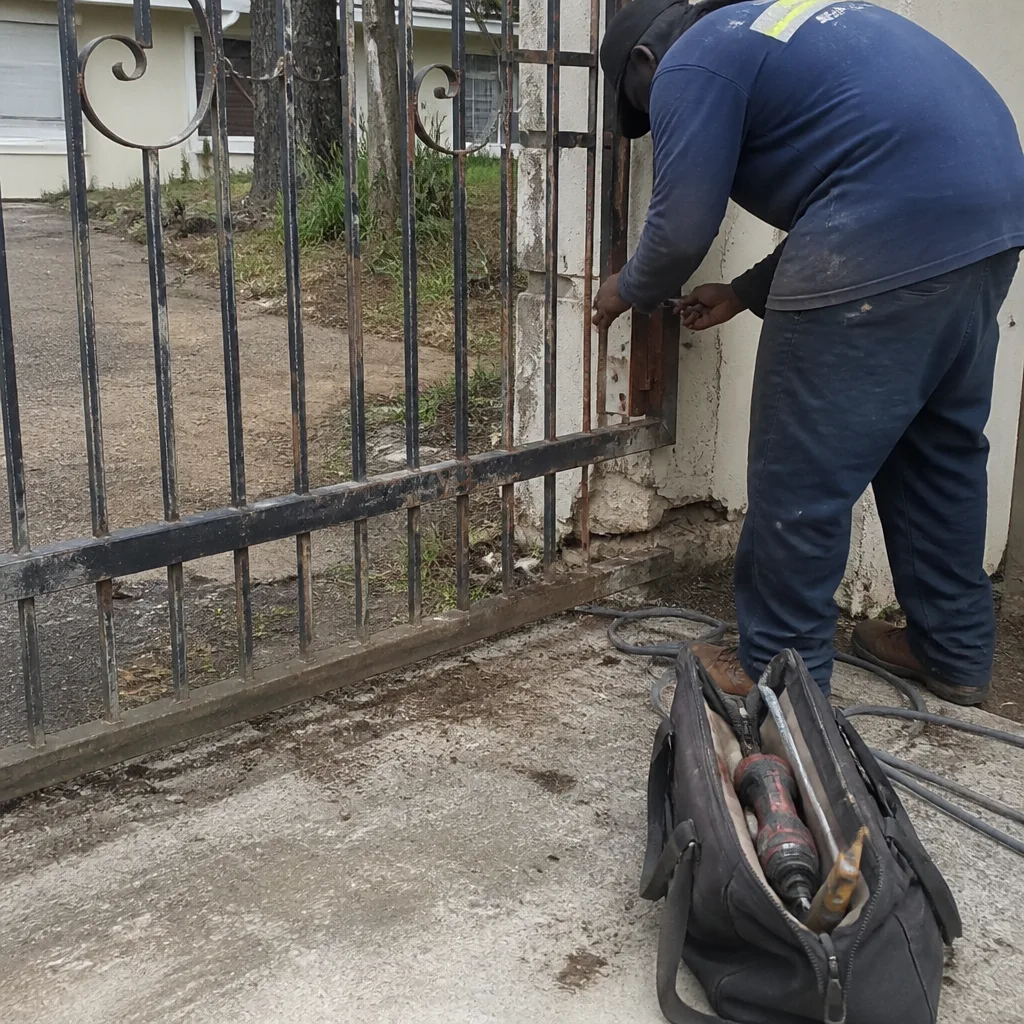 Before
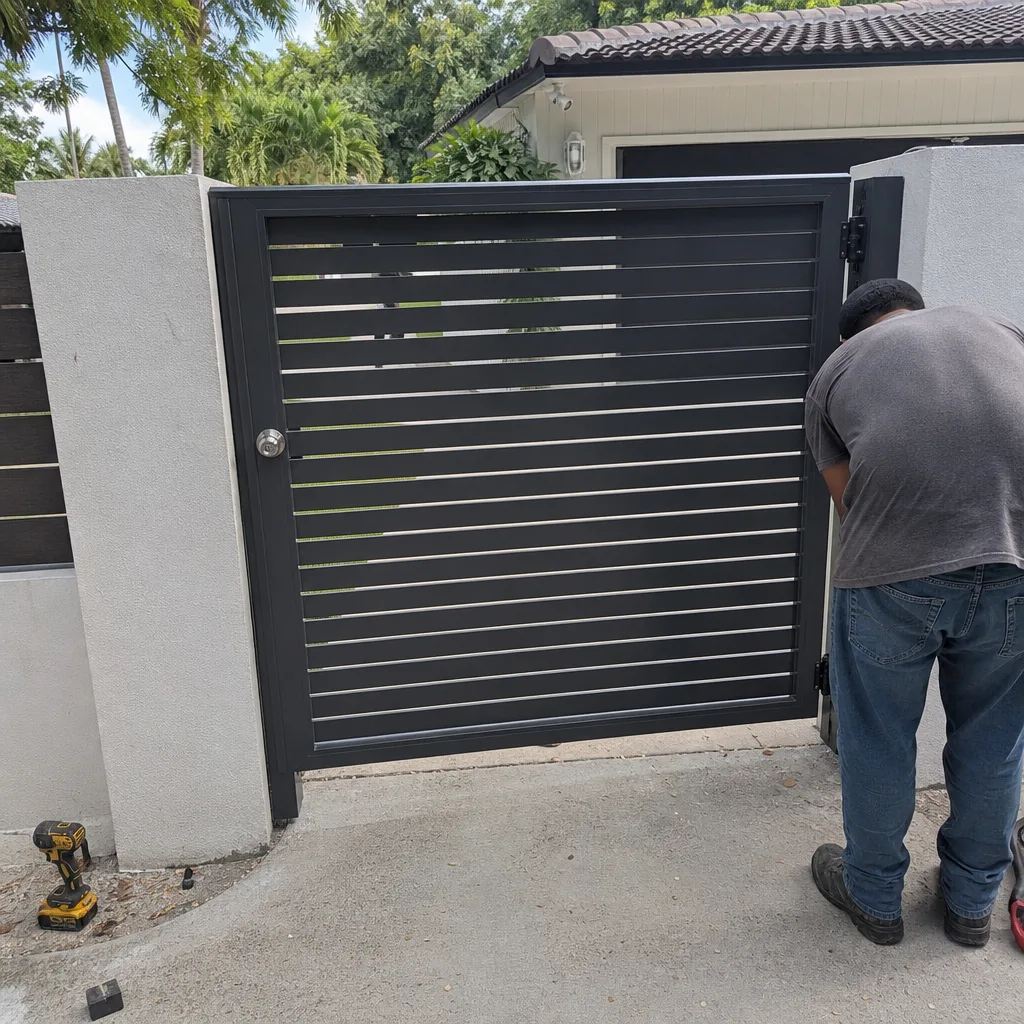 After
After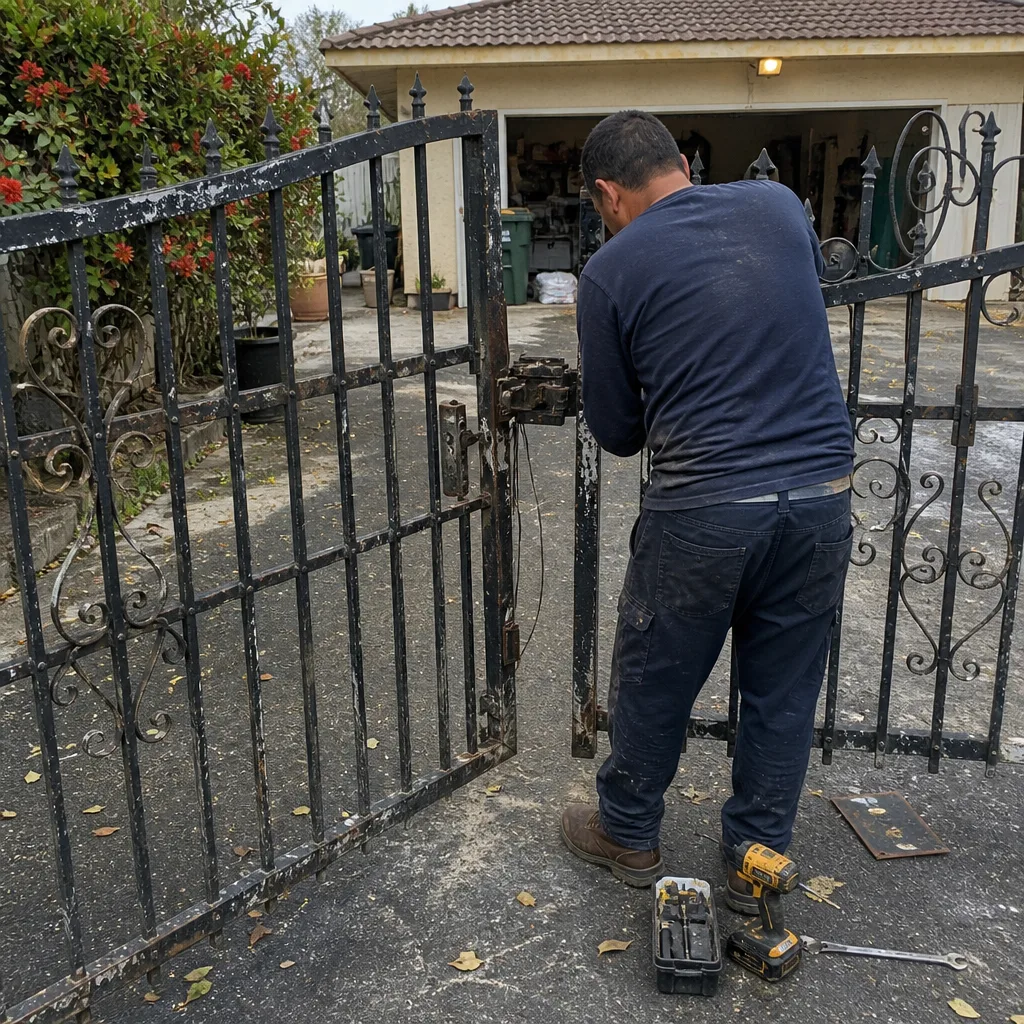 Before
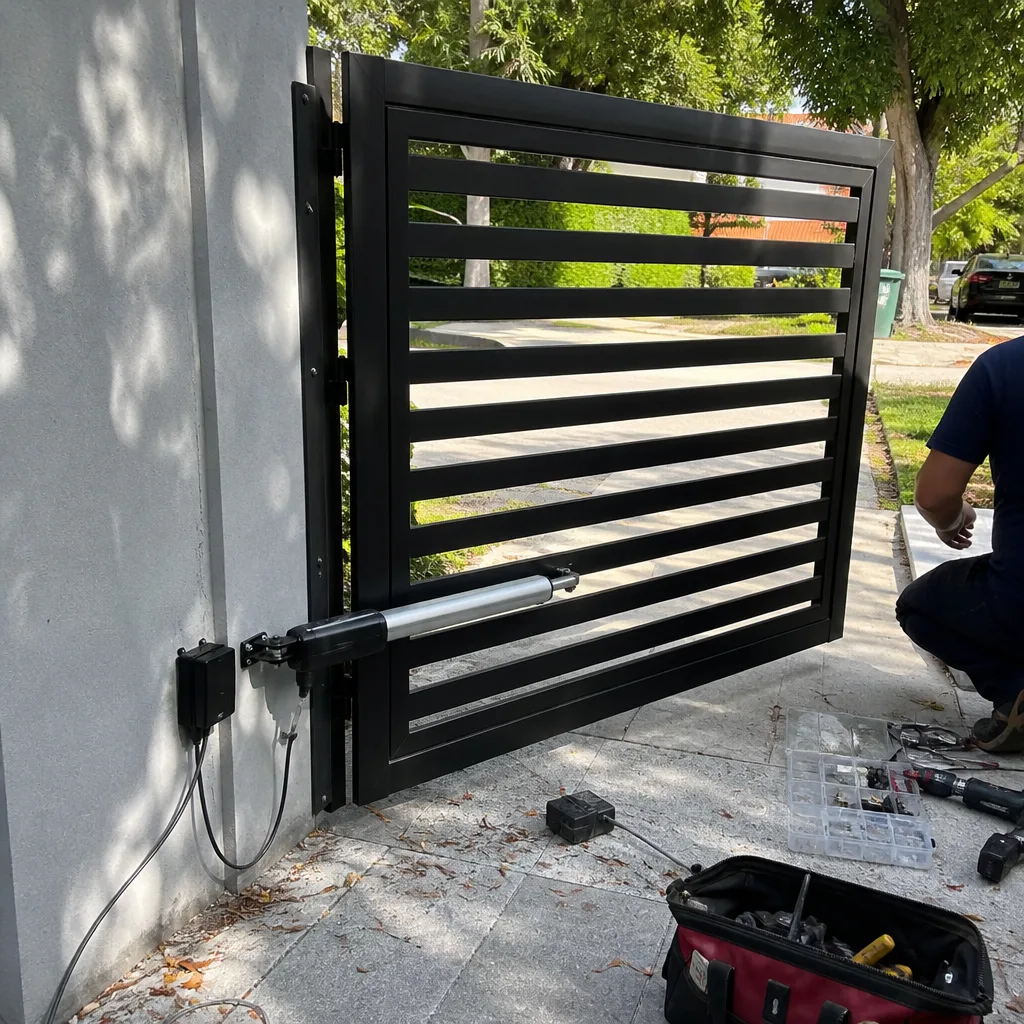 After
After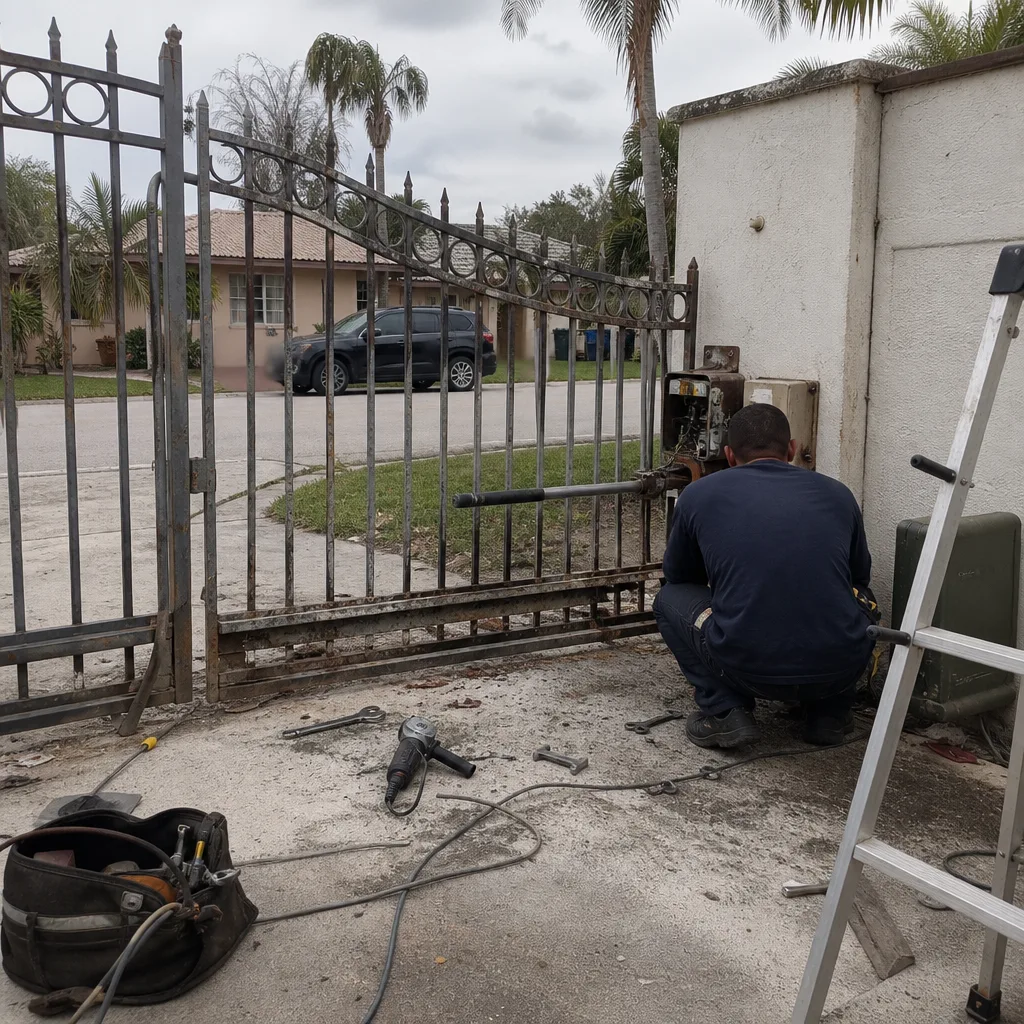 Before
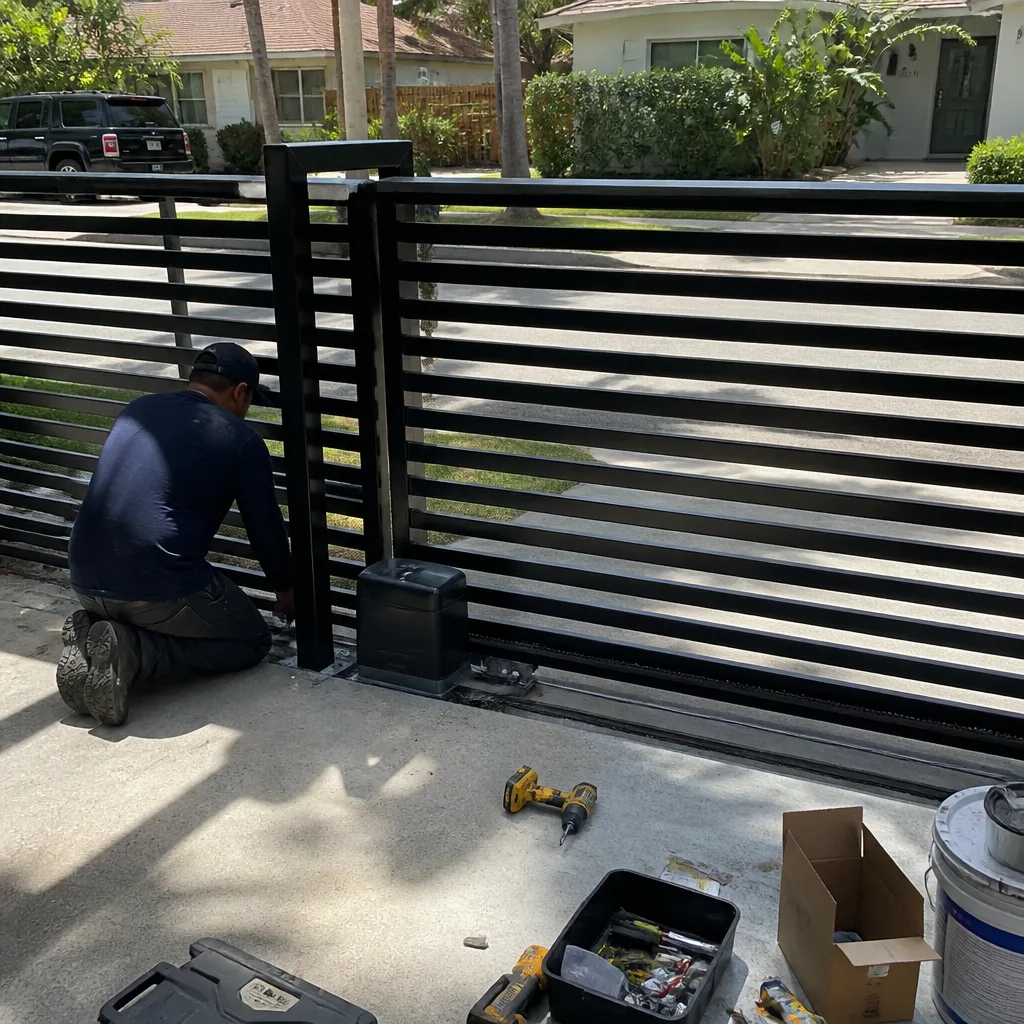 After
AfterGate Repair Permits, Codes & Inspections in FL: What You Need to Know
Most Florida homeowners assume any gate repair requires a permit. That assumption is wrong, but here’s the uncomfortable part: the repairs that don’t need permits are also the repairs where unlicensed contractors quietly create the most expensive problems. A homeowner in Broward County received a stop-work order last year not because they fixed their gate, but because their contractor swapped a 120V control board without pulling an electrical permit. That distinction, the line between mechanical work and electrical or structural work, cost more to resolve than the original repair ever would have. This guide draws that line precisely. We’re writing it from North Miami Beach, where we see the same confusion weekly. By the end, you’ll know exactly what needs a permit, what needs a licensed contractor without a permit, what you can do yourself, and how to document all of it so nothing comes back to haunt you. For more guides & resources, visit our blog. back to bite you at closing.
Quick Answer
Most mechanical gate repairs in Florida (springs, hinges, wheels, track realignment, gate opener motor swaps that don’t touch the electrical feed) require no permit at all. Electrical work on a gate (new circuit, control board replacement, rewiring, adding an intercom or keypad that draws power) and structural changes (new gate posts, widening a driveway opening, pouring a new pad for a slide gate) trigger permit requirements in most Florida counties. The line is simple: if you’re replacing parts that bolt on, you’re usually fine without a permit; if you’re changing how power reaches the gate or altering what’s anchored in the ground, you need paperwork.
Table of Contents
- The Permit Line: What Actually Triggers a Permit in Florida
- Mechanical Repair vs. Electrical Work: Why the Distinction Matters
- Miami-Dade vs. Broward: How Gate Electrical Permit Rules Differ
- Licensed Contractor but No Permit: The Middle Category Nobody Explains
- Genuine Homeowner DIY Territory: What You Can Legally Do Yourself
- What a Proper Inspection Record Should Contain (and Why It Has Resale Value)
- The Liability Exposure of Unpermitted Gate Electrical Work at Home Inspection
- How to Prove the Permit Was Pulled and Closed, Not Just Opened
 Before
 After
AfterThe Permit Line: What Actually Triggers a Permit in Florida
Florida’s building code framework delegates enforcement to local jurisdictions, and for gate work, the trigger events fall into three categories: structural alteration, electrical modification, and everything else. The “everything else” category is where 90% of gate repairs land, and it’s the reason most gate repair in Florida never sees a permit office.
Here’s the working framework we use in North Miami Beach, and it holds across most of the state:
- No permit required: Replacing a gate opener motor with a like-for-like unit (same voltage, same circuit), swapping hinge bearings, replacing wheels or rollers, re-hanging a sagging leaf, adjusting limit switches, replacing a photo-eye sensor, installing a battery backup on an existing opener, and reprogramming remotes or keypads.
- Permit required: Running a new electrical circuit to a gate that currently has no power, replacing an existing circuit with a different voltage (like moving a gate from 120V to 24V at the supply level, not the motor), adding a new gate where no gate existed before if it involves new footings or posts set in concrete, widening a driveway opening to accommodate a larger gate, and any work that changes the structural anchoring of the gate posts.
- Gray zone, lean toward permit: Replacing an entire gate operator (the complete unit, not just the motor) where the new draw exceeds the old circuit’s capacity. Most local inspectors in Florida will tell you that if you’re pulling new wire through conduit, you’re doing electrical work.
The trigger word in Florida code enforcement conversations is “modification.” Bolt-on replacement is maintenance. Altering what’s in the ground or in the wall is modification. For a homeowner in North Miami Beach, the practical test is: “Can the old part be unbolted and the new part bolted into the same place with the same power supply?” If yes, you’re in maintenance territory. If you’re running a line, pouring concrete, or changing voltage, stop and check with the local building department.
Mechanical Repair vs. Electrical Work: Why the Distinction Matters
The distinction matters because it determines who can legally do the work, not just whether a permit is needed. Mechanical gate repair in Florida can be performed by a general contractor, a licensed gate specialist, or in many cases the homeowner. Electrical work on a gate, by contrast, falls under Florida’s electrical contractor licensing requirements.
Here’s the practical breakdown:
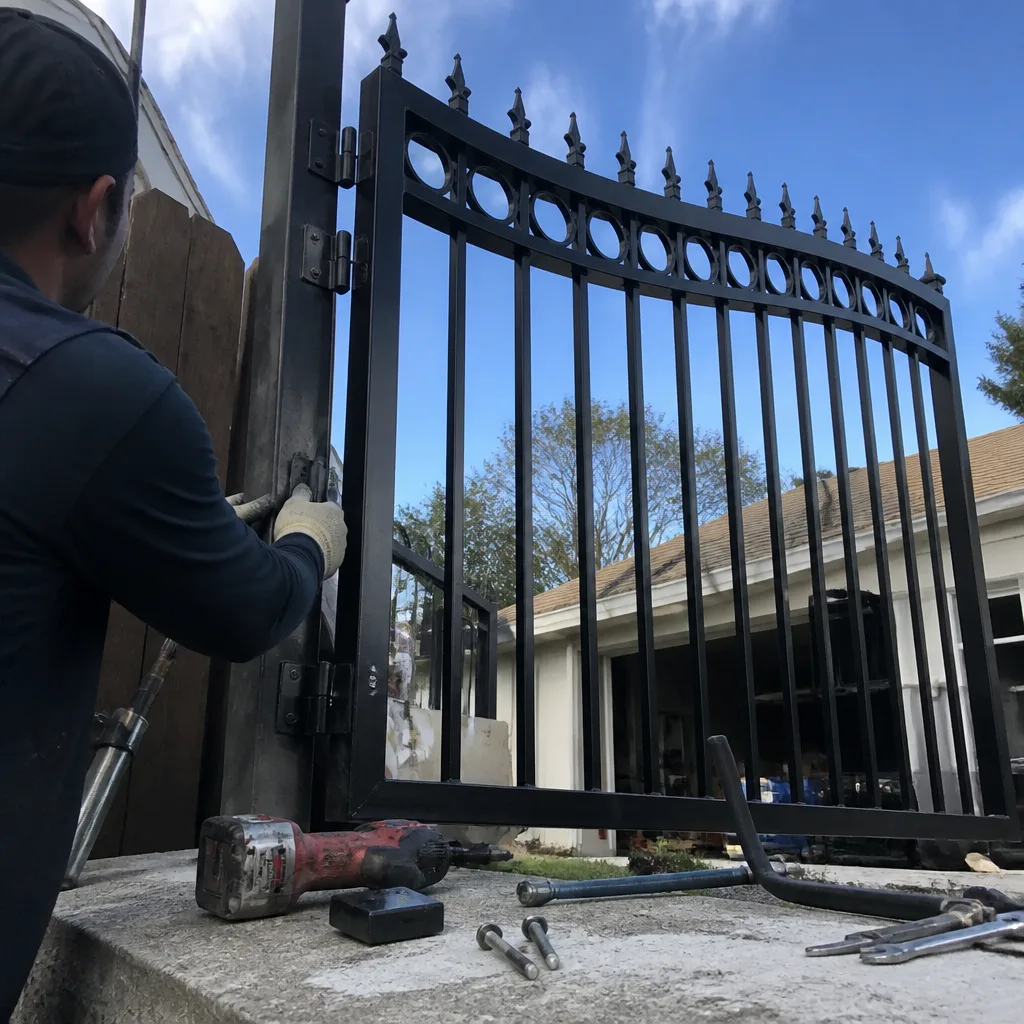
Mechanical work includes hinges, brackets, wheels, tracks, chain tension, leaf alignment, limit-switch mechanical adjustment, and gate opener motor swaps that plug into an existing outlet or wire into an existing junction box without changing the circuit. In North Miami Beach, we’ve replaced hundreds of BFT and Viking motors where the old unit unbolted and the new one bolted onto the same mounting plate, same wires, same breaker. No permit, no problem, and the county building official will confirm that on the phone.
Electrical work includes running conduit a new distance, adding a disconnect box, changing a breaker, converting from 120V to a low-voltage transformer at the supply point, and adding powered accessories like a mag-lock, an intercom, or a card reader that currently has no power source. Florida Statute 489 defines electrical contracting as work requiring a licensed electrical contractor, which in practice means either a certified electrician or an EC license holder. A gate company cannot pull an electrical permit unless they hold that credential or subcontract the electrical portion.
The expensive mistakes happen when a contractor does electrical gate work without either the license or the permit. A Ghost Controls opener swap is mechanical. A new keypad that requires a 120V feed trenched under a driveway is electrical. When the wrong contractor does the second, the homeowner is the one who owns the problem at inspection time. For a deeper look at what to watch for, see our Gate Repair Warning Signs: A North Miami Beach Homeowner’s Reference Guide.
Miami-Dade vs. Broward: How Gate Electrical Permit Rules Differ
Florida’s building code is statewide, but enforcement culture and local amendments differ, and nowhere is that more visible than the line between Miami-Dade and Broward counties. We work in North Miami Beach, which sits in Miami-Dade, and we field calls from Broward homeowners who got different answers from their building department than their friends across the county line did.
Miami-Dade County is stricter on gate electrical work than most of the state. The county’s electrical inspection requirements treat any gate operator installation that involves new branch-circuit wiring as an electrical permit event, full stop. Miami-Dade also has its own product approval requirements: gate operators installed in the county must meet the High Velocity Hurricane Zone (HVHZ) standards, which affect mounting hardware, wind-load ratings on the gate leaf, and how the operator anchors to the post. If you’re replacing a gate opener in North Miami Beach, the unit itself doesn’t need product approval if it’s a like-for-like swap, but if you’re installing a new gate or a new operator, the wind-load documentation matters.
Broward County is slightly more relaxed on low-voltage gate control wiring. A 24V control circuit running from an existing outlet to a gate operator is often treated as appliance wiring, not branch-circuit electrical work, which means some jobs that require a permit in Miami-Dade don’t in Broward. But Broward enforces its own rule aggressively: any electrical work on a property with a homeowner’s insurance policy that has a “permits and inspection” clause will void coverage if the work is discovered after a fire or electrocution claim. That’s not a code issue; it’s an insurance contract issue.
The practical takeaway for a North Miami Beach homeowner: if your property line is in Miami-Dade, assume any new electrical run to a gate requires a permit. If you’re just over the line in Broward, don’t assume you’re exempt; call the city building department for the specific municipality. Municipalities within both counties can impose stricter rules than the county baseline.
Licensed Contractor but No Permit: The Middle Category Nobody Explains
There’s a category of gate work that requires a licensed professional but no permit: mechanical repairs that involve specialized labor, welding, or spring tension. Most homeowners never have this explained because the gate industry isn’t great at distinguishing “you can do this yourself” from “just because there’s no permit doesn’t mean there’s no license.”
Examples of work that needs a licensed or qualified contractor but no permit:
- Gate spring replacement and tensioning: A torsion spring on a residential swing gate stores enough energy to break a wrist or worse. No permit needed, but this is not a homeowner job. A trained gate technician knows how to release tension safely and set the new spring to the correct wind.
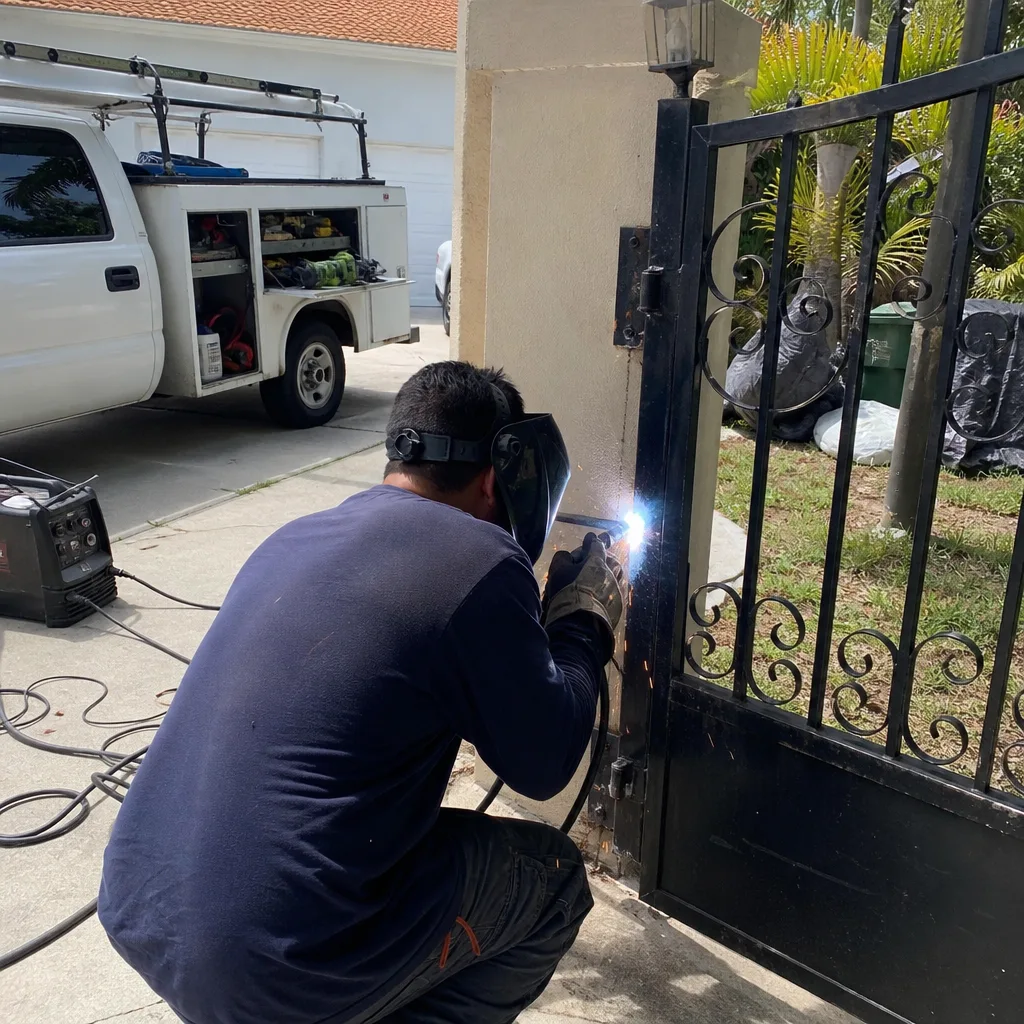
- Welded bracket repair: If your gate’s hinge bracket cracked and needs welding, no permit is triggered, but you need a welder who understands gate geometry. A bad weld on a gate post will tear out under the weight of the leaf, and you’ll be replacing the post, which does require a permit.
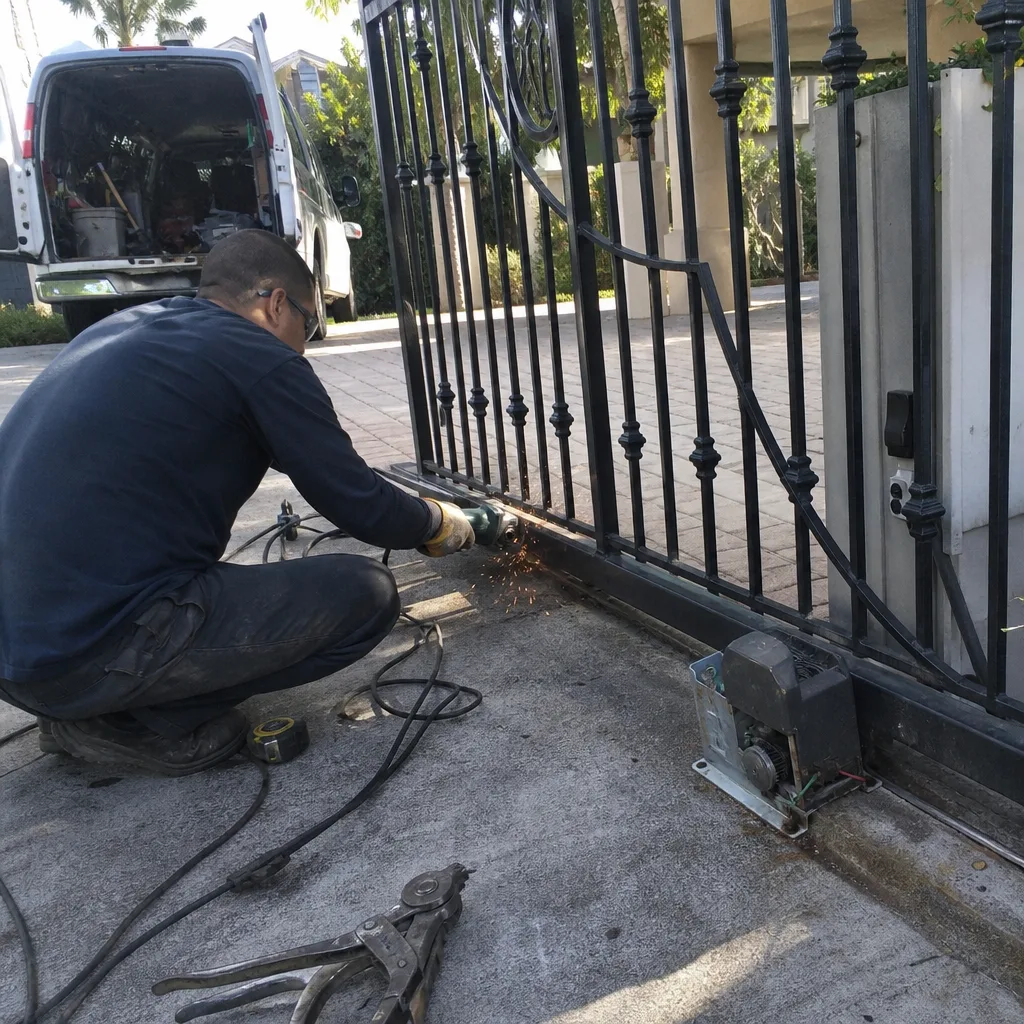
- Slide gate track realignment: Pulling up a section of track and re-bedding it in concrete is maintenance if you’re re-setting the same track in the same location, but it requires someone who understands drainage and gate weight distribution.
- Gate opener motor replacement on complex automation: A Viking or Linear operator swap where the limit switches are electronic and the force settings are load-dependent needs a technician, but no permit. If the motor is plug-in and the circuit is untouched, it’s maintenance.
The reason we emphasize this at Vance Gate Repair is that Florida homeowners swing between two wrong extremes: they either assume everything needs a permit and they overpay for paperwork, or they assume no permit means no licensing, and they hire a handyman to tension a spring. Both mistakes are expensive in different ways. The middle category is where a licensed, insured Gate Repair services contractor does the work without a permit because the work doesn’t trigger one, and that’s completely legal.
Genuine Homeowner DIY Territory: What You Can Legally Do Yourself
Florida law is clear that homeowners may perform work on their own primary residence without a contractor’s license in most trades, including gate repair, provided no permit is required and the work is not electrical in nature. Your primary residence is the key phrase. You cannot legally do this work on a rental property you own, a commercial property, or a house that isn’t your primary dwelling.
Here’s what a homeowner can legally do in North Miami Beach without pulling a permit or hiring a contractor:
- Remotes, keypads, and programming: If the opener has power and works, you can learn new remotes, change codes, and adjust the auto-close setting through the control board menu. This is configuration, not construction.
- Photo-eye realignment: A photo-eye, the infrared beam that stops the gate if something crosses the path, is a bolt-on sensor with two wires that plug into the operator. Cleaning the lens, re-aligning the beam, and checking the wire connections is homeowner work. If the photo-eye itself is dead and needs replacement, that’s still bolt-on replacement; no permit.
- Hinge lubrication and minor leaf adjustment: Greasing hinge bearings, tightening loose bracket bolts, and adjusting the leaf’s rest position on a swing gate are maintenance. If the gate is sagging because the hinge bearings are worn, that’s a bearing replacement: bolt-on, no permit, but heavier than it looks.
- Battery backup swap: Many newer Linear and Ghost Controls openers have an external battery pack. Replacing that battery is like replacing a car battery; unplug, unbolt, swap, done. No permit, and the manufacturer’s instructions cover it.
- Track cleaning and debris clearing: For a slide gate, clearing the V-track of sand and debris is routine maintenance. South Florida’s sandy soil makes this a monthly job for some homeowners.
What homeowners cannot do themselves: any work that touches the 120V or 240V feed to the gate operator, any new conduit, any new trenching for wire, any structural post replacement, and any gate installation involving new concrete footings. The moment you’re installing a new electrical device that doesn’t plug into an existing outlet, you’re doing electrical work, and Florida wants a licensed person doing it.
What a Proper Inspection Record Should Contain (and Why It Has Resale Value)
When permitted gate work is done correctly, the permit isn’t the valuable document. The inspection record is. A closed permit means an inspector came out, checked the work against code, and signed off. The paper trail from that sign-off contains specifics that matter years later, and here’s the part most North Miami Beach homeowners never think about: that record has resale value.
A proper inspection record for permitted gate electrical work should contain:
- The permit number and the jurisdiction that issued it (City of North Miami Beach, Miami-Dade County, etc.)
- The scope of work described in the permit application, matching what was actually done
- Inspection dates, the inspector’s name or ID, and the result of each inspection (passed, failed, re-inspection)
- A list of electrical components inspected: disconnect location, grounding method, conduit type and size, wire gauge, and breaker size
- Documentation of any re-inspection and what was corrected between visits
- A final inspection mark showing the permit was closed, not just issued
The resale value point is practical: when you sell a home in Florida, the buyer’s inspector will check for open permits and unpermitted work. South Florida home inspectors are familiar with gate operators, and they’ll flag a gate opener that’s clearly newer than the house but has no permit record and no documentation. That flag turns into a closing negotiation, or worse, a seller credit. A closed permit with a clean inspection record eliminates that conversation before it starts.
At Vance Gate Repair, we photograph every gate we work on in North Miami Beach and leave a written record with the homeowner, even for work that doesn’t require a permit. For permitted work, we make sure the inspection record is in the customer’s file before we consider the job finished. Under The Haven Standard, Clause 4: every visit includes a documented photo record of what was found, what was adjusted, and what was replaced. That documentation habit transfers directly to permit records and resale value.
The Liability Exposure of Unpermitted Gate Electrical Work at Home Inspection
The liability exposure isn’t theoretical. When a home inspector in Florida finds unpermitted electrical work, the problem compounds in three directions: insurance, financing, and sale price.
First, insurance. Florida homeowners insurance carriers have become aggressive about unpermitted electrical work since the state’s property insurance crisis accelerated. If a gate’s unpermitted electrical wiring creates a fire hazard and the home burns, the carrier will investigate the permit history. Unpermitted work, even if it wasn’t the ignition source, gives the carrier grounds to reduce or deny the claim. That’s a seven-figure exposure for a repair that cost a few hundred dollars.
Second, financing. FHA and VA loans in Florida have specific requirements about electrical safety and will flag unpermitted work in an appraisal. Conventional lenders have followed suit. A buyer whose financing falls through because of a gate is not a buyer who closes.
Third, the negotiation. A home inspector who finds an open permit or unpermitted gate electrical work will write it up. The buyer’s agent will ask for a credit or a repair with a permit pulled retroactively. In North Miami Beach’s competitive market, that request lands hard. The seller either takes a price hit or delays closing while the work gets permitted after the fact, which is more expensive than doing it right the first time.
The retroactive permitting process in Miami-Dade is not a walk-through. You can’t just file a permit and say “it’s already done.” An inspector will want to see the work, which often means opening walls, exposing conduit, and proving the wire gauge and grounding meet current code. Current code, not the code from whenever the unpermitted work was done. That’s the trap.
How to Prove the Permit Was Pulled and Closed, Not Just Opened
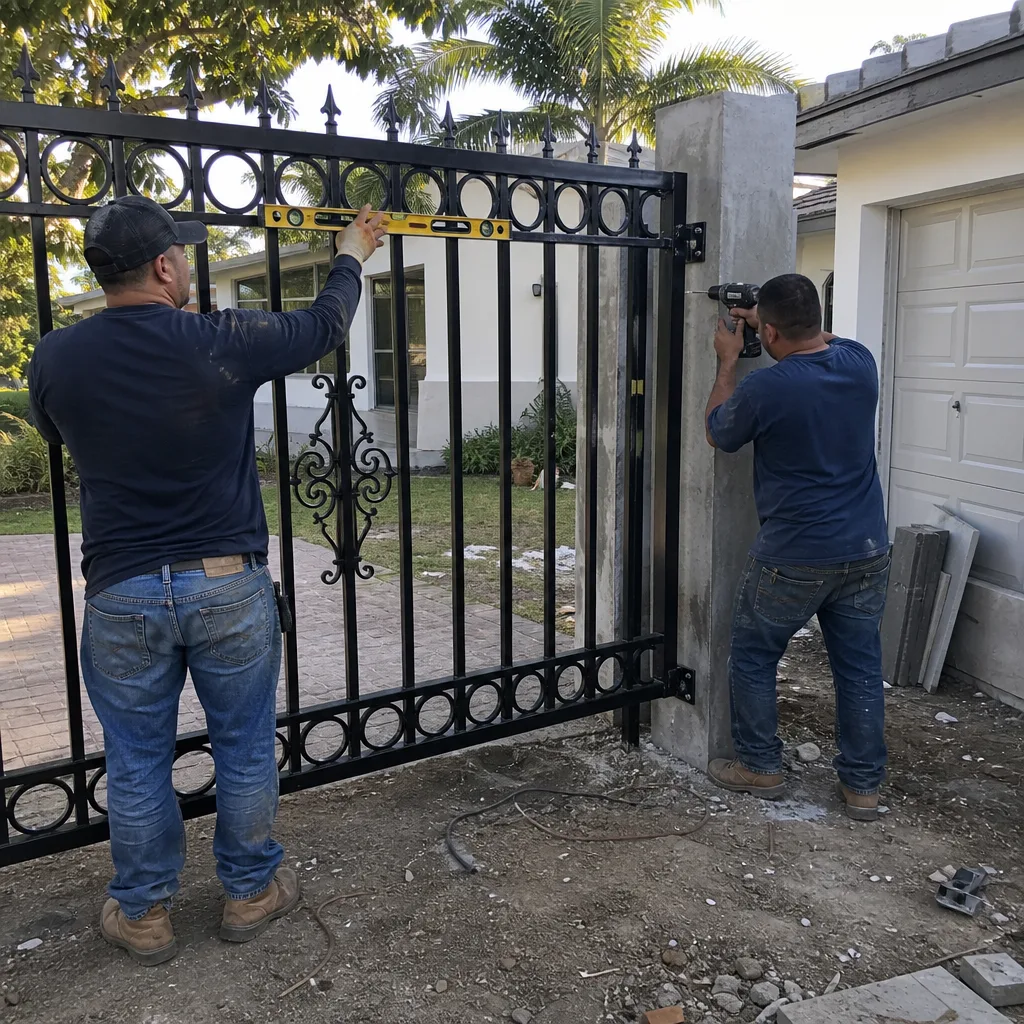
This is the step most homeowners skip, and it’s the one that matters most. A permit that was pulled but never given a final inspection is, in Florida’s eyes, an open permit. Open permits show up in title searches. They delay sales. And they’re nearly worthless as protection.
Here’s how to verify the permit was closed, step by step:
- Request the permit number from the contractor before work starts. It won’t exist yet for new work, but set the expectation: you want the number the moment it’s pulled. A contractor who hesitates on this is a red flag.
- Verify the permit in the jurisdiction’s online portal. Miami-Dade County, the City of North Miami Beach, and Broward County all have searchable permit databases. Type in the address or permit number and look at the status. “Issued” means the permit exists. “Finaled” or “Closed” means the inspection passed.
- Request the inspection sign-off sheet after the final inspection. This is the document the inspector leaves or the one submitted electronically after they pass the work. It will show the date, the inspection type, and the result.
- Check that the work scope on the permit matches the work done. A permit that says “gate operator replacement” doesn’t cover “new electrical circuit to gate location.” If the contractor did more than the permit describes, the permit doesn’t protect you for the extra work.
- Keep everything in your closing paperwork. When you sell, the permit record and inspection sign-off are your proof the work was legal. They go in the file with the disclosure documents.
In North Miami Beach, we’ve seen homeowners pull an open permit on a refinance because a gate company opened a permit for gate electrical work and never scheduled the final inspection. The homeowner found out years later when the bank flagged the property. The fix was a new inspection on old work, and it cost more than the original gate job. Request the proof. Don’t accept a verbal “yeah, it’s all done.”
Common Mistakes to Avoid
- Assuming all gate work needs a permit. Most mechanical gate repair in Florida needs no permit. Overpaying for unnecessary permits wastes money, but the worse error is avoiding a needed permit because you assumed the opposite. Know which side of the line your repair falls on.
- Hiring an unlicensed contractor for electrical gate work because they said “no permit needed.” This is the most expensive mistake in Florida gate repair. The contractor saves a day of paperwork, and you inherit the liability. If the work involves new wiring, the contractor needs a license to do it, and the job needs a permit.
- Accepting a verbal “it’s permitted” without paperwork. Verbal confirms are worthless at closing. You need the permit number, the inspection sign-off, and the final status in the county database. Get it in writing.
- Assuming Broward rules apply in Miami-Dade. The two counties are twenty minutes apart but have different enforcement cultures for gate electrical work. Check with the municipality where the property sits, not where your friend lives.
- Replacing your gate opener with a different voltage without checking the circuit. A 120V Viking opener swapped for a low-voltage Linear unit isn’t a like-for-like replacement. The circuit needs to change, and that change triggers electrical work rules. Know the voltage before you buy the replacement.
- Ignoring an open permit until sale time. Open permits don’t expire in Florida, and they surface in title searches. The moment you know about an open permit, get it closed. Waiting until you’re under contract is a guaranteed delay.
- Doing electrical gate work yourself on a rental or non-primary residence. Florida’s homeowner exemption applies only to your primary residence. If the gate is on a rental property, you’re not legally allowed to do even the work that doesn’t require a permit if it crosses into licensed trade territory.
When to Call a Professional
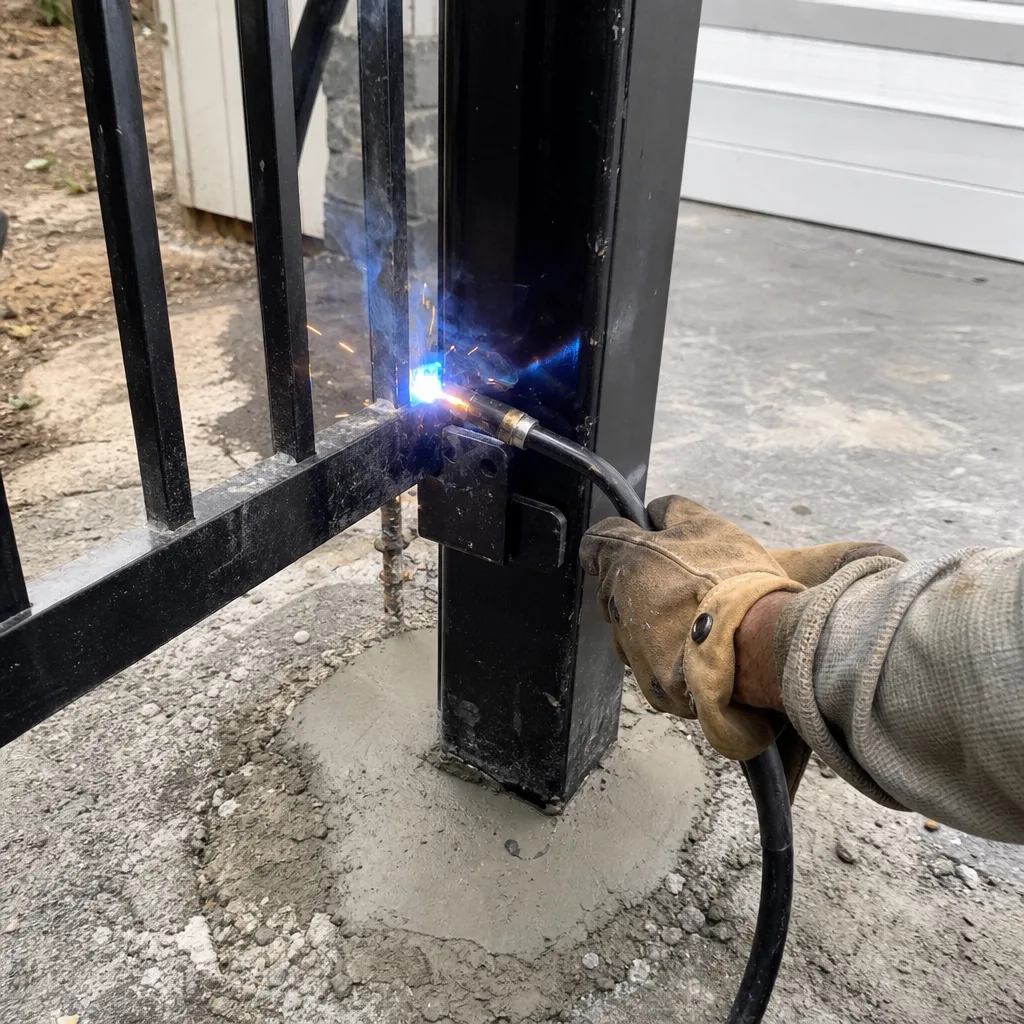
Call a gate professional in North Miami Beach when the work touches anything you’re not sure about, and the threshold for “not sure” should be low. If the gate’s power comes from anything other than a plug into an existing outlet, if the hinges are welded to the post, if the gate leaf weighs more than you can easily hold open, or if the spring is under tension, that’s professional territory. If you’re selling a home in the next two years, call a professional for anything electrical on the gate and get the permit closed properly. The cost of doing it right is less than the closing credit you’ll hand over. Gate Repair in North Miami Beach is what we do every day, and we quote a written price before any work starts. Vance Gate Repair North Miami Beach offers free estimates in North Miami Beach, call (754) 219-6080.
Frequently Asked Questions
No permit is required in Florida for a like-for-like gate opener motor replacement where the new motor bolts into the same mounting with the same voltage and the same circuit. The exception is if you’re changing voltage or running new wire; that crosses into electrical work and requires a permit and a licensed contractor. Call (754) 219-6080 if you’re not sure which side of the line your replacement falls on.
Gate-related permit fees in North Miami Beach typically run between $75 and $350 depending on the scope of electrical work, plus any inspection fees. The cost of the permit is small compared to the cost of retroactive permitting or a lost insurance claim. For an exact quote on your gate repair, including any permit requirements, estimates are free from Vance Gate Repair North Miami Beach.
Yes, a homeowner can replace their own gate opener on their primary residence if the replacement is a plug-in or like-for-like swap on an existing circuit and no permit is required. The moment the work involves new wiring, new conduit, or a new circuit, Florida requires a licensed electrical contractor, and the homeowner exemption no longer applies. If you’re installing anything beyond a bolt-on swap, call a licensed gate professional. For help choosing one, read our How to Hire a Gate Repair Contractor in North Miami Beach: A Step-by-Step Guide.
The home inspector will flag it, the buyer’s agent will request a credit or a permit pulled retroactively, and the sale can be delayed or repriced. The seller’s insurance carrier may also use the unpermitted work as grounds to deny a future claim. In South Florida markets like North Miami Beach, this one flag can cost thousands at the closing table. Get the permit closed before you list.
Search the Miami-Dade County permit portal by your property address or permit number and look for the status field. “Issued” means the permit was pulled but no final inspection has passed. “Finaled” or “Closed” means the inspector signed off. If the status is open, call the contractor who did the work or the county to schedule the final inspection. Don’t wait until you’re selling.
Yes. Florida electrical contracting requires a licensed electrical contractor, either a certified electrician or an EC license holder. A gate company without electrical credentials can do mechanical work legally, but any work touching the 120V or 240V feed, new circuits, or new branch wiring must be done by or subcontracted to a licensed electrician. Ask for the license number before the work starts; a real contractor will show it.
The Bottom Line
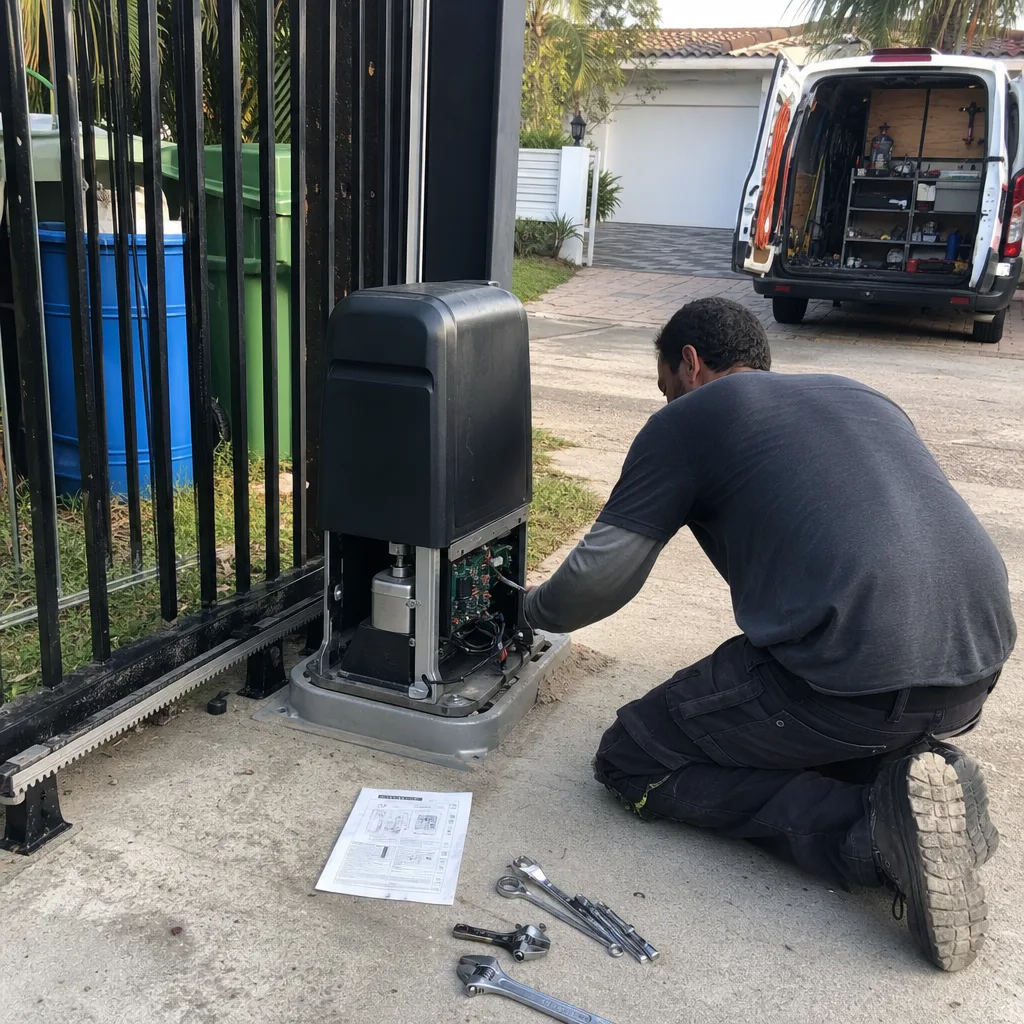
Florida gate repair permits come down to one question: is the work mechanical or electrical? Mechanical work, the bolt-on replacement of motors, hinges, wheels, and sensors, generally needs no permit. Electrical work, anything touching the power feed or adding new circuits, needs a permit and a licensed contractor. The homeowners who get burned are the ones who accepted a contractor’s “no permit needed” without checking whether the work was actually electrical. In North Miami Beach, where the county enforces gate electrical work strictly, the safe move is to ask for the permit number, verify it’s closed, and keep the paperwork. It’s not complicated. It’s just documentation, and documentation is the part most people skip. Vance Gate Repair North Miami Beach home is built on that documentation habit, and our Gate Installation in North Miami Beach and Gate Motor & Opener in North Miami Beach services both operate under the same standard. If you’re not sure what your gate needs, call (754) 219-6080 and we’ll tell you straight: what needs a permit, what doesn’t, and what it will cost, in writing, before anything gets touched.
Written by Adrian Vance, Owner at Vance Gate Repair North Miami Beach, serving North Miami Beach since 2014.