
Last updated September 21, 2026
Free on-site gate assessment - hinges, posts, and your LiftMaster or Nice gate operator checked before anything is quoted
The assessment is free and the quote is the invoice.

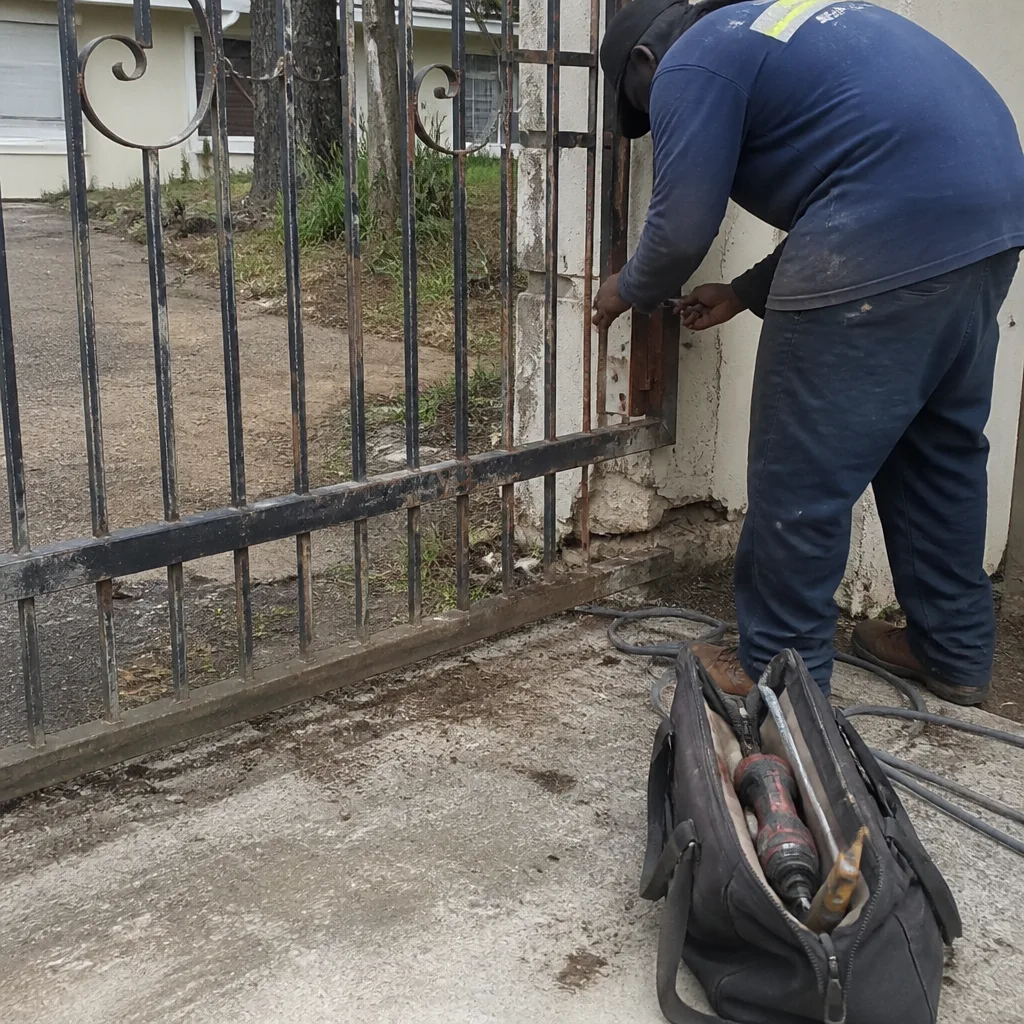 Before
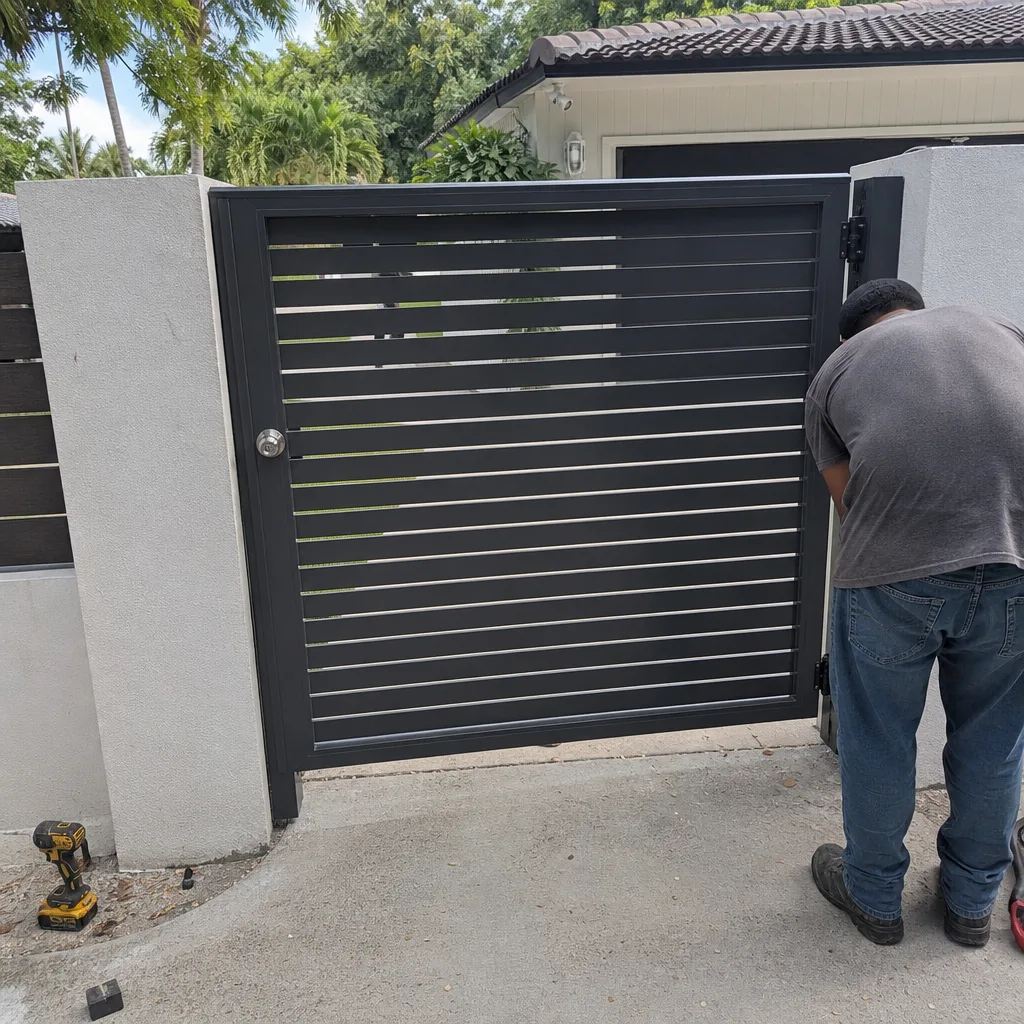 After
After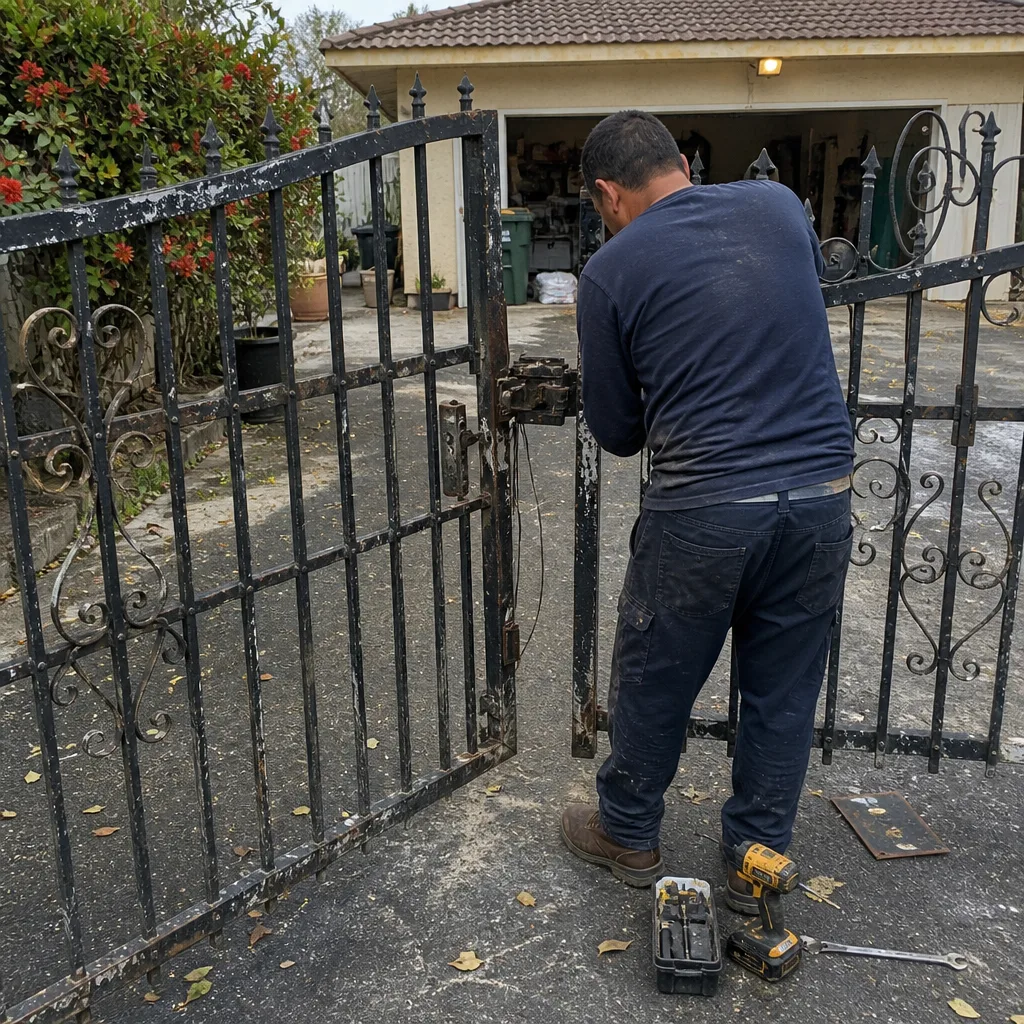 Before
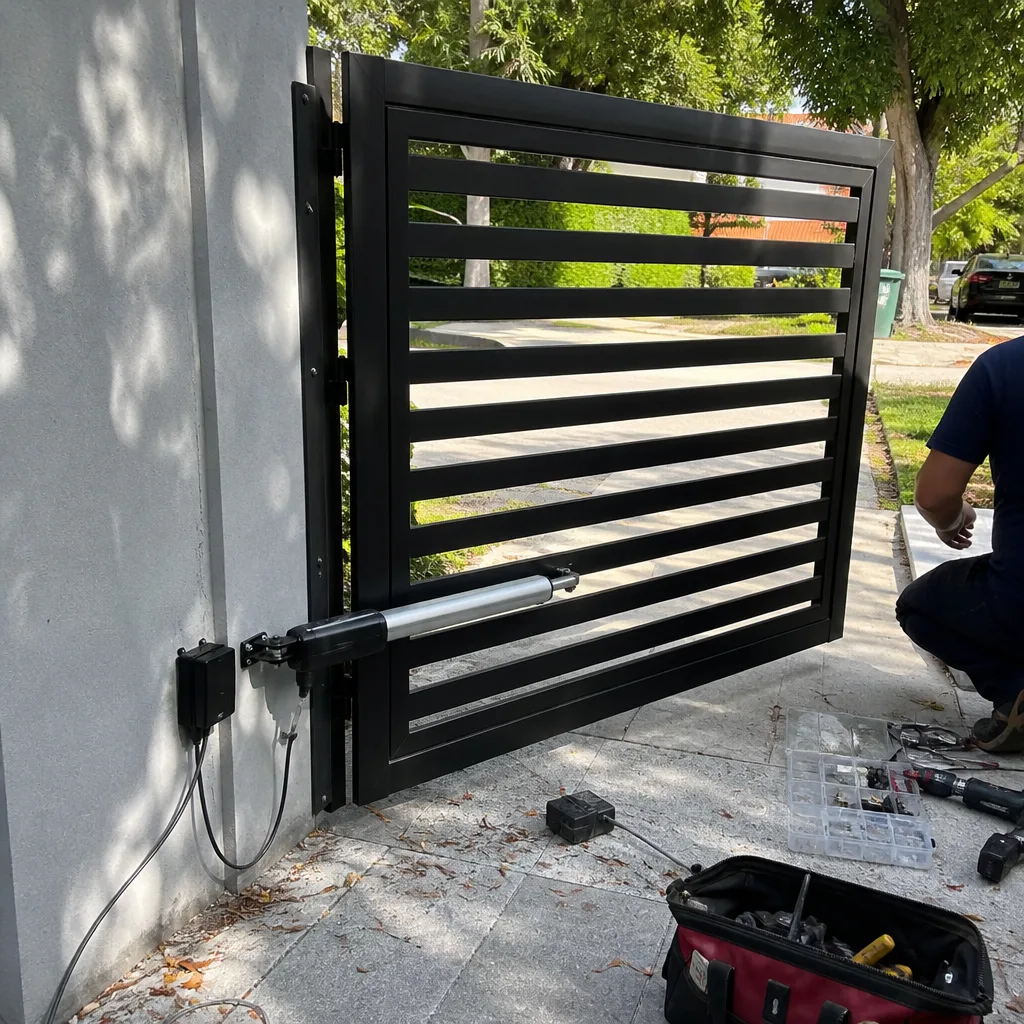 After
After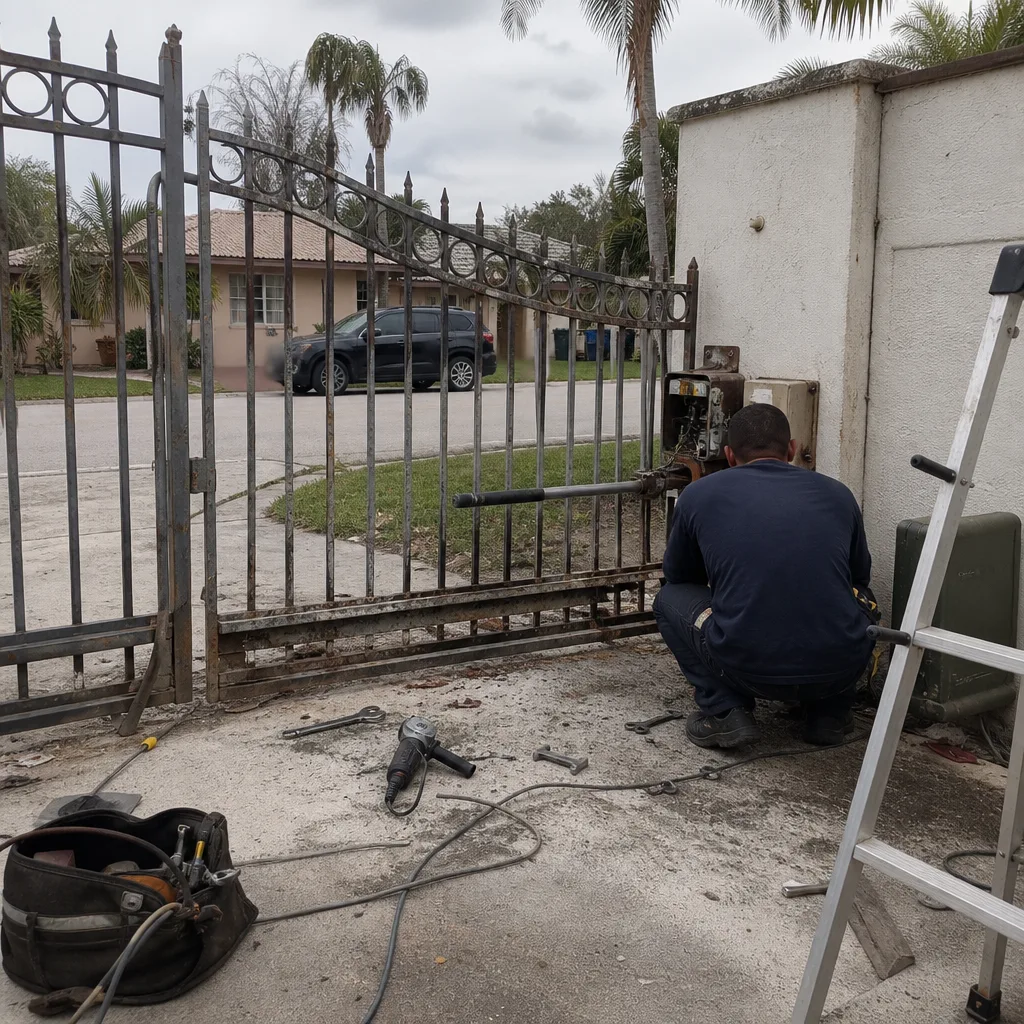 Before
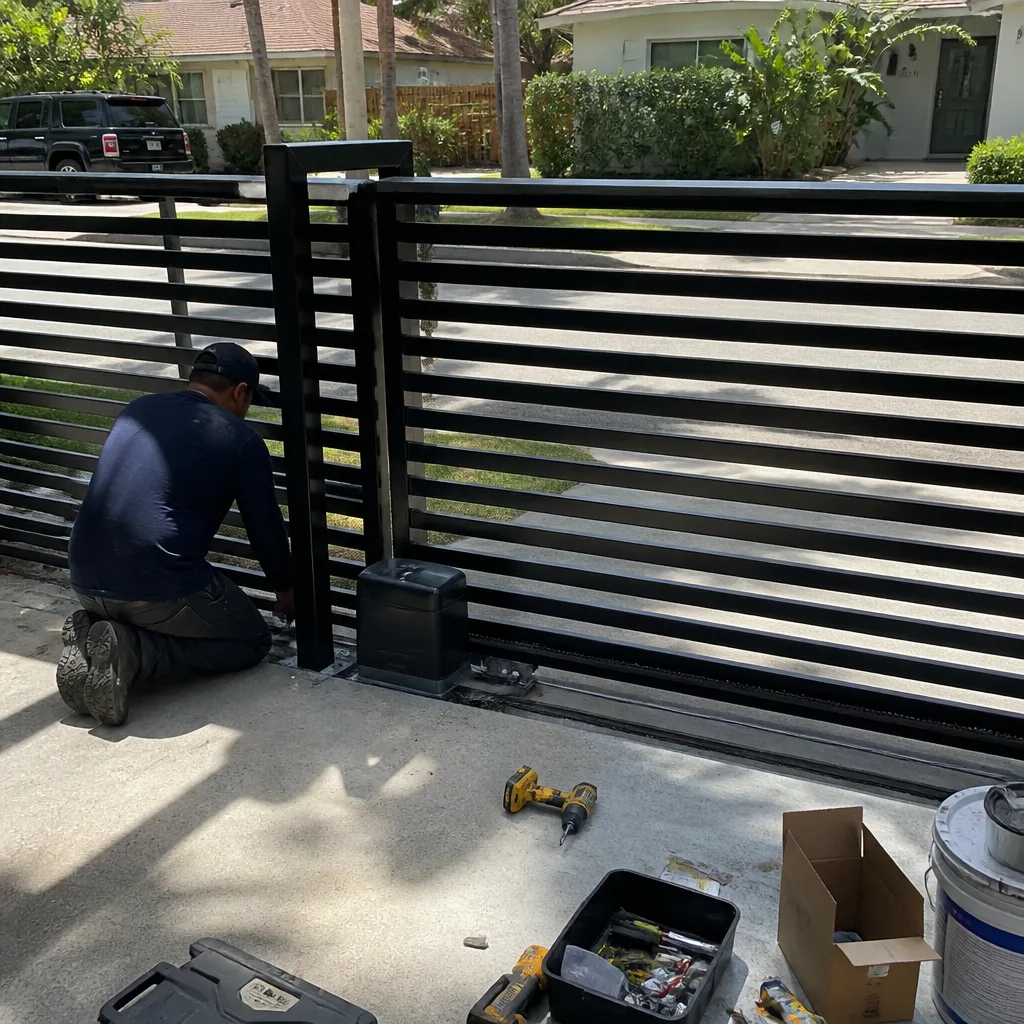 After
AfterDIY vs Professional Gate Repair: The North Miami Beach Homeowner’s Decision Guide
A homeowner who replaces their own gate wheel bearings has done nothing legally or technically wrong. A homeowner who replaces their own 120V control board transformer in Florida may have. The difference between those two tasks is not always obvious from the outside of the board, and the stakes do not reveal themselves until something fails. This guide draws those boundaries factually, task by task, so you can decide based on actual stakes rather than YouTube confidence. If you own a driveway gate in North Miami Beach, you’ll learn which repairs are safe to attempt, which ones carry legal exposure, and where the warranty line actually sits. For professional help, explore our Gate Repair services.
Quick Answer
Most mechanical gate repairs in North Miami Beach, like replacing wheels, greasing hinges, or tightening hardware, are homeowner-safe. Any repair touching line-voltage wiring, control boards, or gate motor capacitors in Florida requires a licensed electrical contractor, and many manufacturer warranties void the moment a non-qualified person opens the motor housing. The honest break-even point is this: if the repair requires accessing the electrical compartment, the DIY route usually costs more than professional service once re-repair risk and parts markup enter the calculation.
Table of Contents
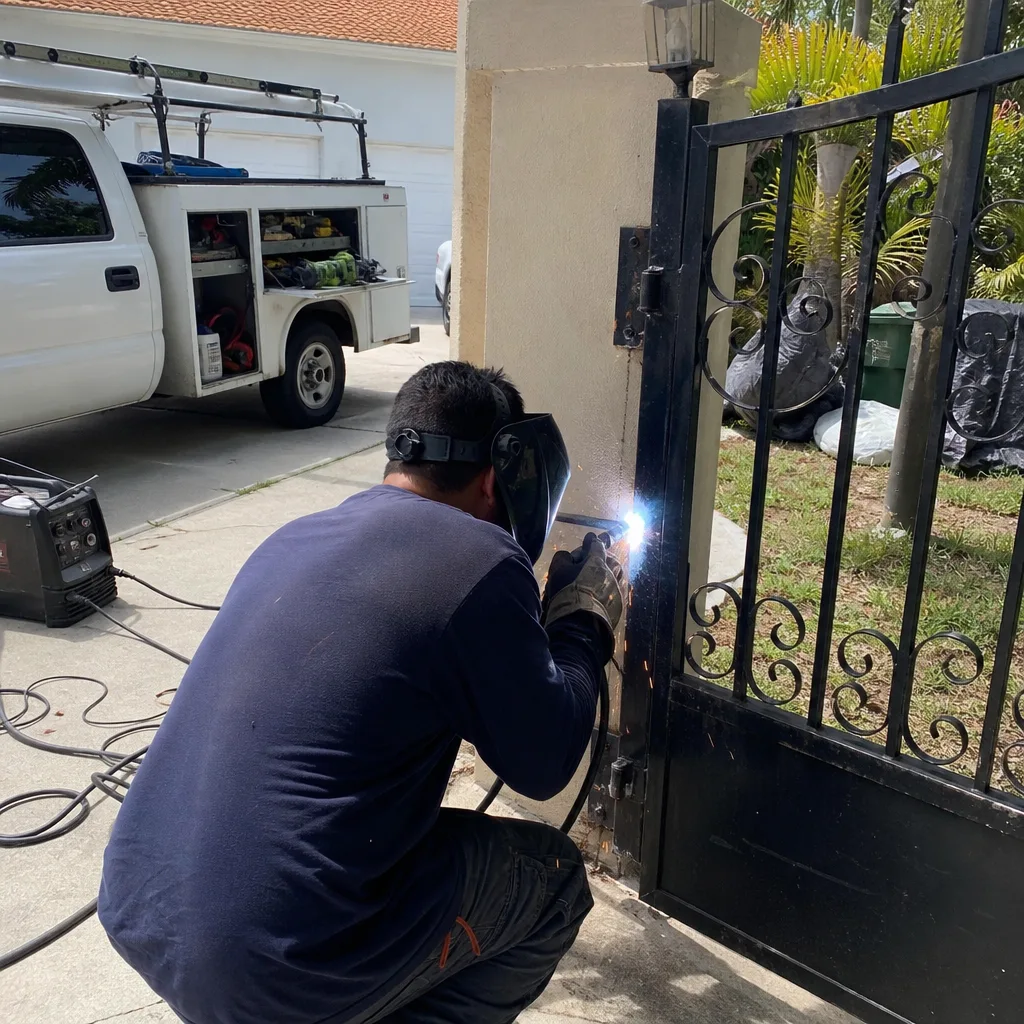
- What Florida Law Actually Says About DIY Gate Repair
- The Task-by-Task Breakdown: Safe, Grey Zone, and Licensed
- The Three Warranty Clauses DIY Gate Work Most Often Voids
- What a Professional Carries That Changes the Outcome
- Your Pre-Visit Documentation Protocol: Photos, Symptom Log, Video
- The Financial Break-Even Point: When DIY Costs More
- Why North Miami Beach Conditions Matter for Gate Repair
 Before
 After
AfterWhat Florida Law Actually Says About DIY Gate Repair
Florida Statute 489.103 defines electrical contracting as work involving “electrical conductors, fixtures, devices, and systems.” A gate control board wired to 120V or 240V falls squarely under that definition. The moment you open the motor housing and touch anything past the low-voltage terminal strip, you are performing work that legally requires a licensed electrical contractor in Florida. This is not a technicality. Homeowner insurance policies in the state routinely deny claims where unlicensed electrical work is found to have contributed to a fire or equipment failure.
On the mechanical side, the picture is different. Replacing a wheel, greasing a hinge, adjusting a chain, or tightening mounting hardware does not require a license. Florida property owners are permitted to perform basic maintenance and non-electrical repairs on their own residences. The line sits precisely at the point where the work begins to involve conductors carrying line voltage.
The grey zone matters more than most homeowners expect. A low-voltage photo-eye sensor, the infrared beam that stops the gate if something crosses the path, is technically below the licensing threshold in most installations. But the sensor feeds into a control board, and troubleshooting why the board is not reading the sensor often means metering live terminals inside the electrical compartment. That crosses the line. In our experience across North Miami Beach, the most common self-repair that goes wrong is exactly this: a homeowner starts with a misaligned photo-eye, ends up inside the motor housing, and then the manufacturer warranty is gone.
Key takeaways on Florida law:
- Mechanical adjustments, lubrication, and hardware replacement: homeowner-safe.
- Anything requiring access to line-voltage wiring, control boards, or motor internals: licensed contractor required.
- Low-voltage components sit in a grey zone, but troubleshooting them often leads into the licensed territory within minutes.
The Task-by-Task Breakdown: Safe, Grey Zone, and Licensed
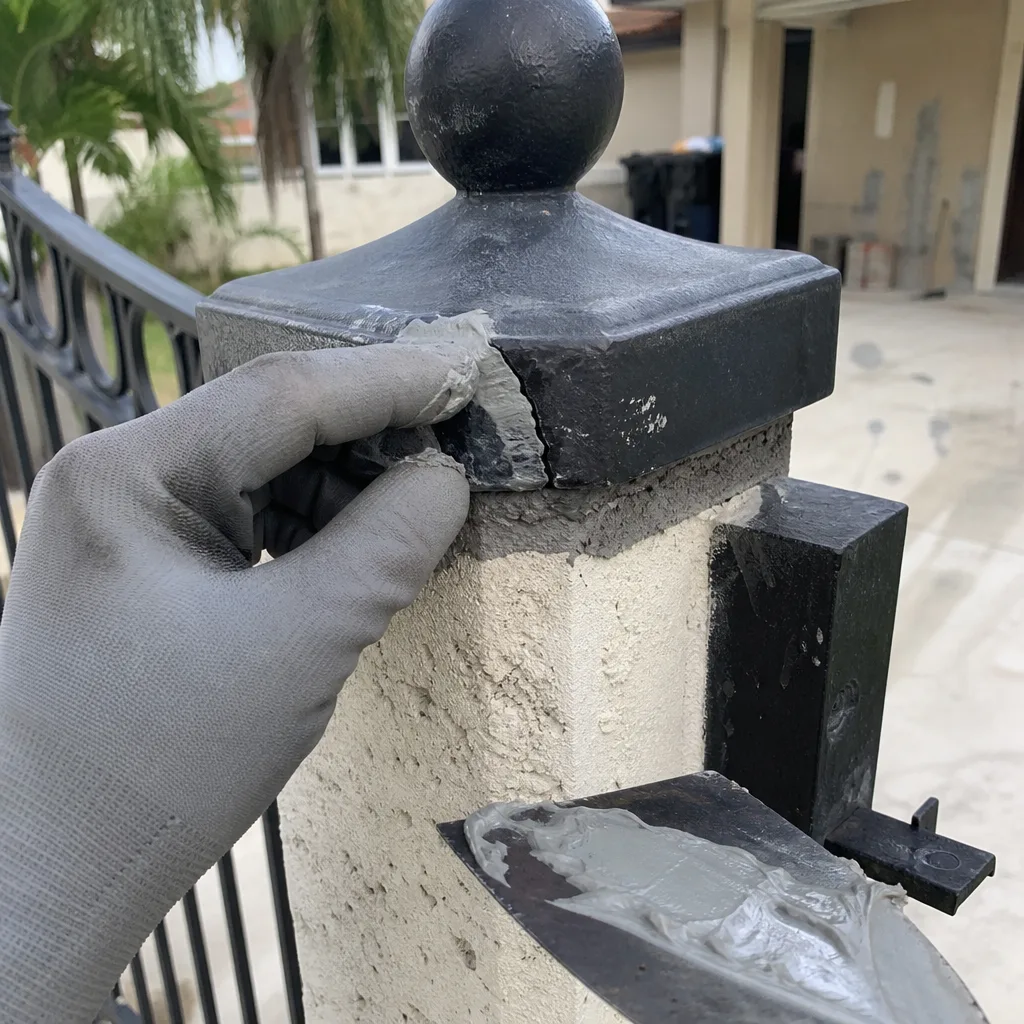
This breakdown is based on the gate systems we service daily across North Miami Beach, including motors from DoorKing, Elite, Mighty Mule, and LiftMaster. For a detailed cost analysis, see our Gate Repair Cost Breakdown: The North Miami Beach Homeowner’s Reference for 2026. The categories are drawn from Florida licensing law, manufacturer warranty language, and observed outcomes from eleven years of field repair records.
Homeowner-Safe Tasks (No License Required)
- Wheel and roller replacement on sliding gates. The bearings wear out every three to six years in Miami-Dade’s humidity and salt air. The work is mechanical, accessible, and inexpensive to correct if done wrong.
- Hinge lubrication on swing gates using a lithium-based grease. Simply do not use WD-40; it washes out in rain and accelerates wear.
- Track cleaning and debris removal. Sand from North Miami Beach roadways migrates into gate tracks constantly. A stiff brush and a shop vacuum handle this.
- Tightening rack bolts, hinge bolts, and mounting hardware with a torque wrench set to manufacturer specs.
- Visual inspection and photographic documentation. This is free, zero-risk, and reduces diagnostic time if you later call a professional.
Grey Zone Tasks (Require Careful Judgment)
- Photo-eye realignment. The adjustment itself is simple. Diagnosing why the beam is misaligned often requires a meter on the control board terminals, which is licensed territory.
- Chain tension adjustment on sliding gates. Overtightening damages the gearbox; under-tightening causes chain skip. We see both outcomes regularly in North Miami Beach installations.
- Receiver and remote programming. Programming a remote is homeowner-accessible on most LiftMaster and Mighty Mule units. But if programming fails, the next diagnostic step is inside the control board.
- Replacing external safety edges. The rubber strip replacement is straightforward. Wiring the new edge into the board is not.
Licensed Contractor Tasks (Do Not Attempt)
- 120V or 240V transformer replacement inside any control board enclosure. This is the exact scenario from the opening of this guide.
- Motor capacitor replacement. Capacitors store charge even with power disconnected and can deliver a fatal shock if mishandled.
- Control board replacement or reprogramming on any gate operator. DoorKing, Elite, and LiftMaster boards all carry proprietary firmware and require bench testing before installation.
- Rewiring any part of the gate electrical system, including running new conduit from the house to the gate post.
- Repairing a gate that has fallen off its track while under power. If the gate is still connected to the motor when it derails, disconnect power at the breaker and leave the rest to a licensed professional.
A safety note that should not need saying but does: gate springs, particularly on older one-piece tilt gates and cantilever systems, are under constant tension. A spring that releases during disassembly can cause serious injury. Never remove a spring, chain, or rack gear from a gate that is still attached to the operator. Disconnect power at the breaker first, and if the spring shows rust or cracking, stop and call a professional.
The Three Warranty Clauses DIY Gate Work Most Often Voids
Every major gate automation manufacturer writes warranty exclusion language that quietly transfers risk to the owner the moment a non-qualified person touches the unit. These clauses are not hidden, but they are easy to skip when you are reading a manual on a Saturday morning. Here are the three most common ones, with the language to look for in your own documentation.
Clause 1: Unauthorized Service Exclusion. Most warranties state that any service performed by a party other than a “qualified service professional” voids the warranty for the affected component and anything downstream. The key word is qualified. A homeowner who is competent with a multimeter is not “qualified” in the warranty sense unless they hold the required licensing. We have seen DoorKing and Elite warranty claims denied on exactly this basis in North Miami Beach.
Clause 2: Tamper Evidence Voidance. Many modern operators, including recent LiftMaster models, include tamper-evident screws or seals on the motor housing. If the seal is broken, the manufacturer presumes unauthorized work occurred and the warranty claim becomes an uphill fight. The seal is not there to punish you; it is there because the manufacturer cannot verify what happened inside the housing once it has been opened.
Clause 3: Installation Error Transfer. Some warranties cover parts but explicitly exclude labor when equipment fails due to “improper installation, adjustment, or maintenance.” If a Mighty Mule operator burns out its gearbox because a homeowner overtightened the chain and added load to the motor, the gearbox replacement is on the homeowner, not the manufacturer. This clause matters because the failure may not occur until months after the DIY adjustment.
What to look for in your gate documentation:
- Find the warranty section in your operator manual. It is usually within the first twenty pages or the last ten.
- Look for the phrase “unauthorized service” or “unauthorized modification.”
- Check if there is a tamper-evident seal description or a “this seal indicates warranty status” note.
- Review the “exclusions” list for language about installation quality and qualified service providers.
- If the gate was installed by a previous homeowner, request the installation records from the manufacturer or the installer. In many cases, the warranty transferred with the property, but only if the installation was registered.
The honest framing is not “never touch your gate.” The honest framing is “know what you give up when you do.” If the operator is five years old and the warranty has expired, the calculation changes. If the operator is eighteen months old with three years of coverage remaining, a DIY board repair could cost you more than the board is worth.
What a Professional Carries That Changes the Outcome
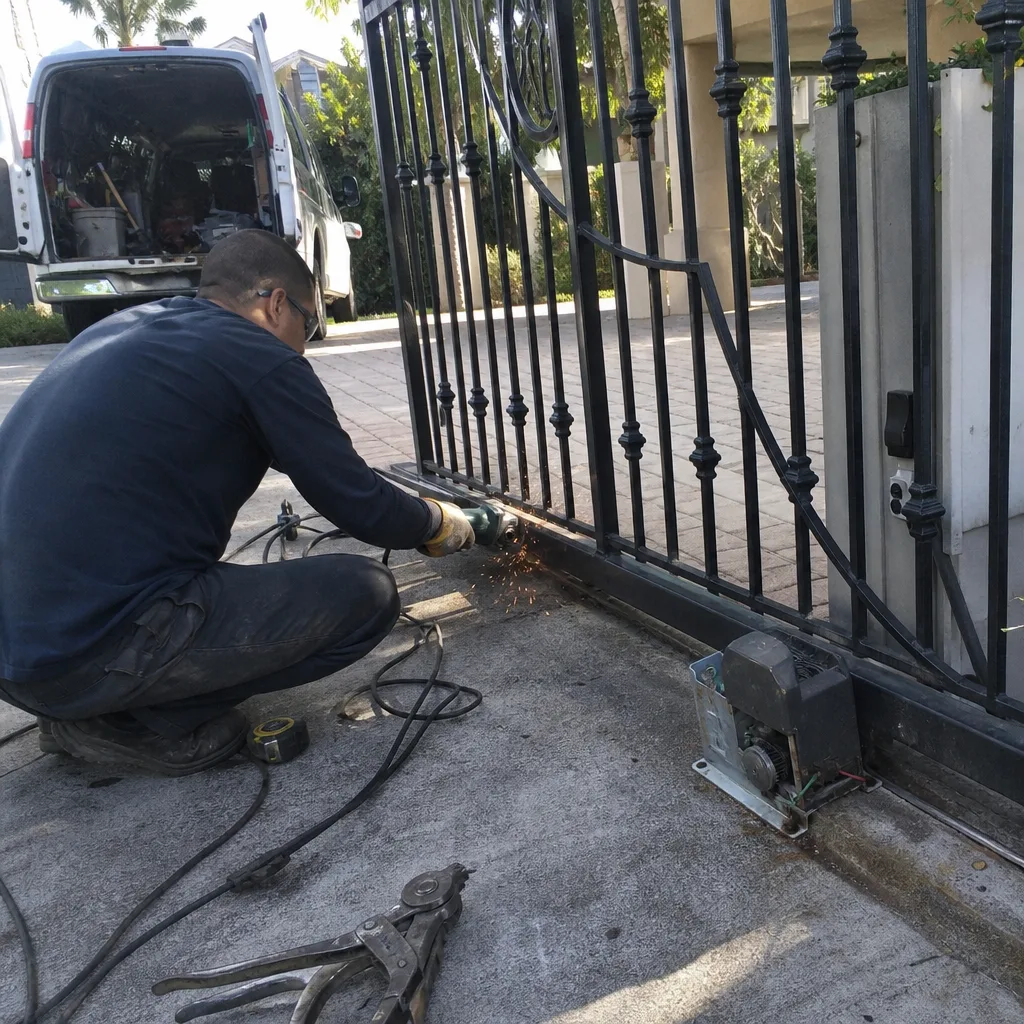
This section is not an argument for hiring a professional. It is a factual inventory of diagnostic equipment that changes what a technician can see, measure, and verify. The point is not that you cannot buy this equipment. The point is that the equipment exists for a reason, and understanding that reason clarifies the true difference between a repair and a fix.
A true RMS multimeter. A basic $30 meter reads voltage. A true RMS meter reads voltage accurately under load, which is what matters when a gate motor is pulling amperage during operation. In North Miami Beach, where power fluctuations from summer storms are common, we use RMS meters to distinguish between a failing motor and a failing power supply. A basic meter cannot make that distinction.
A clamp ammeter. This measures current draw without breaking the circuit. A healthy LiftMaster swing arm draws a specific amperage range under load. A motor with worn bearings or a binding gearbox draws more. The clamp meter identifies the problem before the motor burns out, which means the repair is a bearing replacement rather than a full motor replacement. That is a $400 difference on most units.
Force gauge and sensitivity test equipment. Under UL 325, the federal safety standard for gate operators, every gate must reverse when it encounters a specific amount of force. Testing this properly requires measuring the force at the leading edge of the gate using calibrated equipment. A gate that reverses too late is a safety hazard. A gate that reverses too early will not close reliably. The correct adjustment is a specification, not a feeling.
A bench test setup for control boards. When a board is suspected to be faulty, the proper diagnostic path is to remove it, power it on a bench with a known-good transformer, and test each terminal. This isolates whether the fault is in the board, the wiring, or an external component like a safety edge. On a DoorKing or Elite board with twenty-plus terminals, board-level faults and wiring faults present identically to casual observation. The bench test is what separates a correct diagnosis from a parts-cannon guess.
Thermal imaging and heat detection. A failing relay, a corroded terminal, or a motor bearing running hot shows up instantly on a thermal camera. We use this on every North Miami Beach service visit because the salt air accelerates corrosion in ways that are invisible until the connection fails.
None of this equipment is proprietary. A committed homeowner could acquire all of it for somewhere around $1,800 to $3,000. The question is whether that investment makes sense for one gate, one repair, one time.
Your Pre-Visit Documentation Protocol: Photos, Symptom Log, Video
The single most effective way to reduce the cost of a professional gate repair is to hand the technician a complete symptom record before they arrive. Under The Haven Standard, we document every visit with photos and a written record before we leave. You can do the same thing on the front end, and it genuinely reduces diagnostic time.
Here is the protocol we recommend to every North Miami Beach homeowner who calls with a gate issue:
- Photograph the gate in its failed state. If it will not close, photograph it open. If it closes halfway and reverses, photograph the halfway point. If it is off the track, photograph the point of derailment and any visible wheel damage. Do not stage anything. The failure state is the evidence.
- Photograph the operator unit. Take one wide shot showing the motor and its mounting, one close shot of the model number plate, and one shot of the control board through the access panel if it is already open. Do not open a sealed or tamper-evident compartment just for the photo. The model plate is usually on the outside of the housing.
- Record a thirty-second video of the gate attempting a full open and close cycle. Narrate what you observe: “It starts, moves about two feet, stops, beeps three times.” The audio matters as much as the video because the technician hears what you hear.
- Write a symptom log. Note when the problem first appeared, whether it is intermittent or constant, whether it happens more in rain or humidity, and anything that changed recently: power outages, landscaping work, vehicles striking the gate, hurricane preparation.
- Photograph the remote and keypad. Many issues that look like motor problems are actually transmitter or receiver problems. A photo of the exact remote model saves a step.
- Locate and photograph the breaker that controls the gate. This matters for two reasons: it tells the technician where to kill power, and a tripped or half-tripped breaker is itself a diagnostic clue.
When a homeowner provides this level of documentation, the first visit becomes a repair visit rather than a discovery visit. That meaningfully changes the labor cost and gets the gate working sooner. It also gives the technician a baseline. If a photo shows a misaligned chain and the technician finds the chain tensioned correctly on arrival, that difference is information.
The Financial Break-Even Point: When DIY Costs More
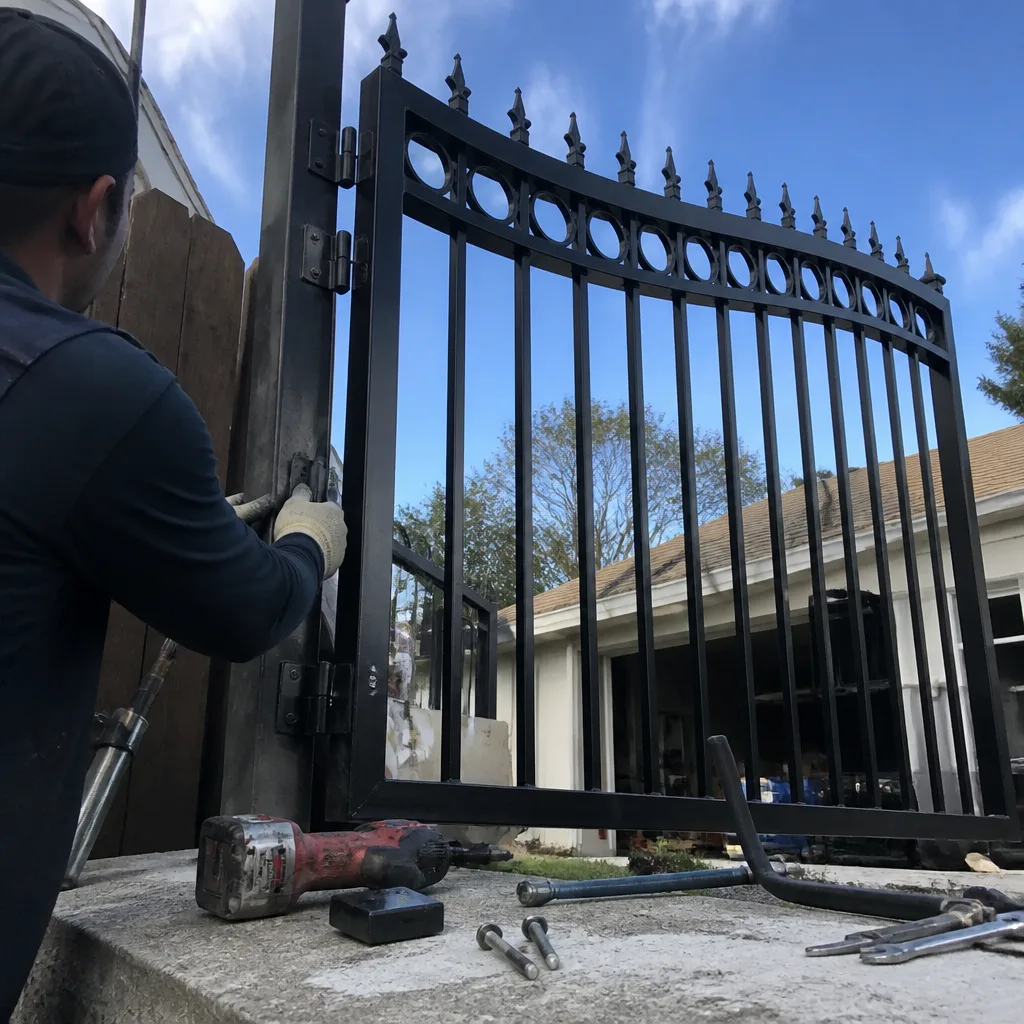
The financial argument for DIY gate repair usually assumes the repair works the first time, requires no specialty parts, and does not void a warranty. The financial argument against DIY includes the cost of re-repair when the first attempt fails, the parts markup that homeowners pay at retail versus what a gate company pays at trade rates, and the time spent diagnosing a problem without the right tools.
Here is a line-item comparison for a typical North Miami Beach swing gate motor replacement, the most common major repair we see:
- Professional path: Diagnosis cost is included in the service call. Motor cost is wholesale plus a standard margin. Labor is quoted in writing before work starts. Total: typically $850 to $1,400 depending on the motor brand and whether the arm bracket is intact.
- DIY path: Retail motor cost is typically 20 to 30 percent higher than trade pricing. If the diagnosis is wrong and the motor is not the fault, the homeowner has purchased a motor they did not need. The original fault remains. Most retailers will not accept returns on electrical components that have been installed or powered. Total: motor cost plus failed-repair cost plus eventual professional repair.
The break-even point is not a dollar figure. It is a probability calculation. If the probability of correctly diagnosing the fault on your own is high, and the repair is mechanical, and the system is out of warranty, DIY wins. If any of those conditions are false, professional service wins. For electrical faults, the probability of correct self-diagnosis without a bench test is low enough that the expected value calculation favors calling a licensed contractor every time.
The honest arithmetic includes one more factor: re-repair risk. A wheel replaced incorrectly wears out again in months. A hinge greased with the wrong product fails again in a season. A chain over-tightened destroys a gearbox and turns a $150 adjustment into a $900 operator replacement. These are not hypotheticals. They are the calls we receive after the DIY attempt, and they are systematically more expensive than the original repair would have been.
Why North Miami Beach Conditions Matter for Gate Repair
Gate repair in North Miami Beach is not the same job as gate repair in Phoenix or Denver. The environment changes what fails, how fast it fails, and what the repair needs to account for.
Salt air corrosion. Properties within two miles of the coast, which includes most of North Miami Beach, experience accelerated corrosion on every metal surface. Steel gate frames corrode at the welds. Aluminum hinges develop oxide buildup that binds the pivot. Copper wiring in unsealed conduits corrodes at the terminations. The most common failure we see in North Miami Beach that inland gate companies rarely encounter is corroded terminal blocks on gate control boards, a problem directly attributable to salt air.
Hurricane season wind loads. Every gate installed in North Miami Beach needs to withstand sustained wind loads that inland gates never face. A gate that was installed without hurricane-rated hinges or a proper wind-lock system will twist or bind during storm season. This is not a repair issue as much as an installation-spec issue, and it is why the gate installation conversation in this market starts with the rated wind zone.
Humidity and electronics. Condensation inside motor housings is a constant problem in Miami-Dade. A control board that stays dry in California will grow corrosion between its pins in a North Miami Beach summer. This is why our documented photo records include the interior of the motor housing: it creates a baseline so we can see whether moisture intrusion is getting worse over time.
Soil and shifting. The sandy soil under many North Miami Beach neighborhoods shifts with seasonal rain patterns. Gate posts set without adequate concrete mass lean out of plumb, which puts load on the hinges and the operator. A gate that closes slowly and reverses may not have a motor problem at all; it may be fighting a post that moved a quarter inch out of alignment.
These conditions are not arguments against DIY maintenance. Cleaning your track, greasing your hinges, and documenting symptoms are all still homeowner-safe in this climate. The conditions are arguments for understanding that the gate is part of a larger system: the soil under it, the salt in the air, and the wind that hits it from June to November.
Common Mistakes to Avoid
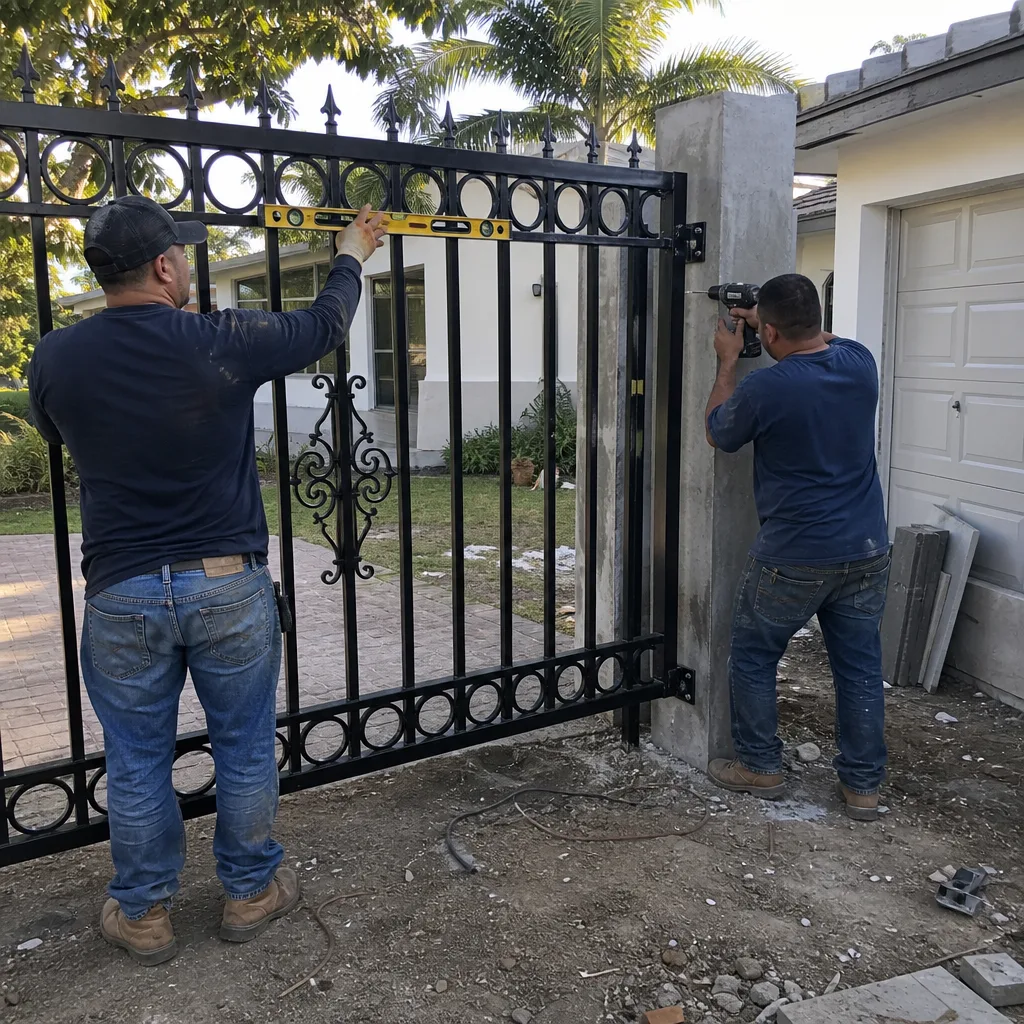
- Using penetrating oil like WD-40 on gate hinges in North Miami Beach. It washes out in rain and leaves the hinge dry within weeks. Use a lithium-based grease or a marine-grade lubricant rated for salt air.
- Overtightening the chain on a sliding gate. The chain should have a specific amount of sag, usually around one inch over ten feet. Tightening it like a guitar string adds load to the gearbox and shortens motor life.
- Opening the motor housing while the unit is still under warranty. If a tamper-evident seal exists, breaking it voids the warranty for everything inside. Photograph the outside, note the model number, and leave the housing closed.
- Replacing the operator before checking the breaker and the photo-eyes. In North Miami Beach, we regularly find tripped GFCIs and misaligned photo-eyes on gates that were condemned as motor failures by the homeowner. Check the cheap things first.
- Buying a replacement part by matching a part number without verifying the model number. DoorKing and Elite both use a range of boards across similar-looking operator models. A one-digit difference in the model number can mean a completely different board.
- Ignoring a gate that reverses halfway for weeks and assuming it will get better. Gate problems do not self-resolve in salt air. A binding gate is loading the motor on every cycle, and the eventual failure is more expensive than the early repair would have been.
- Attempting to adjust a gate spring while the system is connected to power. Even if the operator is switched off at the unit, line voltage is still present on the supply side. Kill the breaker, verify with a meter, and only then touch the mechanical components. If the spring is cracked or rusted, skip the adjustment altogether.
When to Call a Professional
Call a professional when the repair requires opening the electrical compartment, when the gate is off its track under power, when a spring shows visible damage, when the system is under warranty and the repair touches anything electrical, or when you have already attempted a repair and the problem is unchanged. Those five scenarios cover most of the calls we receive in North Miami Beach. If your situation falls outside them, the task-by-task breakdown above gives you a clear path to decide. Vance Gate Repair North Miami Beach offers free estimates in North Miami Beach, and we deliver a written price before any work begins. Call (754) 219-6080 and a live person answers, any hour, any day.
Frequently Asked Questions
Mechanical repairs like wheel replacement, hinge lubrication, and hardware tightening are legal for homeowners in Florida. Electrical work on line-voltage components, including control boards, transformers, and motor capacitors, requires a licensed electrical contractor under Florida Statute 489.103. Low-voltage components like photo-eyes sit in a middle ground, but troubleshooting them often leads into licensed territory.
Yes, in most cases. Manufacturers including DoorKing, LiftMaster, Elite, and Mighty Mule include warranty exclusion language for unauthorized service, tamper-evident seal breakage, and installation error. Check your operator manual for the words “unauthorized service” and “tamper” before you open the motor housing. Call (754) 219-6080 if you want a free second opinion on whether your repair is covered under warranty.
Minor mechanical repairs like wheel replacement or hinge lubrication typically run $95 to $250. Motor replacement on a standard swing gate typically runs $850 to $1,400 including parts and labor. Control board replacement typically runs $350 to $700 depending on the brand. Every quote from Vance Gate Repair North Miami Beach is written and delivered before work starts, with no surprise line items at the end.
In most cases, yes. A live person answers 24 hours a day at (754) 219-6080, and we dispatch technicians across North Miami Beach for same-day service on most repairs. The exception is replacement parts that must be ordered for uncommon operator models; in those cases, you get a written scope and a written price before anything is ordered.
We service nine major automation brands: LiftMaster, FAAC, BFT, Linear, Viking, Ghost Controls, DoorKing, Elite, and Mighty Mule. We are not tied to any single manufacturer, which means we repair the motor already on your property rather than steering you toward a replacement you do not need. For gate motor and opener service in North Miami Beach, our motor service page covers brand-specific details.
Document the failure: photograph the gate in its failed state, photograph the model number plate on the operator, record a thirty-second video of the gate attempting a cycle, and note when the problem started and whether it is intermittent. This reduces diagnostic time and therefore cost. Every Vance Gate Repair North Miami Beach visit leaves you with a written record of what was found, what was set, and what was installed, with photos of every adjustment.
The Bottom Line
The DIY-versus-professional decision is not a question of your competence. It is a question of legal exposure, warranty consequences, and the cost of being wrong. Mechanical maintenance is homeowner-safe and worth learning. Electrical repair is not, and a single mistake inside a control board can void a warranty, expose you to liability, and turn a $300 repair into a $1,400 replacement. In North Miami Beach, the salt air, humidity, and storm-season wind add environmental complexity to every part of that calculation. Document what you can, stay out of the electrical compartment, and when the job crosses the line, get a written price from a licensed contractor before anyone picks up a tool. For gate repair, gate installation, or gate motor and opener service, our Vance Gate Repair North Miami Beach home page covers everything we do. If you are comparing options, start with our breakdown of Gate Repair in North Miami Beach and our Gate Installation in North Miami Beach pricing, then check the Gate Motor & Opener in North Miami Beach page for brand-specific service details. Call (754) 219-6080 for a free, written estimate.
Written by Adrian Vance, Owner at Vance Gate Repair North Miami Beach, serving North Miami Beach since 2014. Browse more guides & resources on gate repair and maintenance.