
Last updated September 21, 2026
Free on-site gate assessment - hinges, posts, and your LiftMaster or Nice gate operator checked before anything is quoted
The assessment is free and the quote is the invoice.
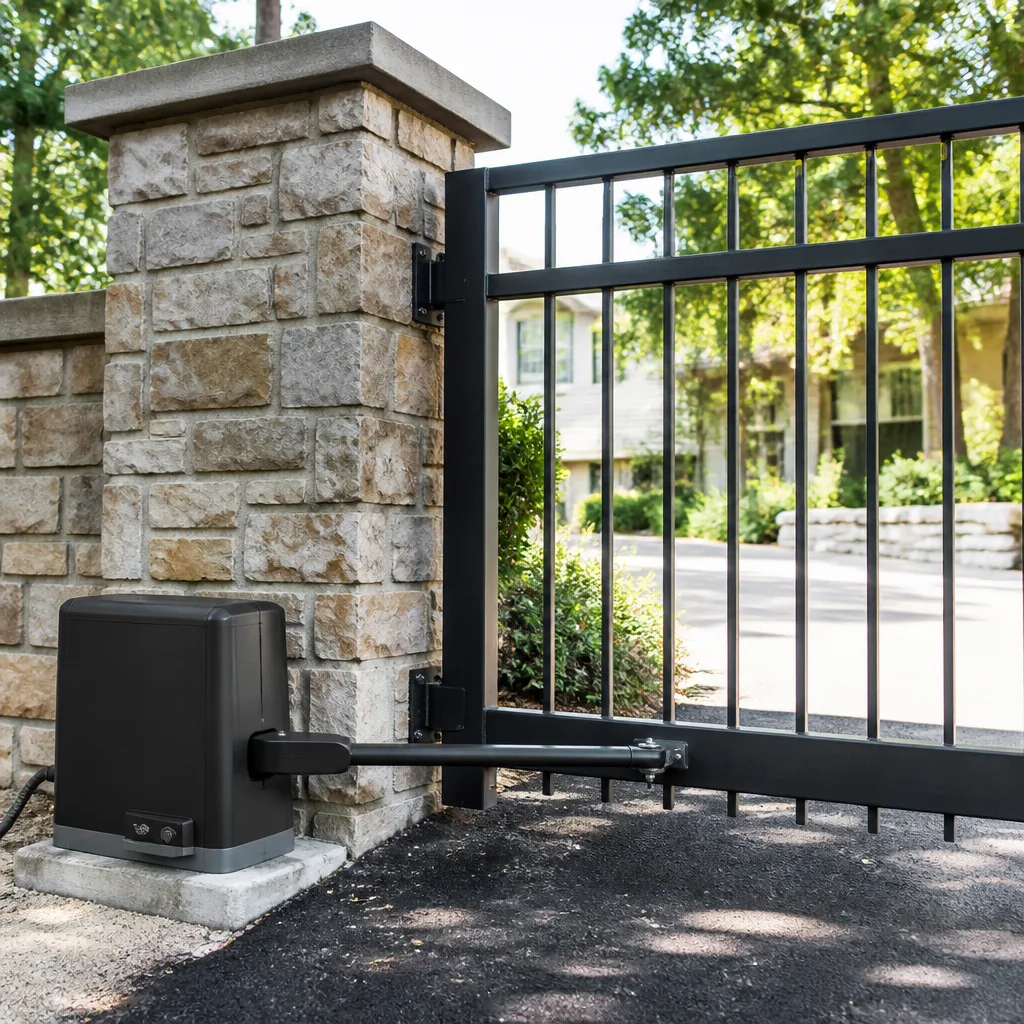
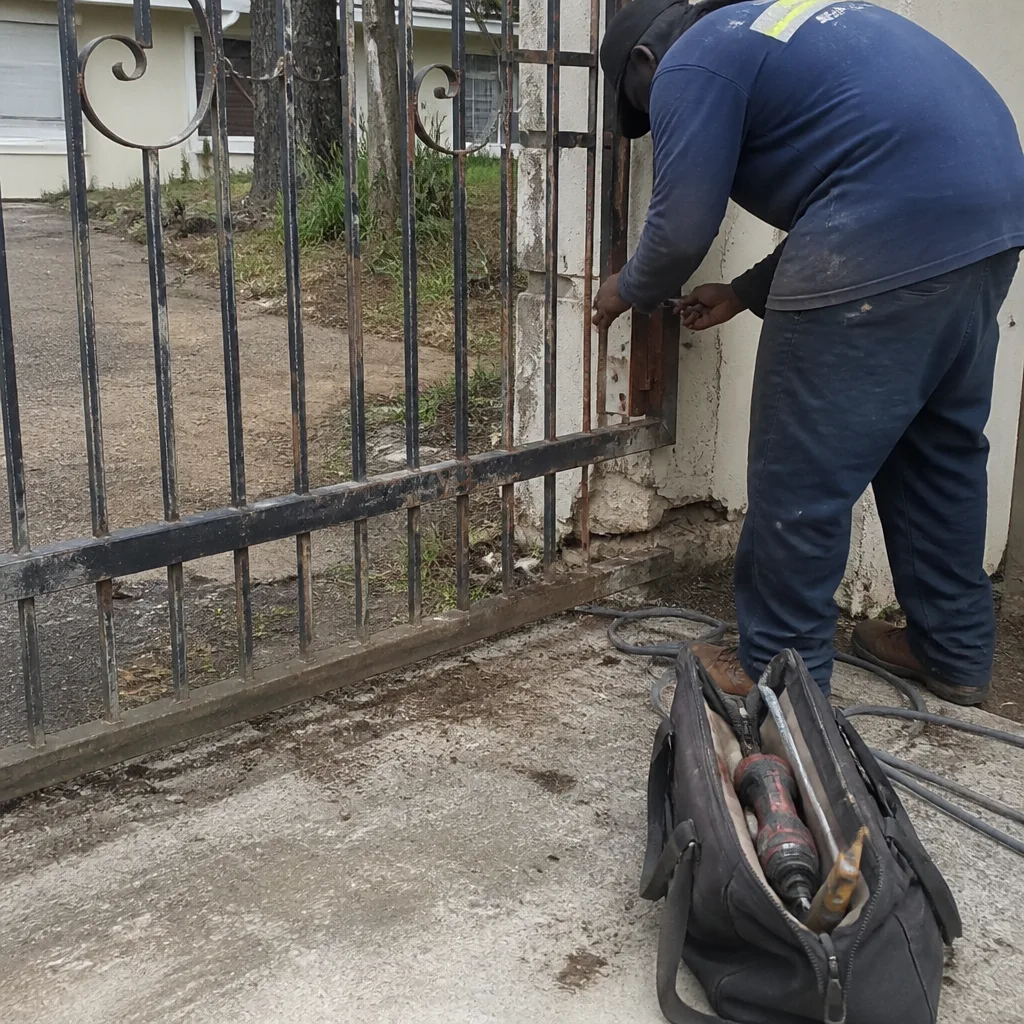 Before
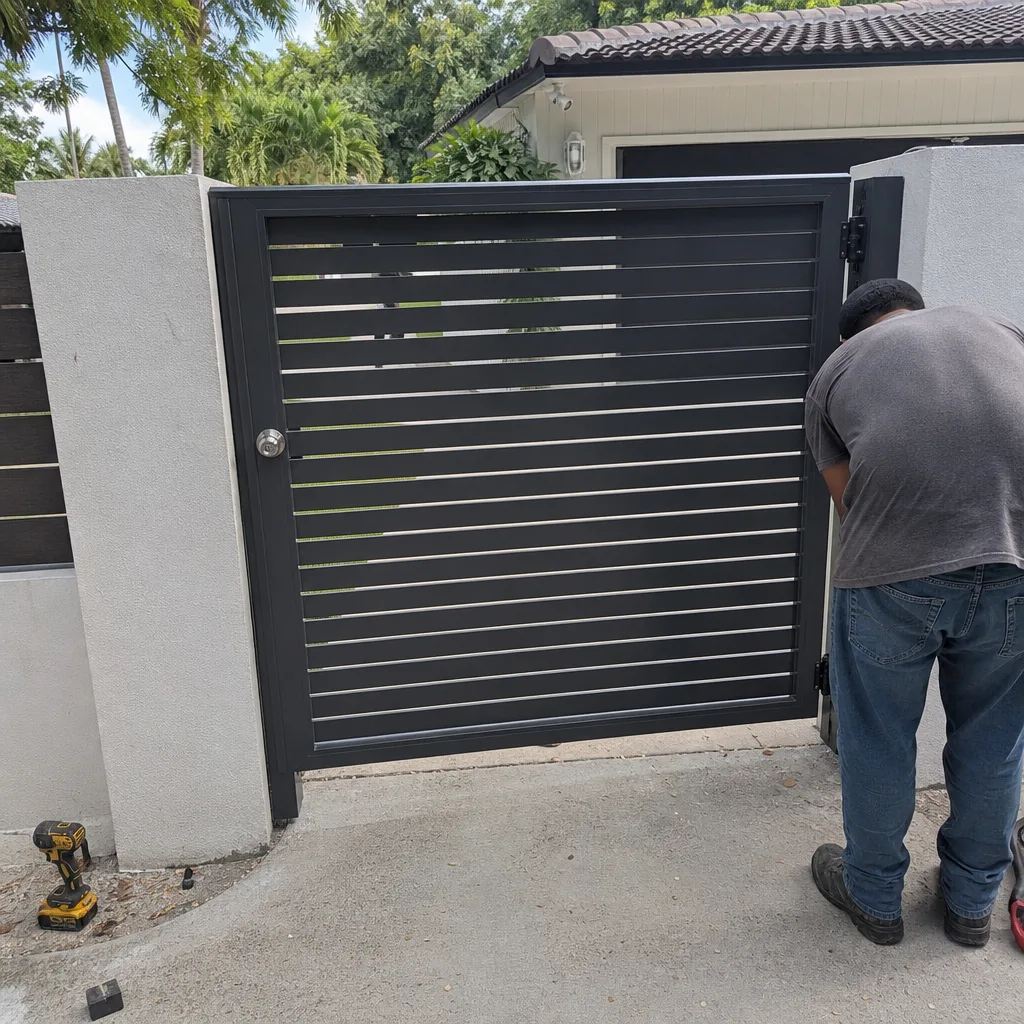 After
After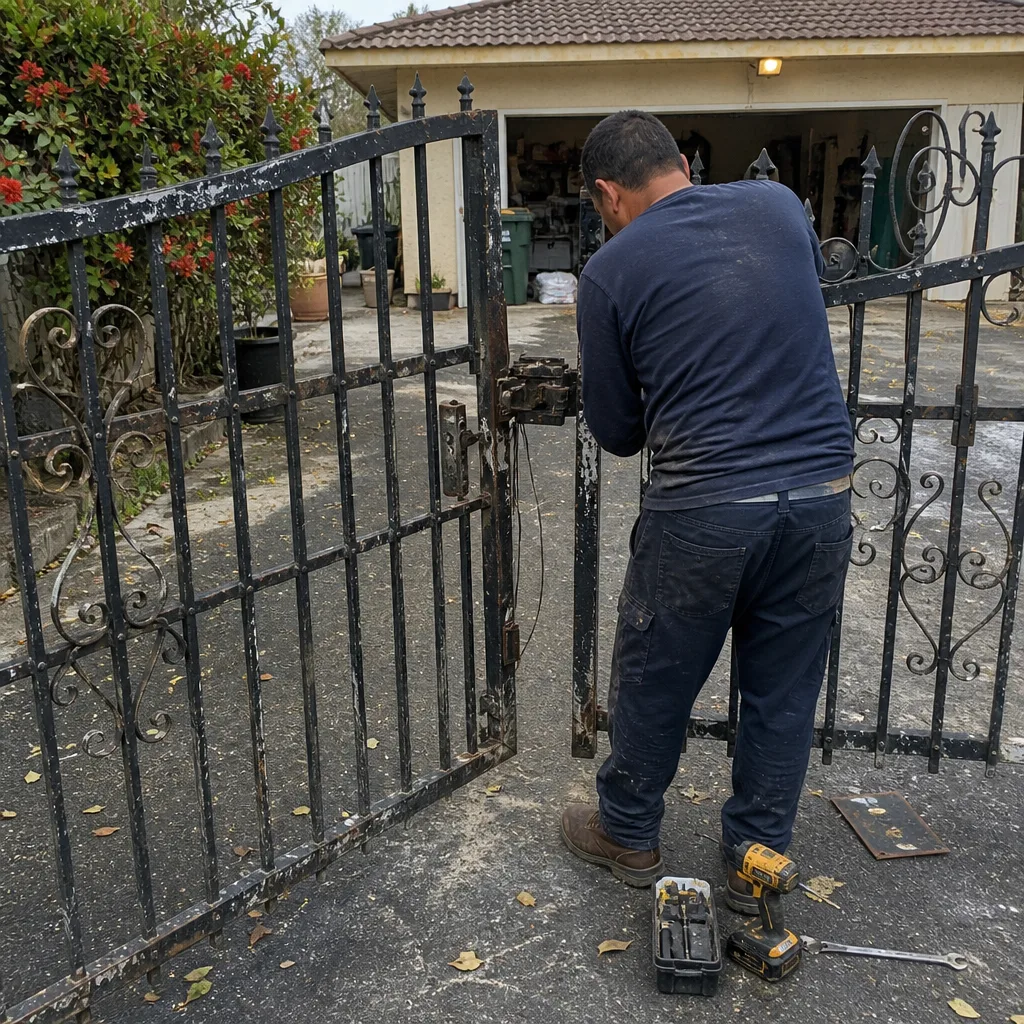 Before
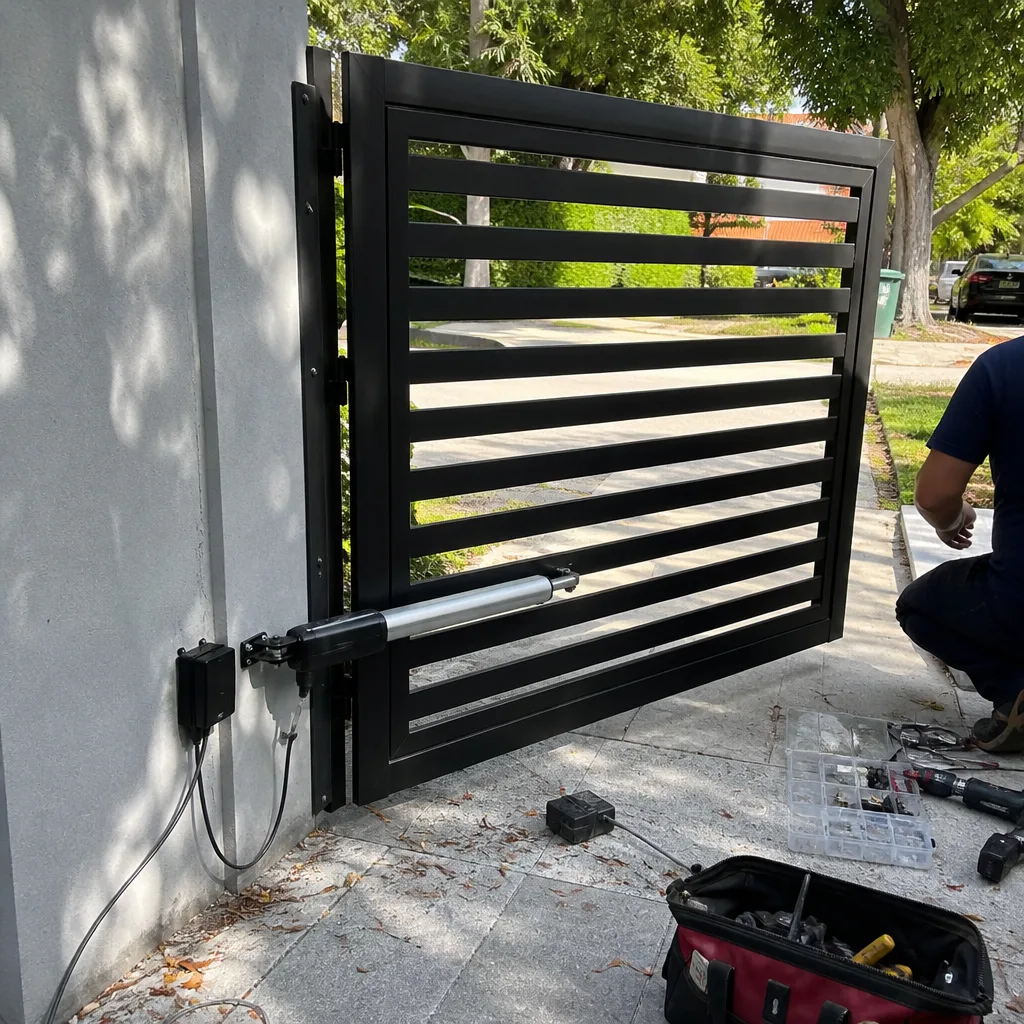 After
After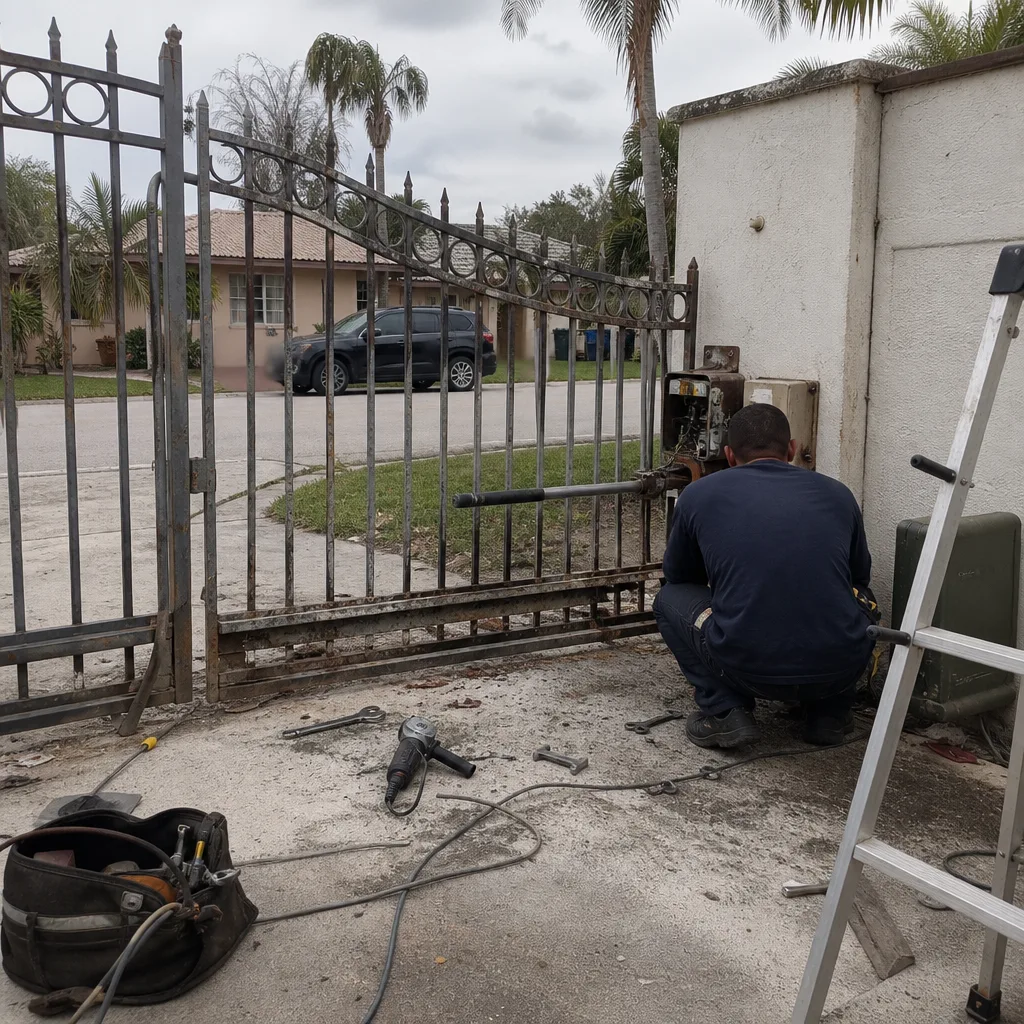 Before
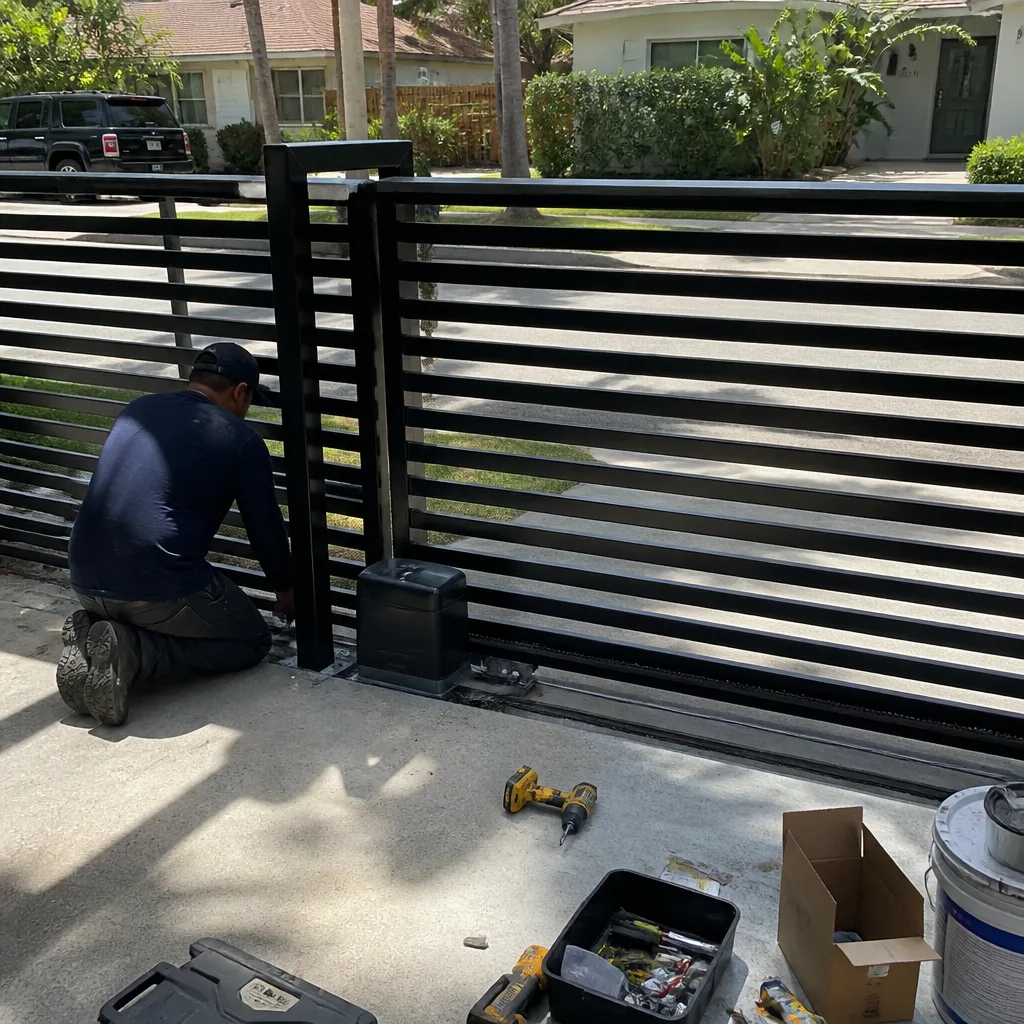 After
AfterGate Repair Warning Signs: A North Miami Beach Homeowner’s Reference Guide
A gate that hesitates for half a second longer than it did six months ago is not “just getting old.” That hesitation is a motor drawing measurably higher amperage because a bearing is beginning to fail or an obstruction is building against the travel path. Both conditions have a documented repair cost that roughly doubles if the motor burns out before anyone addresses the root cause. This guide walks through the warning signs that show up on North Miami Beach gates in the order they typically appear, so you can act on the first signal instead of waiting for the last one. For professional help, see our Gate Repair services. We’ve pulled together what our technicians see on service calls across North Miami Beach weekly: the noises, the stutter-starts, the safety reversals, and the two signs that mean the gate should not be moved until a professional looks at it.
Quick Answer
Most North Miami Beach gate failures announce themselves through one of four early indicators: a change in operating sound, a slower or jerky travel motion, a safety sensor that reverses the gate for no visible reason, or a motor that hums without moving the gate. Each of these maps to a specific component, and most are repairable for a fraction of what a full motor replacement costs if caught in the first few weeks. If you notice grinding combined with visible sag at the hinge side, stop operating the gate and call for an inspection.
Table of Contents
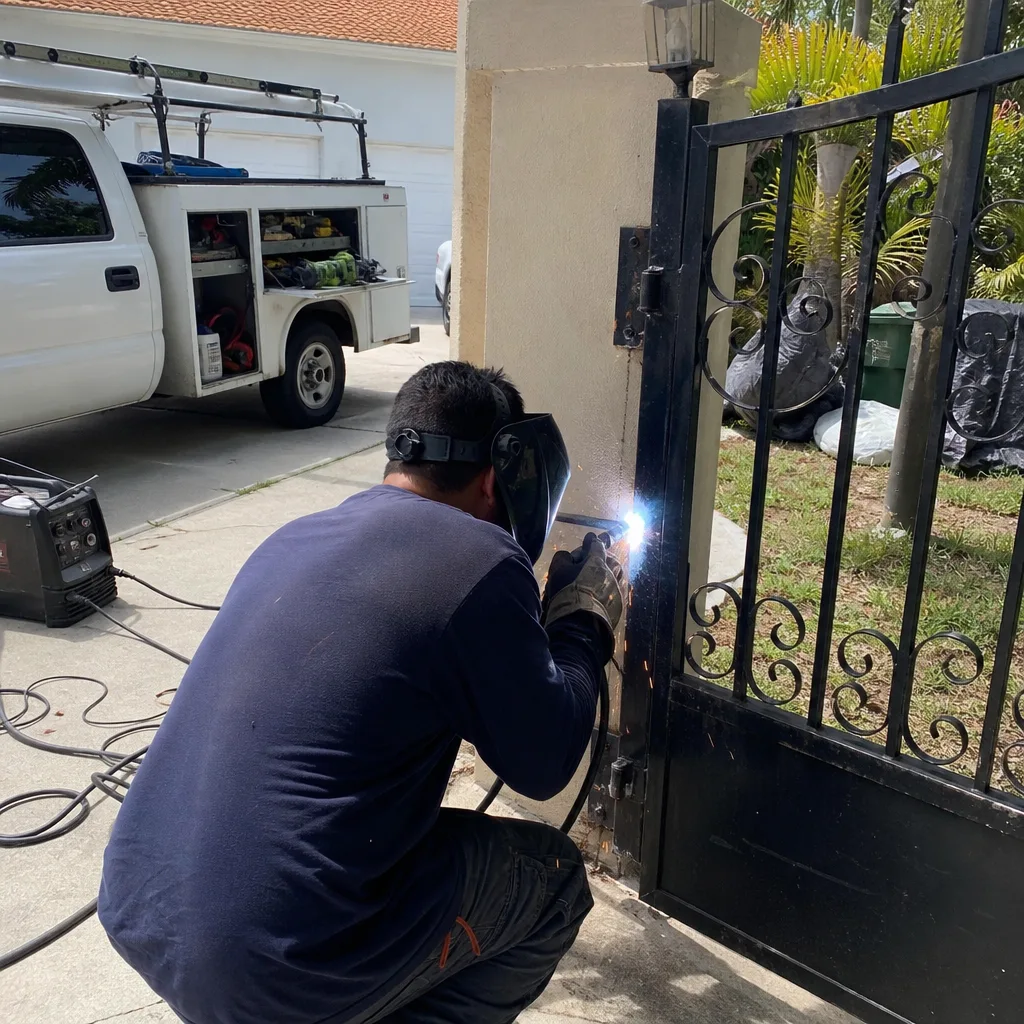
- The Symptom Sequences: How Gate Failures Actually Begin
- What Noise Changes Tell You: Grinding, Clicking, Buzzing, and Hum
- Sensor Problem vs. Limit Switch Problem vs. Obstruction: How to Tell Them Apart From Your Driveway
- Intermittent Failures: Harder to Diagnose, More Urgent to Document
- The Two Warning Signs That Mean Stop Operating the Gate
- How North Miami Beach Climate Accelerates Gate Wear
- Why Written Documentation Matters Before Any Repair Starts
- Common Mistakes to Avoid
- When to Call a Professional
- Frequently Asked Questions
- The Bottom Line
 Before
 After
AfterThe Symptom Sequences: How Gate Failures Actually Begin
Gate failures rarely happen in a single moment. They happen in sequences, and the first symptom in each sequence is almost always misread as something harmless. Here are the four most common failure progressions we see on residential gates in North Miami Beach, laid out in the order the symptoms tend to appear. For year-round maintenance tips, see our Seasonal Gate Repair Care for North Miami Beach: Year-Round Homeowner’s Guide.
Sequence One: The Failing Bearing
- First symptom: A faint, high-pitched squeal or whine while the gate moves. Homeowners typically dismiss this as “the gate settling” or blame it on rain. It is metal-on-metal contact inside a bearing that has lost its grease seal.
- Second symptom: The gate slows noticeably at the same physical point in its travel every time. The bearing is not just dry now; it is worn enough to create resistance.
- Third symptom: The motor housing feels hot to the touch after a full open-close cycle. The motor is compensating for the drag by pulling more current.
- Fourth symptom: The gate stops mid-travel and the motor trips its internal thermal overload. This is the day most people call. By this point, the bearing has usually scored the shaft, and the repair cost has moved from a bearing replacement into motor or gearbox territory.
We’ve replaced bearings on North Miami Beach gates that were caught at symptom one for under $200. We’ve replaced entire motors on gates that reached symptom four for ten times that. The bearing does not care whether you noticed it; the price does.
Sequence Two: The Drifting Limit Switch
- First symptom: The gate opens slightly further than it used to, then bumps the physical stop with a soft thud. Most people barely register this.
- Second symptom: The gate reverses itself after opening fully and travels back a few inches before stopping. This happens because the limit switch is no longer telling the control board the gate has arrived; the board is guessing based on travel time.
- Third symptom: The gate slams hard into the open stop, or the close-stop, repeatedly. The motor is overshooting because the limit reference has drifted entirely.
- Fourth symptom: The control board faults out or the gearbox strips from repeated impact. At this point, the limit switch repair is no longer the only line item on the invoice.
The frustrating part: a limit switch adjustment on most North Miami Beach residential gates is a 20-minute fix with a documented setting change. In our service record, the average limit-switch repair call where the gate is still moving costs between $95 and $180. The average gearbox replacement after a month of slamming costs between $400 and $700. The sequence matters.
Sequence Three: The Photo-Eye Misalignment
- First symptom: The gate reverses once every ten or fifteen cycles for no apparent reason. The photo-eye, the infrared beam that stops the gate if something crosses the path, is marginally out of alignment. It only loses the beam intermittently.
- Second symptom: The gate reverses more often, and you start noticing it happens on windy days. The wind is flexing the gate frame slightly, which moves the photo-eye enough to break the beam.
- Third symptom: The gate will not close at all unless you hold the close button in override mode. The beam is now permanently broken or the photo-eye has failed.
Misalignment gets fixed with a realignment and a photo log showing the new beam path. A failed photo-eye gets replaced, typically $85 to $160 for the part plus the service call, depending on brand. The symptom sequence is easy to misread because reversing looks like a “safety problem” when it is often just a mounting bracket that loosened a quarter turn over two years of heat cycling.
Sequence Four: The Dying Capacitor
- First symptom: The gate hums for half a second before it starts moving. That hum is the motor struggling to start because the start capacitor is degrading.
- Second symptom: The gate moves noticeably slower on cold mornings. Capacitors lose effectiveness in cooler temperatures, and North Miami Beach’s winter mornings, while mild by northern standards, are enough to expose a weak capacitor.
- Third symptom: The gate hums and does not move at all. The capacitor has failed completely. If the control board does not have an overload protection circuit, the motor windings can overheat quickly.
A capacitor replacement is one of the cheapest repairs in gate automation, often between $65 and $140 installed. A motor replacement after repeated hum-without-start events is not. This is the sequence that makes us push hardest for early calls: the cost curve is almost vertical at the end.
What Noise Changes Tell You: Grinding, Clicking, Buzzing, and Hum
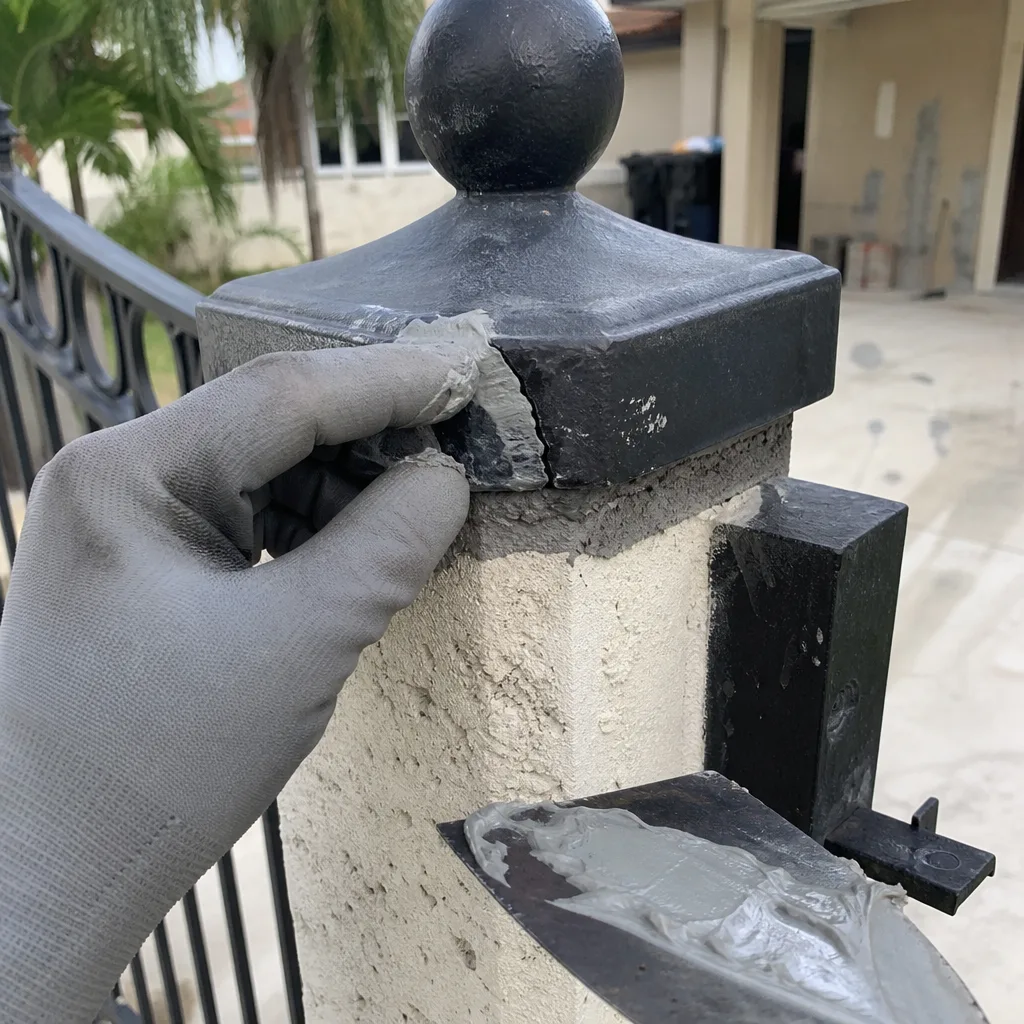
Every component on a gate system produces a characteristic sound when it begins to fail. Learning the four most common noises, and what each one points to, turns you into a much harder customer to misdiagnose. Here is what we listen for on every service call in North Miami Beach.
Grinding
Grinding is metal against metal under load. On a sliding gate, it usually means the track wheels or rollers have worn flat spots or the track itself has accumulated sand and shell debris from North Miami Beach driveways. On a swing gate, grinding points to the hinge bearings, particularly the lower hinge, which carries more weight and gets more salt-air exposure. Grinding never resolves itself. It only gets louder and more expensive.
Clicking
A rapid clicking sound when the gate tries to start usually means the control board relay is engaging but the motor is not receiving enough current to turn. That points to a failing capacitor, a corroded connection, or a partially broken wire inside the conduit. A single loud click when the gate stops is often the limit switch actuating, which is normal on some FAAC and BFT models. The difference is rhythm: repeated rapid clicks are an electrical delivery problem. One defined click at the end of travel is a switch doing its job.
Buzzing
A loud 60-cycle buzz, the kind that sounds like a transformer fighting for its life, means the motor is receiving power but cannot turn. On a swing gate opener with a mechanical arm, this is often an internal gear key that has sheared. On a sliding gate operator, it can mean the drive chain jumped off the sprocket. The buzz is the motor telling you it is healthy enough to try; the mechanical linkage is what failed. Do not keep pressing the button, because a stalled motor draws locked-rotor current and will burn its windings in under a minute of repeated attempts.
Intermittent Hum
A soft hum that comes and goes without the gate moving is the classic dying-capacitor signature. It is also the easiest to ignore because it is not loud. The hum lasts a few seconds, stops when the thermal overload opens, and resets itself. Homeowners in North Miami Beach often report they “heard something a few times last week but it started working again.” The capacitor is not healing. It is failing in stages, and one of those stages is the last one.
If you can record the sound on your phone, do it. A ten-second video with the gate making the noise gives a technician more diagnostic information than a verbal description ever will. We listen to these recordings on every diagnostic call, and they shorten the time-to-diagnosis meaningfully. Gate Motor & Opener in North Miami Beach covers the full range of motor-level repairs we perform.
Sensor Problem vs. Limit Switch Problem vs. Obstruction: How to Tell Them Apart From Your Driveway
Three different failures produce the same visible symptom: a gate that reverses or stops at the wrong place. The fix for each is different, ranging from a $0 five-minute obstruction check to a component replacement. Here is how to separate them using only what you can see from your driveway.
The Obstruction Test
Walk the full length of the gate track or swing path. Look for anything that has grown, shifted, or accumulated: palm fronds, sand, landscaping stone that migrated, a bicycle leaned against the fence line, a paver that heaved upward after rain. North Miami Beach landscaping grows fast, and a philodendron that was clear of the track in March can be interfering by June. Remove the obstruction and cycle the gate. If the problem disappears, you have a $0 fix.
The Photo-Eye Test
Photo-eyes are the two small boxes mounted near the gate opening on either side of the drive, usually at ankle height. One sends an infrared beam and one receives it. Most have a small LED indicator: steady green or red means aligned and receiving. Blinking or dark means the beam is broken. If the gate reverses but the photo-eye indicator is blinking, you have an alignment or wiring problem, not a logic problem. The gate is doing exactly what it should do with a broken beam; it is refusing to close because it believes something is in the path.
Some Linear and Viking models flash a specific blink count that corresponds to a diagnostic code. The count is in the manual, and it is worth knowing because it tells you whether the eye is misaligned, blocked, or has a bad wire, which are three different repairs.
The Limit Switch Test
Limit switches tell the control board where the gate is in its travel. On most North Miami Beach residential gates, they are small mechanical or magnetic switches mounted inside the operator housing or on the gate track. If the gate reverses at a random point every time, or slams into the stop at full speed, and the photo-eye LED is steady, the problem is almost always the limit switch or its associated wiring. A gate that overshoots the stop by a consistent amount every cycle is a limit switch that has drifted, not a photo-eye issue. A gate that reverses at a different point every cycle, with a steady photo-eye light, is a limit switch failing intermittently or a control board losing its position reference.
The key distinction: photo-eye problems are about refusing to move through an open path. Limit switch problems are about not knowing where the path ends. Obstruction problems are about something physically in the way. Three different fixes. Three different prices.
Intermittent Failures: Harder to Diagnose, More Urgent to Document
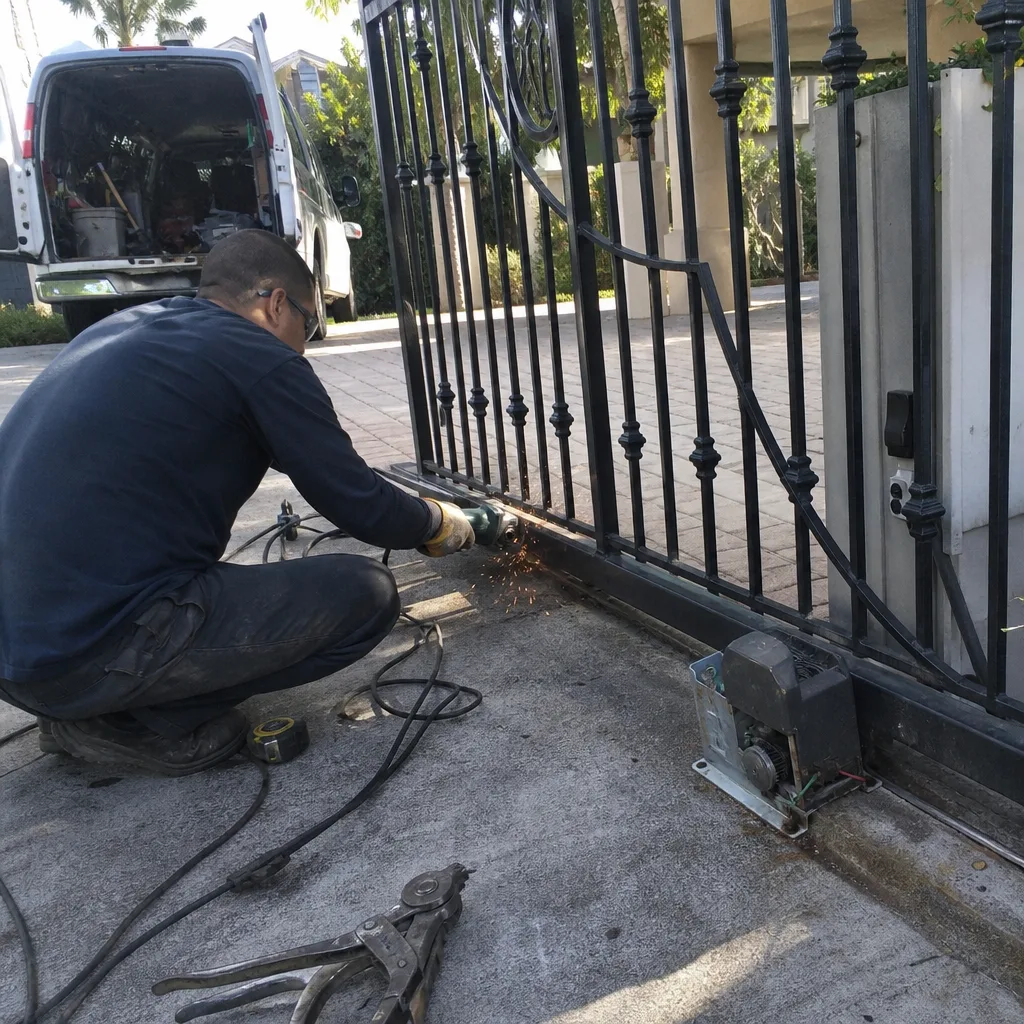
Intermittent failures are the hardest problem in gate repair because they refuse to happen while a technician is standing there. A gate that works perfectly for nine hours then reverses three times in ten minutes is a gate that will work perfectly during a one-hour service window. This is why documentation matters more for intermittent problems than for anything else.
Why Intermittent Failures Get Worse
Intermittent electrical faults are almost always caused by a connection that fails under specific conditions: heat expanding a cracked solder joint, humidity bridging a corroded terminal, vibration shaking a loose wire. Each cycle of failure and recovery makes the underlying condition worse. The crack grows, the corrosion spreads, the wire backs further out. What was an intermittent fault in January becomes a permanent fault by August. The repair cost does not change much between those two moments, but a permanent fault is easier to find. The problem is that most people wait until the permanent failure, which means they risk the motor or board damage that comes with uncontrolled fault cycles.
How to Capture Intermittent Failures on Video
- Record the whole sequence. Start the video before you press the button, keep it running through the failure, and include the gate’s full travel path. Ten seconds of the gate stalling is okay; thirty seconds that shows the start, the stall, and the recovery is better.
- Narrate what you did. Say out loud: “I pressed the opener at 7:15, the gate moved two feet, stopped, hummed for three seconds, then reversed.” The narration establishes the timeline and the sequence, which matters more than the picture quality.
- Film the LED indicators after the failure. Walk to the photo-eyes and the operator and record the blink patterns. The post-failure LED state is often more diagnostic than the failure itself.
- Note the conditions. Rain the night before, a hot afternoon, a windy morning, the gate in direct sun versus shade. North Miami Beach humidity and salt air are ambient conditions that contribute to intermittent connection failures, and they matter to the diagnosis.
- Send the video before the service visit. A technician who watches the failure before arriving will bring the right parts. A technician who discovers the failure on site may need a return trip.
We ask every North Miami Beach customer with an intermittent issue to send video. Under the evidence standard we work by, a customer-recorded video of a real failure is the closest thing to having a technician on site when it happened.
The Two Warning Signs That Mean Stop Operating the Gate
Most gate problems can be lived with for a few days while you schedule a repair. Two combinations absolutely cannot. If you see either of these, the gate should not be operated until a professional inspects it.
Sign One: Grinding Sound Combined with Visible Sag
If the gate produces a grinding noise while moving AND you can see the free end of the gate sitting visibly lower than the hinge side, stop. This combination means the gate’s structural weight is no longer being carried by the hinges or the track wheels. It is being carried by the motor and gearbox, which were never designed to hold a quarter-ton of steel. The grinding is the gearbox stripping while the sag is the hinge or wheel failure that caused it. Every cycle under this condition shaves weeks off the gearbox life. Gate Repair in North Miami Beach addresses this specific failure pattern regularly, and the repair typically involves structural realignment before any motor work.
The danger here is not theoretical. A gate that sags enough to disengage from the rack or the arm can fall, and a falling steel gate is heavier than the mechanism that was holding it. This is a structural failure first and a motor failure second.
Sign Two: Repeated Motor Humming Without Movement, Followed by Resets
If the motor hums without moving the gate, stops, resets, and then does it again on the next cycle, stop. A stalled motor pulls locked-rotor current, which is three to six times its normal running draw. The overload protection may reset, but the windings are absorbing heat each time. Two or three stalled cycles can permanently damage a motor that would have been fine with a $100 capacitor replacement. The humming-plus-reset cycle is the gate equivalent of a car engine cranking without oil pressure: every attempt makes the eventual repair bigger. If you hear this pattern, disconnect power to the opener at the breaker or the dedicated switch, and do not operate the gate until it has been inspected.
These two combinations are the ones where waiting turns a contained repair into a multi-component replacement. Everything else in this guide can wait a few days. These two cannot.
How North Miami Beach Climate Accelerates Gate Wear
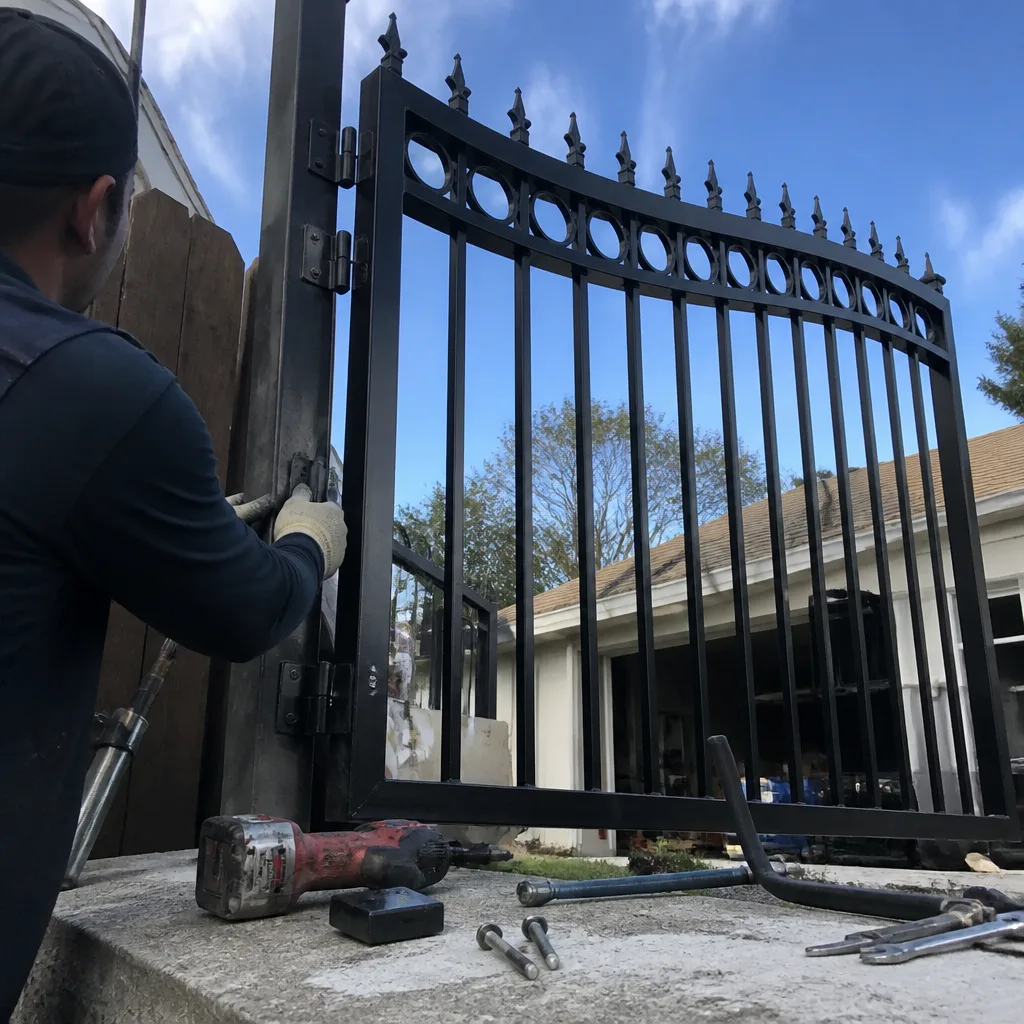
North Miami Beach sits in a salt-air corridor that is kinder to concrete than to steel. The same climate that rusts patio furniture and pits aluminum window frames works on gate hardware year-round. Understanding how the local environment attacks your specific gate helps you spot accelerated wear before it becomes a failure.
Salt Air and Corrosion
The ocean air carries chloride ions that penetrate paint, powder coating, and galvanized surfaces. Wrought iron gates in North Miami Beach flash-rust at exposed weld points within a year of installation unless they are regularly resealed. Steel gate frames last, but the hardware attached to them, the hinge pins, the track wheels, the solenoid locks, the limit switch actuators, corrode faster than the gate itself. A hinge pin that seizes from corrosion transfers its rotational load to the motor, which draws more current, which shortens the motor life. This is a North Miami Beach problem specifically: the same gate in Orlando would not see the same corrosion rate.
Humidity and Electronics
Control boards, photo-eyes, and low-voltage connections live in an environment where relative humidity sits above 70 percent for most of the year. Moisture condenses inside operator housings overnight, and that condensation works its way into terminal connections. Green corrosion on a low-voltage terminal block is the single most common electrical finding on North Miami Beach gate service calls. It causes the exact intermittent failures described earlier, and it explains why a gate works fine for years then suddenly develops a series of unrelated-sounding electrical glitches.
Heavy Rain and Drainage
North Miami Beach gets approximately 58 inches of rain per year, concentrated in the summer months. Underground operator housings, common on sliding gate installations, can flood if the drain holes clog or the surrounding grade shifts. A flooded operator is a full replacement in most cases because the motor windings and control board are both submerged. Watch for water pooling near the operator housing after heavy rain. The fix before flooding is a drainage correction that costs a few hundred dollars. The fix after flooding is an operator replacement that costs several times that.
Why Written Documentation Matters Before Any Repair Starts
Most gate repair estimates in the industry are delivered verbally. The technician looks at the gate, names a number from memory, and the homeowner has no record of what was agreed to. When the invoice comes in higher, the explanation is always the same: “We found more damage once we opened it up.” Sometimes that is true. Sometimes it is not. The homeowner has no way to know.
Documentation changes the power dynamic. A written scope of work with a written price, handed over before any tool comes off the truck, means the homeowner knows exactly what will be done and exactly what it costs. If the technician finds additional damage mid-repair, the written scope is amended, and the homeowner approves the additional work before it starts. No surprises at the end. No “well, we also had to recircuit the board” after the invoice is printed.
At Vance Gate Repair North Miami Beach, this is not a courtesy; it is how we have worked since Adrian Vance started the company in 2014. Every service call begins with a written scope and a written flat price, delivered before work starts. Every service call ends with a photo record of what was found, what was adjusted, and what was installed. The photos are left with the homeowner and filed in the job record so the next technician, whether ours or another company’s, does not have to guess what was done. Vance Gate Repair North Miami Beach home details what this documentation standard covers.
Common Mistakes to Avoid
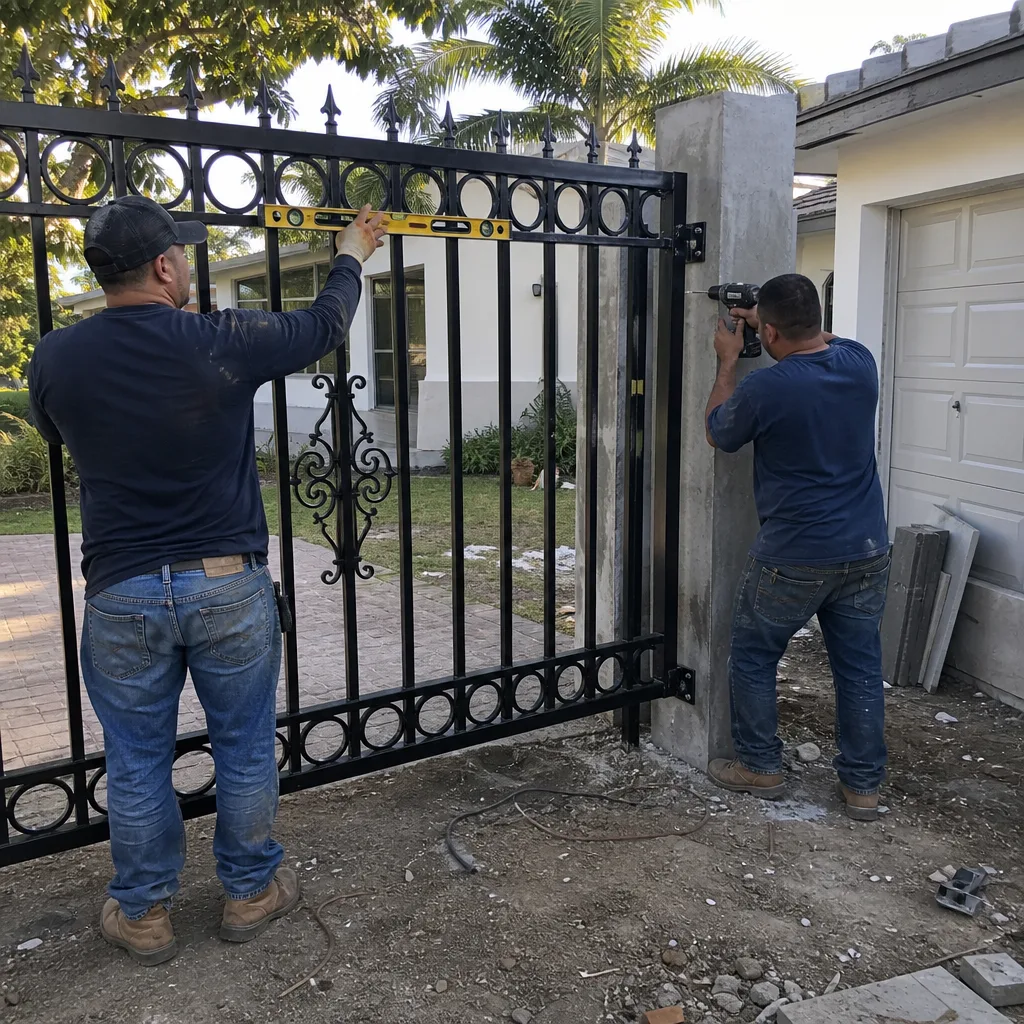
- Ignoring the first noise change. That faint squeal or soft hum is the cheapest diagnostic information you will ever get. Every week it is ignored adds cost to the eventual repair.
- Repeatedly pressing the opener button when the gate hums without moving. Every stalled cycle overheats the motor windings. Two or three attempts can convert a capacitor replacement into a motor replacement.
- Lubricating the gate track with WD-40 as a general fix. WD-40 is a water displacer and a light solvent, not a long-term lubricant. On North Miami Beach gates, it washes away in the first rain and leaves the metal less protected than before. Use a proper lithium or polyurea grease on metal-to-metal contact points.
- Calling for service without video of an intermittent failure. The technician who arrives with no video is diagnosing from a cold start. A 30-second phone recording can save a return trip and a second service fee.
- Accepting a verbal estimate and then approving additional work without a written amendment. You have a right to see what the additional work costs in writing before it starts. If the company will not put it in writing, that is a signal.
- Replacing a motor when the problem is structural. A sagging gate will destroy a new motor just like it destroyed the old one. The structural problem gets fixed first, or the new motor is on a countdown.
- Ignoring water pooling near the operator housing. In North Miami Beach’s rainy season, a clogged drain or a shifted grade can flood an underground operator in a single heavy storm. The drainage fix is a fraction of the replacement cost.
When to Call a Professional
Call when the gate makes a noise it did not make before. Call when the travel speed changes, when the gate reverses without an obstruction, when the photo-eye light blinks, when you see sag at the hinge, when you hear humming without movement, or when the gate slams into its stops. All of these are early indicators, and all of them are cheaper this week than next month. If either of the two stop-operating conditions described above is present, do not operate the gate. Disconnect power and call. Vance Gate Repair North Miami Beach offers free estimates in North Miami Beach, and the written price is handed to you before any work starts. Call (754) 219-6080 and a live person picks up, any hour, every day.
Frequently Asked Questions
Most residential gate repairs in North Miami Beach fall between $95 and $700 depending on the component and the extent of the damage. Bearing replacements, capacitor replacements, limit switch adjustments, and photo-eye realignments typically run $95 to $180. Gearbox replacements, hinge rebuilds, and structural realignments typically run $400 to $700. Full motor replacements run higher, usually $600 to $1,200 depending on brand and operator type. Every repair at Vance Gate Repair North Miami Beach gets a written flat price before work starts, so the number you see is the number you pay. Call (754) 219-6080 for an exact quote on your gate, estimates are free.
For repair calls, yes, we dispatch same-day service in North Miami Beach whenever we have a technician available, and a live person answers the phone 24 hours a day to schedule it. Emergency calls involving a gate stuck open, a gate stuck closed, or one of the two stop-operating conditions described above are prioritized. For installation or new automation work, a site measure comes first, and the work is scheduled once parts are confirmed. For a repair estimate, call (754) 219-6080.
We service nine major automation brands: LiftMaster, FAAC, BFT, Linear, Viking, Ghost Controls, DoorKing, Elite, and Mighty Mule. If your motor is one of these, we carry or can source the parts and we know the control board logic. If your motor is not on that list, we will still look at it; an older or less common operator is not a reason to steer you toward a replacement when a repair is possible. Call (754) 219-6080 and describe what the gate is doing.
Repair addresses a failing component or a structural issue on the existing gate. Installation is a new gate from the ground up: posts or track, gate panel build, operator mounting, control board wiring, safety edge or photo-eye installation, and final travel calibration. Gate Installation in North Miami Beach covers the full installation scope, including written pricing and the photo record included with every job. If your gate is repairable, repair is almost always the lower-cost path. Call (754) 219-6080 to discuss which applies to your gate.
Yes. Automation work includes the power run from the panel to the operator location, low-voltage wiring for photo-eyes and keypads, installation and calibration of the safety edges, and final programming of the travel limits and force settings. Every automation job leaves with a wiring diagram and a photo record of the finished connections, so there is a documented map of the system. Call (754) 219-6080 for a written quote on automation work.
If you already have a written estimate from another company, bring it to us. We review outside estimates at no cost and give you an honest read on whether the scope and price match what the gate actually needs. This is part of the documentation standard we came out of commercial access-control work with. For a free second opinion, call (754) 219-6080.
The Bottom Line
Every North Miami Beach gate that fails completely announces itself first through noise, speed, or behavior changes that were present for weeks or months before the breakdown. The first symptom in each failure sequence is the cheapest to fix, and the cost curve steepens with every ignored cycle. Salt air and humidity make local gates fail faster than the same hardware inland, which means North Miami Beach homeowners do not have the luxury of waiting on a warning sign. Document what you see and hear, call at the first signal, and insist on a written price before anyone touches the gate. You can also explore more guides & resources on our blog. That is the entire difference between a $150 bearing replacement and a $900 motor replacement.
Written by Adrian Vance, Owner at Vance Gate Repair North Miami Beach, serving North Miami Beach since 2014.