
Last updated September 21, 2026
Free on-site gate assessment - hinges, posts, and your LiftMaster or Nice gate operator checked before anything is quoted
The assessment is free and the quote is the invoice.



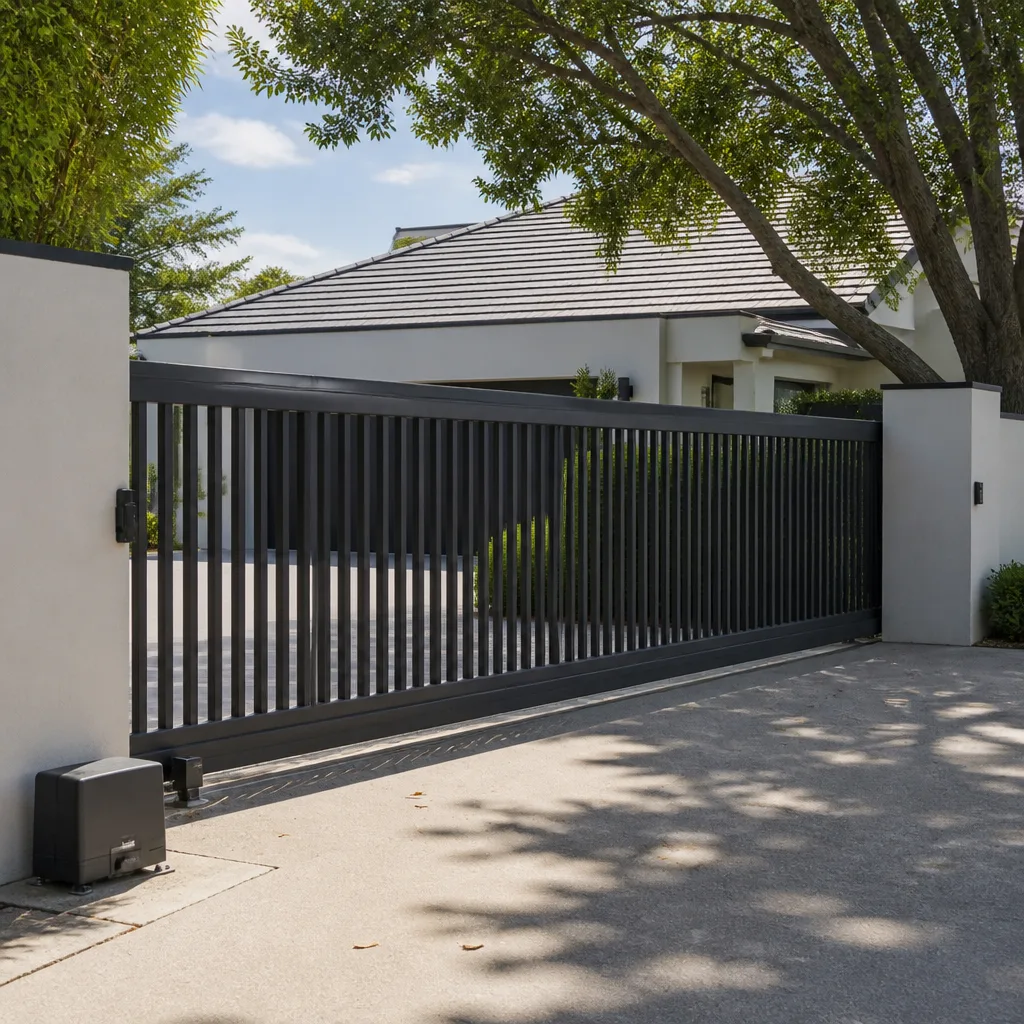
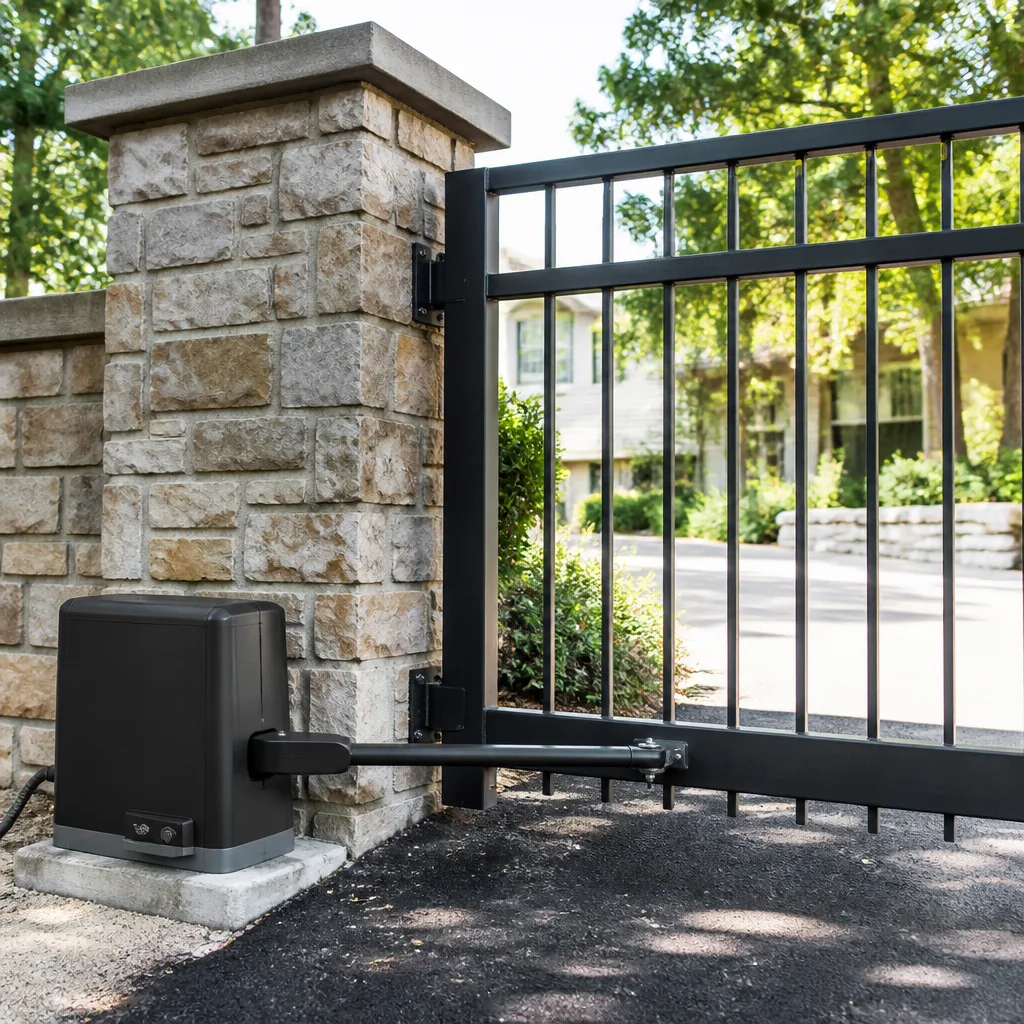
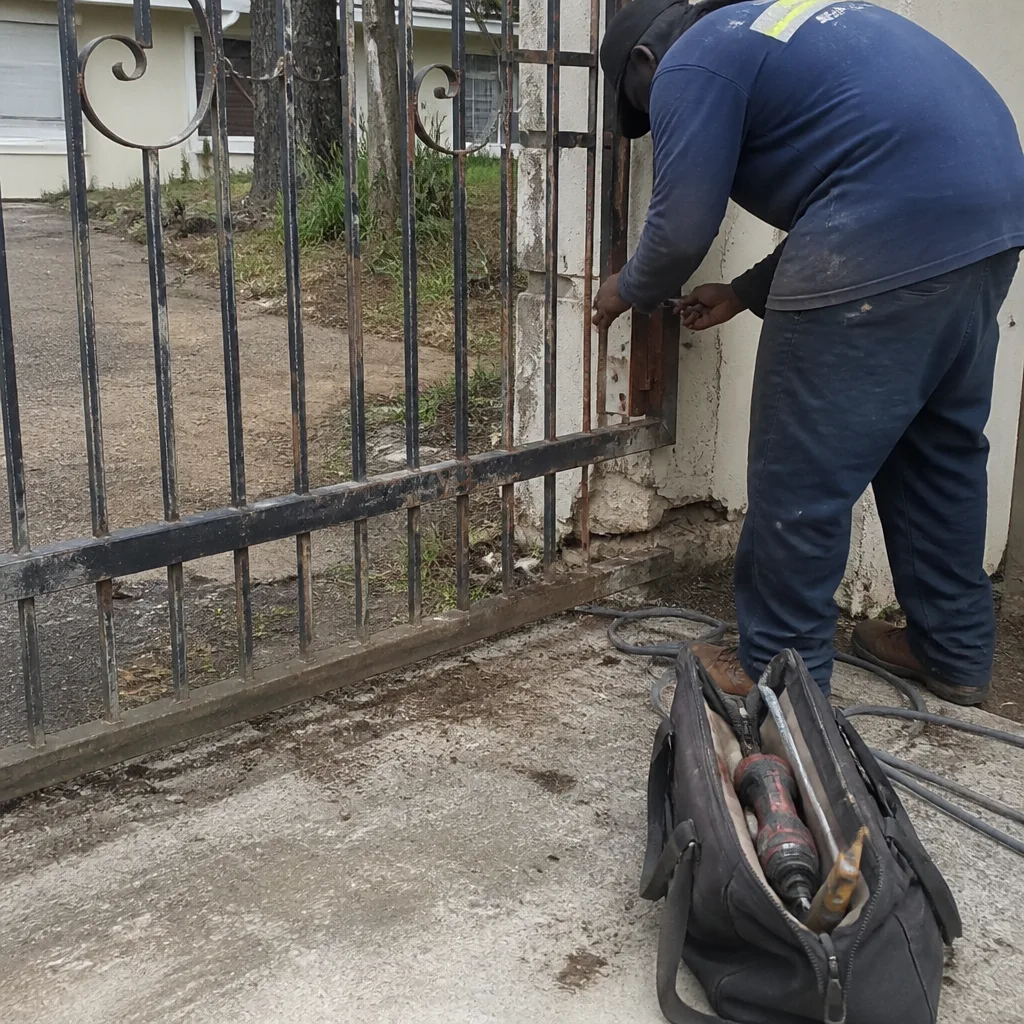 Before
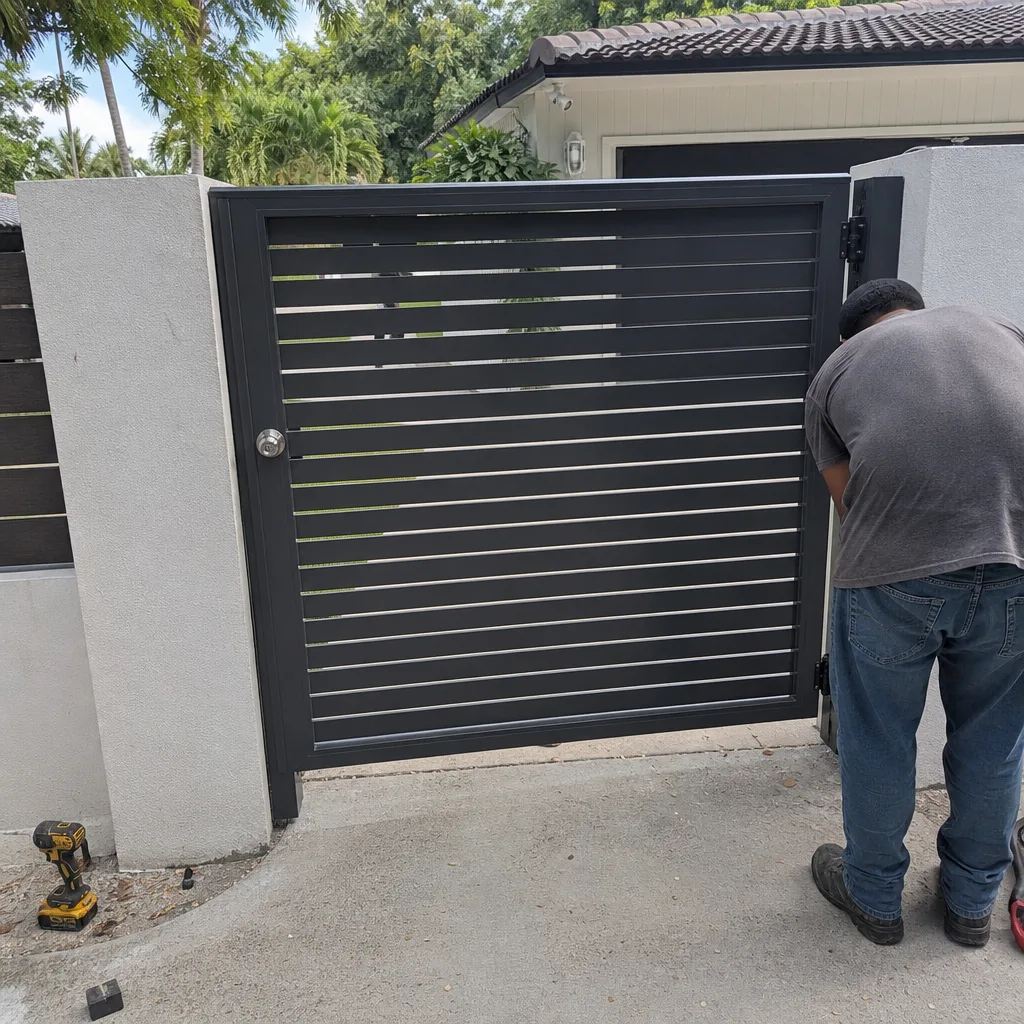 After
After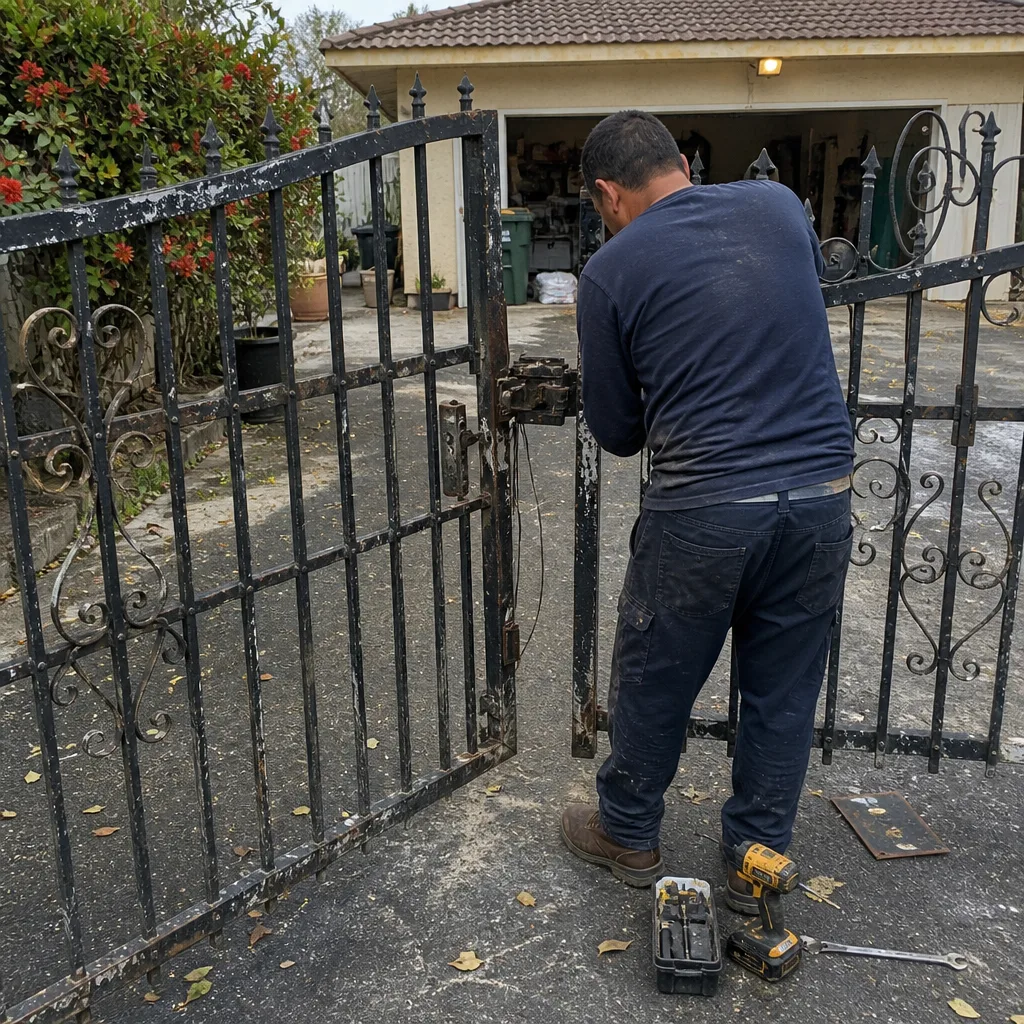 Before
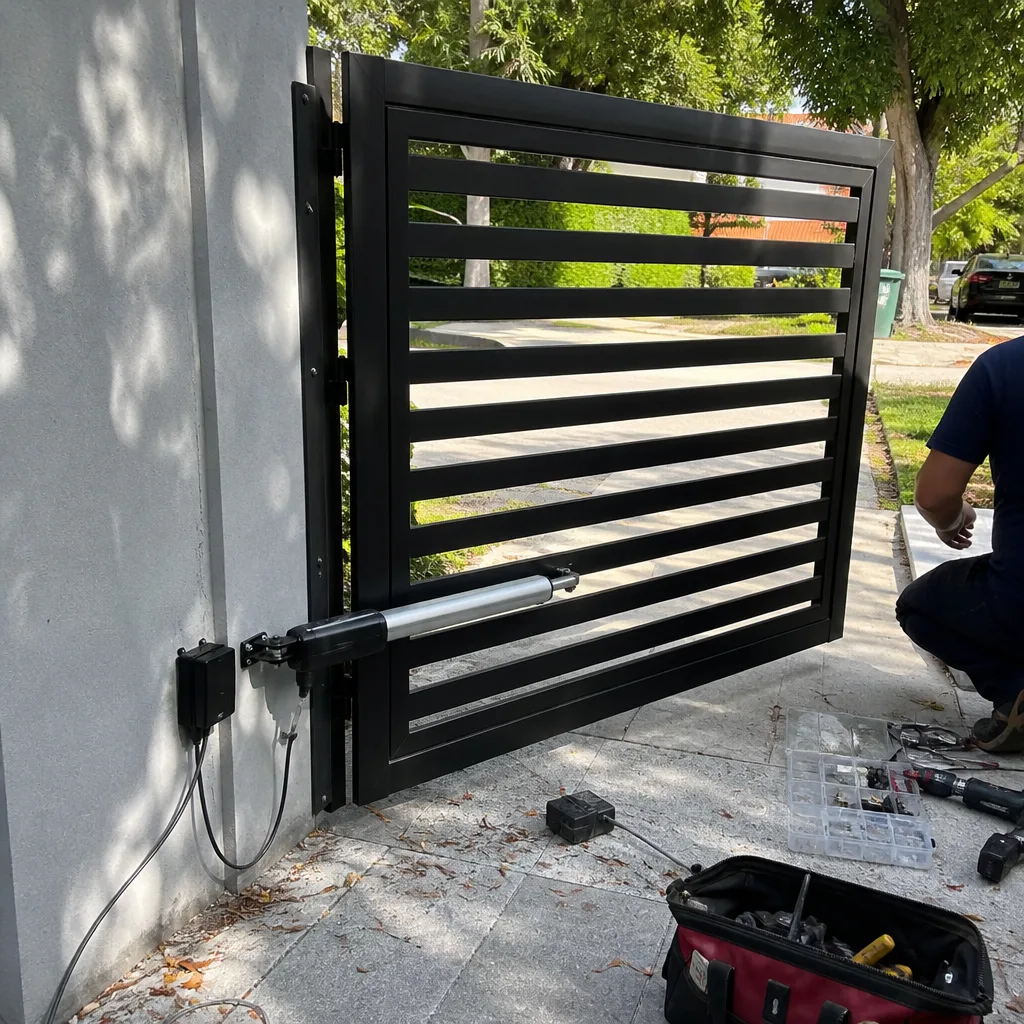 After
After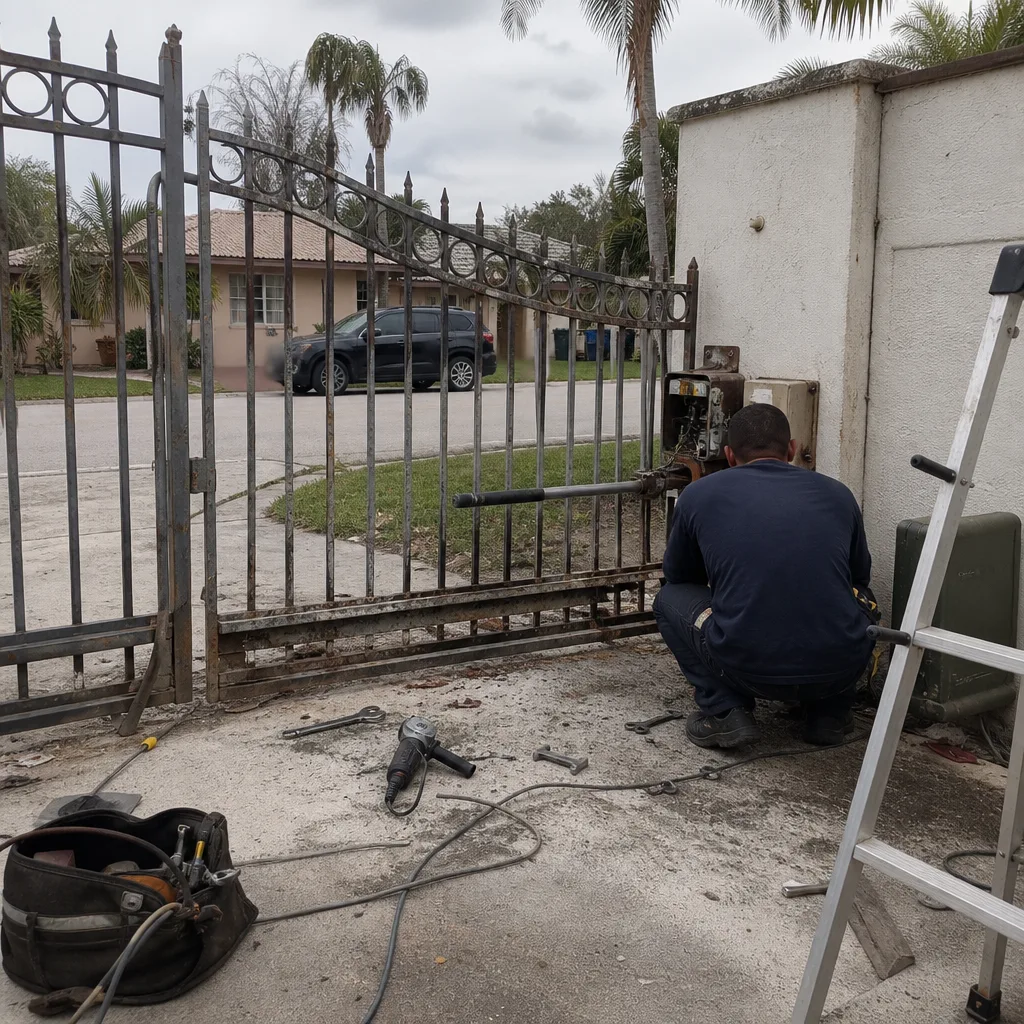 Before
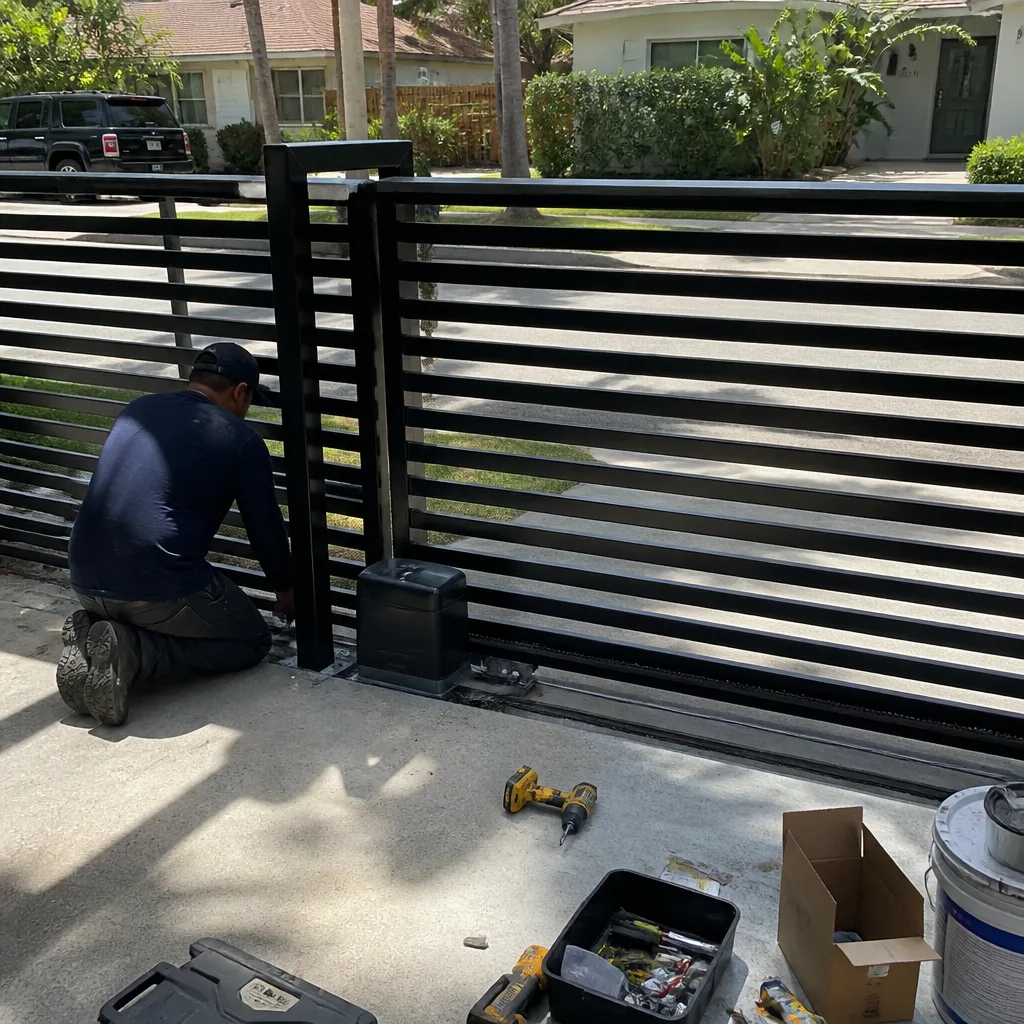 After
AfterGate Repair Maintenance Checklist for North Miami Beach Homeowners
Most gate maintenance schedules you’ll find online were written for places like Phoenix or Atlanta. They assume dry air, mild corrosion cycles, and the occasional thunderstorm. North Miami Beach sits less than two miles from the Atlantic with salt-laden humidity that can put a visible film on aluminum hardware in under three weeks. Since 2014, our Gate Repair services have covered over 22,000 gates across this area, and the failure patterns here are consistent and predictable. The items that kill gates in North Miami Beach are not the items on generic checklists. This guide is built from what we actually find on service calls, not from a manufacturer’s national template. You’ll learn which inspections to perform and when, which fasteners and connections to photograph, how to spot salt-driven damage early, and which maintenance tasks you should never attempt yourself.
Quick Answer
A North Miami Beach gate maintenance checklist should be run every 60 days during wet season (May-October) and every 90 days during dry season, with a full post-storm inspection after any named storm. The highest-yield items are checking for salt oxidation on limit switch contacts, verifying that photo-eye alignment has not drifted, lubricating hinge and arm pivot points with a marine-grade lubricant, and photographing every fastener, seal, and board connection so you have a dated baseline before anything breaks. For more detail, see our guide on Gate Repair Warning Signs: A North Miami Beach Homeowner’s Reference Guide; early maintenance is the cheapest way to avoid that bill.
Table of Contents
- Why Generic Gate Checklists Fail in North Miami Beach
- The Inspection Rhythm That Actually Works Here
- Moisture and Salt: The Two Killers Most Checklists Ignore
- How to Photograph Your Gate Baseline Before Anything Breaks
- The Monthly and Seasonal Checklist Items
- What’s Safe to Do Yourself (and What Voids Warranties)
- How to Document Your Walk So a Technician Arrives with Context
- Common Mistakes to Avoid
- When to Call a Professional
- Frequently Asked Questions
- The Bottom Line
 Before
 After
AfterWhy Generic Gate Checklists Fail in North Miami Beach
The standard maintenance card that comes with most gate openers says to lubricate moving parts and inspect the system every six months. That interval was written for a temperate climate, not for a barrier island humidity zone where salt air accelerates oxidation four to five times faster than inland conditions. We see the consequence every week: a swing gate in North Miami Beach that moves fine in January will start binding in June because a steel pivot pin that looked clean at the quarterly check has developed enough surface corrosion to add friction to the travel arc. The motor then works harder, the limit switch reads the added load as a mechanical obstruction, and the gate reverses mid-travel. Homeowners call us thinking the board is bad. Most of the time, the board is fine. It’s the neglected hardware no six-month card asked them to inspect.
There’s a second problem. Checklists written for dry climates include long lubrication intervals that are simply too sparse here, but they also omit the items that matter most in a coastal Florida environment: salt film removal, drain hole verification, and post-storm photo-eye realignment. If you follow a generic schedule in North Miami Beach, you will under-inspect the exact components that fail first. That’s not a critique of generic advice. It’s a statement about the material reality of operating an electromechanical device in salt air.
This guide is organized around the failure patterns we’ve documented on Gate Repair in North Miami Beach service calls: limit switch oxidation, hinge pin corrosion, photo-eye drift after wind events, and board connector degradation from trapped moisture. Every item here was selected because we have photographed it failing on a real gate in this city. No filler. No national-template padding.
The Inspection Rhythm That Actually Works Here
The right maintenance interval for a North Miami Beach gate is not quarterly and it is not monthly. It’s seasonal, and it shifts with the humidity cycle. Here is the schedule we recommend to every homeowner we serve, and the reasoning behind each step.
During Wet Season (May through October): Every 60 Days
From May through October, the combination of afternoon thunderstorms, sustained humidity above 70 percent, and prevailing onshore winds deposits salt and moisture on every exposed metal surface. The interval drops to two months because that is roughly how long it takes for a clean gate to accumulate enough oxidation on pivot points and terminal strips to cause measurable performance degradation.
- Inspect and clean limit switch contacts - these are the small brass or steel tabs inside the operator housing that tell the motor where to stop. Salt film accumulates here quickly, and a light film can mimic a misaligned limit switch.
- Lubricate pivot points with a marine-grade lubricant - hinge pins, arm pivot bolts, and chain drives all need a corrosion-inhibiting lubricant every 60 days in this season. Standard WD-40 is not a marine-grade lubricant. Use something rated for saltwater environments, like CRC 6-56 or equivalent.
- Check drain holes - every gate operator housing has small weep holes at the bottom designed to let condensation escape. In North Miami Beach, mud daubers, debris, and corrosion can clog these. If the hole is blocked, condensation accumulates inside the housing and attacks the control board. Clear them with a toothpick, not a drill.
- Verify photo-eye alignment - the infrared safety beam that reverses the gate when something crosses the path can drift from vibration, wind, or a light bump from a delivery truck. Misalignment of as little as two inches can disable the gate entirely.
During Dry Season (November through April): Every 90 Days
From November through April, the humidity drops enough to extend the interval to three months. This is a good window for the deeper maintenance items that are uncomfortable to perform in summer heat, like cleaning the control board compartment and checking the motor capacitor.
After Every Named Storm or Wind Event Over 40 mph
Any storm strong enough to rattle the gate’s physical structure is strong enough to knock the photo-eye out of alignment, loosen a limit switch, or shift a mounting bracket. Run the full inspection within 48 hours of the storm passing. North Miami Beach sees enough squall lines during wet season that this is not an occasional item; it’s a regular part of the seasonal rhythm.
Moisture and Salt: The Two Killers Most Checklists Ignore
If you take nothing else from this guide, take this: the two factors most responsible for gate failures in North Miami Beach are trapped moisture and salt-driven oxidation. Both are preventable with a careful eye and a camera. Neither appears on most maintenance cards.
Trapped Moisture
Every gate operator housing is designed to shed water from the top and breathe from the bottom. When the bottom drain holes clog, the housing becomes a humidity chamber. Condensation forms on the interior walls, drips onto the control board, and slowly degrades the solder connections. We’ve opened operator housings in North Miami Beach where the board was coated in a fine green corrosion layer while the exterior looked pristine.
The fix is simple and visual: locate the drain holes, confirm they are open, and use a flashlight to look inside the housing for any sign of standing water or condensation staining. If you see water staining on the interior, the board has already been exposed. That is the moment to call a professional for an inspection, not after the gate stops working.
Salt-Driven Oxidation on Electrical Contacts
Salt air attacks electrical contacts in a specific pattern. Limit switch contacts in coastal environments develop a dull gray or green film on the contact surface. This film adds resistance, and added resistance changes the signal the control board reads. The gate may stop short, overtravel, or reverse intermittently.
Here is the critical distinction most homeowners miss: early salt oxidation looks very similar to normal mechanical wear, but they cost very differently to fix. A contact that is simply worn from mechanical cycling can be cleaned and filed back to service. A contact that has been sitting in salt air for six months without cleaning may have pitted corrosion that requires replacement of the entire switch assembly. The difference in repair cost can be $65 versus $320 on common swing gate operators. This is why the 60-day wet season inspection matters: you are catching oxidation while it is still cleanable, not after it has eaten into the metal.
In our experience, the brands that resist this the longest on North Miami Beach installs are BFT and Linear operators, which use sealed limit switch assemblies in most of their current models. We also see solid performance from Viking and Ghost Controls units when the housing drain holes are kept clear. The brand matters less than the maintenance habit, but some designs tolerate the coastal environment better than others.
How to Photograph Your Gate Baseline Before Anything Breaks
The single most valuable maintenance habit a North Miami Beach homeowner can adopt is not lubrication or inspection. It is creating a photographic baseline of your gate’s current condition while it still works. This baseline does two things: it gives you a reference to compare against when something looks wrong, and it gives any technician who arrives later a complete picture of the system’s original configuration. That second point matters more than most people realize. If a wire gets disconnected or a bracket gets bent, the technician can see exactly what it looked like before the problem started.
Here is the exact photo set we recommend, and we recommend this set because it mirrors what our technicians document on every Gate Motor & Opener in North Miami Beach service visit under the Haven Standard.
- Full gate closed - one wide shot from the street side showing the entire gate, both hinge posts, and the operator arm. This captures overall alignment and any visible sag.
- Full gate open - same angle, gate fully open. This shows the travel arc and any obstruction points.
- Hinge post close-ups - one photo per hinge, six inches away. You are documenting pin wear and bracket tightness.
- Operator housing, door open - one photo of the control board and all wiring connectors. Include the limit switch assembly in focus. This is the most valuable photo in the set.
- Photo-eye alignment - one photo from behind each photo-eye, aimed toward the opposite side. This shows the beam path and any vegetation encroachment.
- Chain or belt drive - if applicable, one photo showing tension and wear patterns on the drive mechanism.
- Ground track - for slide gates, one photo of the track and any rust or debris accumulation.
- Keypad and intercom - if you have entry hardware, one photo of the keypad face showing button wear and one of the antenna or receiver location.
Store these photos in a dedicated folder named “Gate Baseline” with the date in the filename. Every time you run a maintenance check, take a fresh set and compare. Changes you can see in photos are changes you missed during the walk.
This documentation habit is exactly what we deliver on every service call. Our technicians leave a photo log of every adjustment and a written record of every part number installed. It is Clause 4 of the Haven Standard, and it means no future visit depends on memory or guesswork. You can do the same thing for yourself with a phone camera and ten minutes.
The Monthly and Seasonal Checklist Items
Here is the full checklist, organized by frequency. Print it. Tape it inside the operator housing. Run it on schedule and your gate will outlast most of its neighbors.
Every 30 Days (Quick Visual Walk)
- Watch one full open-close cycle. Does the gate hesitate, stutter, or reverse unexpectedly? Smooth travel is the baseline. Anything else is a signal.
- Check for loose fasteners by hand. Don’t crank them, just feel. A bolt that has backed out a quarter turn will be loose to the touch.
- Clear vegetation from the photo-eye path. In North Miami Beach growing season, a palm frond can block the beam in a week.
- Look for fresh rust or corrosion. Orange staining on a bolt head, white chalky residue on aluminum, or green fuzz on copper wiring are all flags.
Every 60 Days During Wet Season (May-October)
- Clean limit switch contacts with an electrical contact cleaner designed for marine environments.
- Lubricate all pivot points with a marine-grade corrosion inhibitor.
- Verify drain holes are open on the operator housing.
- Check photo-eye alignment with a level or a visual beam verification.
- Inspect the control board for moisture staining or corrosion. Use the flashlight on your phone.
Every 90 Days During Dry Season (November-April)
- Full hardware torque check. Hinge bolts, bracket bolts, and operator mounting bolts. Most of these have a spec between 25 and 45 foot-pounds depending on the gate. If you don’t know yours, a quarter-turn test is a safe substitute.
- Clean the control board compartment with compressed air and a soft brush. Never use water.
- Inspect the motor capacitor for bulging or leaking. A swollen capacitor is a failure in progress.
- Check the chain or belt tension. Most manufacturers specify a deflection of 1/4 to 1/2 inch at the midpoint. Too tight kills the motor bearing; too loose jumps the sprocket.
After Every Named Storm or Wind Event Over 40 mph
- Re-run the full 60-day checklist regardless of where you are in the cycle.
- Inspect all mounting brackets for bending or movement. Wind loading on a gate is significant, and brackets that shift by even a few millimeters will alter the travel arc.
- Check the gate’s physical alignment. A gate that was hit by wind-blown debris or blown open can develop a sag that strains the motor on every cycle.
- Verify photo-eye alignment again. Storm-driven vibration is the most common cause of post-storm gate failures in North Miami Beach.
What’s Safe to Do Yourself (and What Voids Warranties)
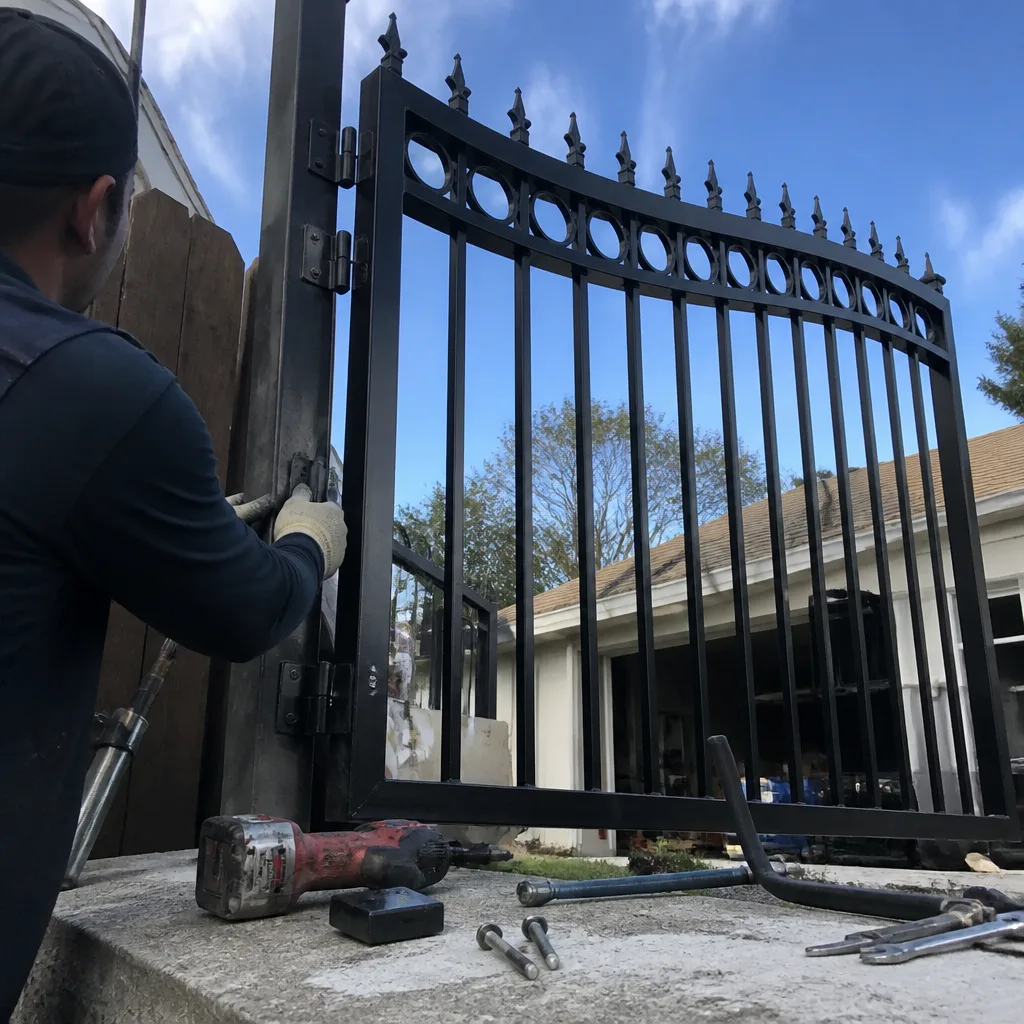
Some maintenance tasks are genuinely safe for a careful homeowner. Others carry risk, either physical risk or warranty risk, and should be left to a technician. The line between them is not always obvious, so here is the boundary we draw on our own service calls.
Safe for a Careful Homeowner
- Visual inspections - every item in the checklist above is inspection only. Looking at a component never voids a warranty.
- Cleaning drain holes - clearing debris from an exterior weep hole is non-invasive.
- Lubricating accessible pivot points - as long as you use the correct lubricant and do not remove any panels or covers to reach them.
- Clearing vegetation from the photo-eye path - cut it back, don’t pull it out by the roots if the roots are near buried conduit.
- Photographing everything - documentation is the safest maintenance task there is.
Do Not Do This Yourself
- Adjusting limit switches. This is a precision setting, and a mis-set limit switch can cause the gate to overtravel and damage the arm or hinge. It also voids the warranty on most operators if an unauthorized adjustment is detected. This is one of the most common phone calls we get: a homeowner who tried to fix a limit switch and made it worse.
- Opening the operator housing to access the control board. The housing contains high-voltage wiring. If you can inspect it through a viewing window or open door, fine. If you need to remove panels to reach it, stop. This is where electrical injury becomes a real risk.
- Adjusting chain or belt tension. Most require a torque wrench and specific tension specs. Over-tightening is the fastest way to destroy a motor bearing, and the repair will not be covered under warranty if the tension was set incorrectly.
- Replacing or rewiring any electrical component. Photo-eyes, keypads, receivers, and control boards all carry the same risk. Leave wiring to a licensed technician.
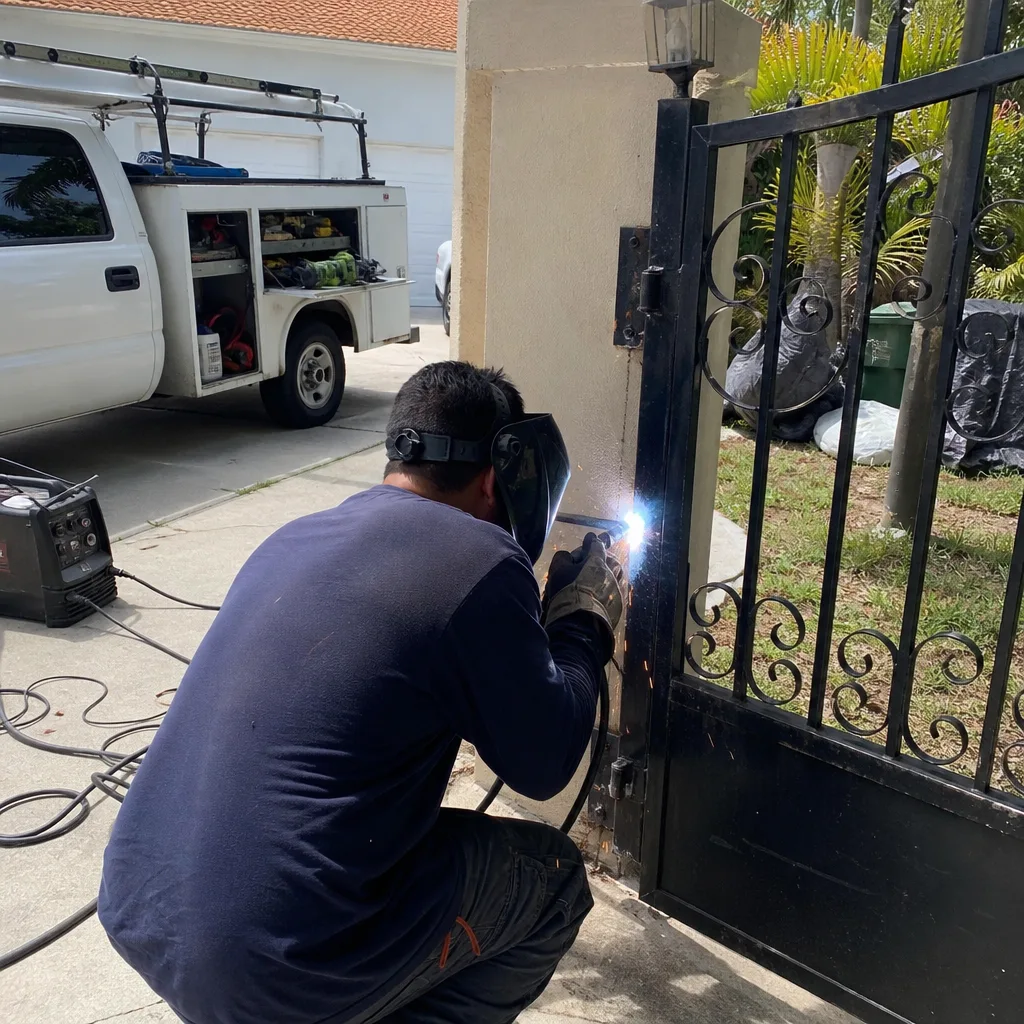
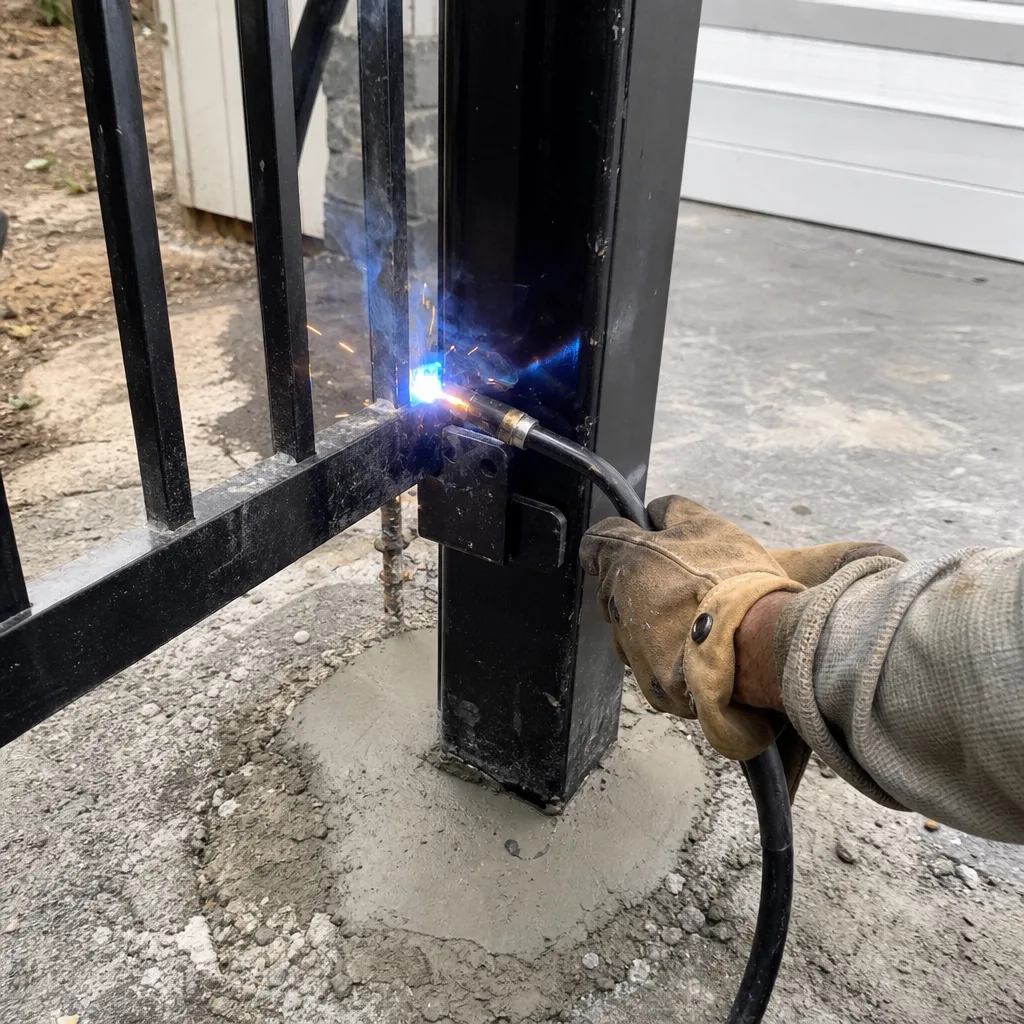
- Welding or structural repair. A cracked hinge bracket on a 400-pound gate is not a homeowner repair. Full stop.
Here’s the rule we use: if the task involves opening a panel, adjusting an electrical setting, or applying force to a structural component, it is a technician’s job. If it involves looking, cleaning, lubricating, or photographing, it is yours. That boundary keeps everyone safe and keeps warranties intact.
How to Document Your Walk So a Technician Arrives with Context
The difference between a $200 repair and a $600 repair is often whether the technician has context. When a gate stops working and the homeowner calls a company, the technician typically arrives cold. They have never seen this gate, they have no photos of its original condition, and they have no record of what maintenance was performed or when. They start from scratch, diagnose by elimination, and charge for the diagnostic time.
You can change this. If you have been running the checklist above and photographing your gate on schedule, you can hand the technician a complete maintenance history before they ever touch a tool. This does two things: it speeds up the diagnosis, and it signals to the technician that they are dealing with a homeowner who documents. When you visit a Vance Gate Repair North Miami Beach home service call, the technician will document everything they find under the Haven Standard. Your own documentation complements that. It gives the technician a before-and-after reference that would otherwise not exist.
What to Include in Your Maintenance Log
- Date and time of each inspection. Consistency matters more than thoroughness. A dated log of 60-day checks tells the technician exactly how well the gate was maintained.
- What you found. Even if the answer is “nothing unusual,” write it down. Negative findings are data.
- What you did. Lubricated hinges, cleared drain holes, cleaned contacts. Specific actions, not general descriptions.
- Photos you took. Include the file names or a cloud link. The technician should be able to pull up your baseline set from their phone.
- Any parts replaced or adjustments made. If you replaced a keypad battery or cleared a photo-eye obstruction, record it. Small changes add up over time.
The best format is a simple spreadsheet or a notes app entry. It does not need to be fancy. It needs to be findable. When the gate does eventually break, and every gate breaks eventually, you will hand the technician a year of documented evidence instead of a shrug. That saves money, and it saves the second visit that happens when the first diagnosis was wrong because the technician had no history to work from.
This is the same philosophy behind our Free second opinion on any written estimate from another company, and one of many more guides & resources we offer. Bring us the paperwork and we’ll review it at no cost. Documentation always gives the better outcome. Whether it’s your documentation or another company’s written estimate, the paper trail is what keeps you from paying twice.
Common Mistakes to Avoid
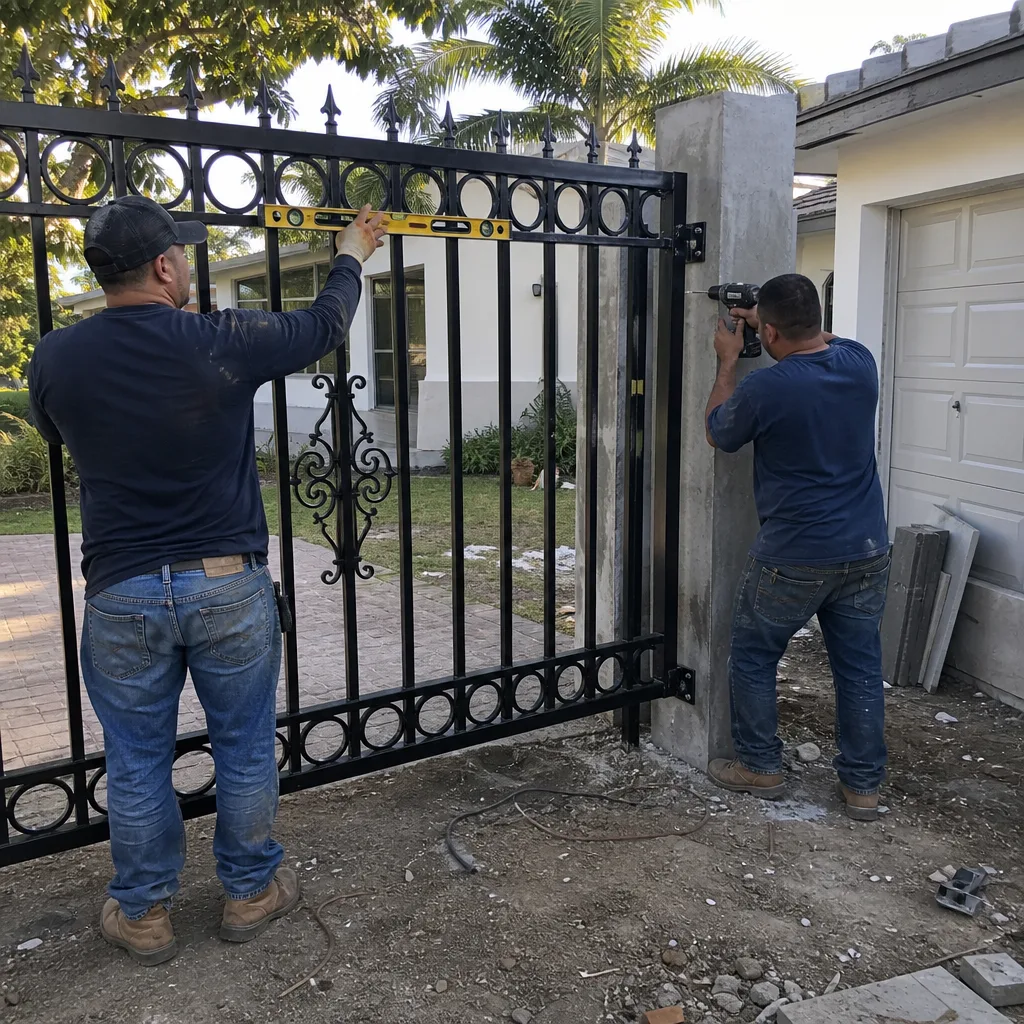
- Using the wrong lubricant. Standard WD-40 is a solvent with light lubricating properties, not a marine-grade corrosion inhibitor. In North Miami Beach salt air, it washes off in weeks and leaves the metal unprotected. Use a product rated for marine environments.
- Ignoring the drain holes. The top causes of control board failure in this area are clogged weep holes and interior condensation. This is a two-minute check that saves a $400 board.
- Adjusting the limit switches without documentation. If you move a limit switch, photograph its original position first. Without a baseline, a misadventure becomes a diagnostic puzzle for whoever arrives behind you. And the technician will charge to sort it out.
- Running the 6-month maintenance interval. In May through October, a North Miami Beach gate accumulates enough corrosion in sixty days to measurably affect performance. Six months is three failure cycles in this climate.
- Skipping the post-storm inspection. After a squall line, the photo-eyes drift, the brackets flex, and the hardware loosens. Waiting until the gate fails costs more than the thirty minutes a post-storm check takes.
- Treating all gate brands as interchangeable. A Viking operator and a Ghost Controls operator have different limit switch designs, different tension specs, and different sealed-component layouts. The maintenance habit matters more than the brand, but the brand determines the specific steps. Read the manual for your specific model.
- Documenting nothing. A gate that has been maintained for two years with zero documentation is, to a technician, indistinguishable from a gate that has never been maintained. The paper trail is what turns maintenance into money saved later.
When to Call a Professional
Some issues on a North Miami Beach gate are signs of an approaching failure, not a maintenance item. If your gate reverses mid-travel, stops short of the close position, or makes a grinding noise that was not there last month, the underlying cause is usually mechanical or electrical wear that cleaning will not fix. Same if you see moisture staining inside the operator housing, a bulging capacitor, or a hinge pin with visible play. These are repair conditions, not maintenance conditions. The gate may still work today, but it is telling you, in technical language, that a component is near the end of its service life. Gate Installation in North Miami Beach is a separate conversation if the entire structure is end-of-life, but most of what we repair was salvageable at the maintenance stage and became a full replacement only after being ignored for a season.
If you are not sure whether a finding is normal, call us. Vance Gate Repair North Miami Beach offers free estimates in North Miami Beach, and we will come out and tell you what we found, what it costs to fix, and whether it can wait. Call (754) 219-6080 and a live person answers, day or night.
Frequently Asked Questions
Run a full maintenance checklist every 60 days during wet season (May through October) and every 90 days during dry season (November through April), plus a full walk within 48 hours after any named storm or 40 mph-plus wind event. This schedule reflects the actual corrosion rate in coastal South Florida, not a national average. Call (754) 219-6080 if you find something during a check that you don’t recognize.
Most swing-gate motor replacements run between $650 and $1,450, depending on the brand, the arm bracket condition, and whether the limit switch assembly can be reused. The price is written and agreed before any work starts, under Clause 1 of the Haven Standard. You’ll never get an invoice bigger than the quote, because the quote is the price.
Yes, if you use a marine-grade corrosion-inhibiting lubricant and limit the application to accessible pivot points like hinge pins and arm joints. Do not open the operator housing to reach internal components. That is a technician’s job, and opening the housing yourself can void the operator warranty. If you are unsure where the accessible pivot points end, call us and we will walk you through it.
Mid-travel reversal usually indicates the gate is encountering resistance and the operator’s obstruction detection is engaging. Common causes in North Miami Beach include salt-corroded pivot pins adding friction, a photo-eye misaligned by wind or vegetation, or a limit switch sending a false reading due to oxidation on the contacts. The first and third causes look similar but cost very different amounts to fix, which is why a documented inspection matters. Call (754) 219-6080 for a diagnosis and a written estimate.
In our experience, sealed limit switch assemblies perform best in coastal environments, and current models from BFT and Linear hold up well on North Miami Beach installs. Viking and Ghost Controls also perform solidly when the operator housing drain holes are kept clear. The brand matters less than the maintenance habit. A well-maintained budget operator will outlast a neglected premium one every time.
Yes. We repair every major automation brand, and we also handle full gate installation when the existing structure is beyond economical repair. Every job, repair or install, gets a written price before work starts and a documented photo record when we leave. Call (754) 219-6080 and a live person answers 24/7, no voicemail loop and no automated attendant.
The Bottom Line
A gate in North Miami Beach is not a set-it-and-forget-it device. It is an electromechanical system operating in one of the most corrosive air environments in the country, and it responds to attention or neglect with equal predictability. The homeowners who keep a 60-day wet season rhythm, photograph their baselines, and document their findings are the ones whose gates last fifteen years instead of five. The checklist in this guide is the exact one we use on our own service calls, adapted for homeowner use. Run it, photograph everything, and when something looks wrong, call before it becomes a repair. Call (754) 219-6080 for a free estimate. A live person answers, and you’ll get a written price before any work starts.
Written by Adrian Vance, Owner at Vance Gate Repair North Miami Beach, serving North Miami Beach since 2014.